
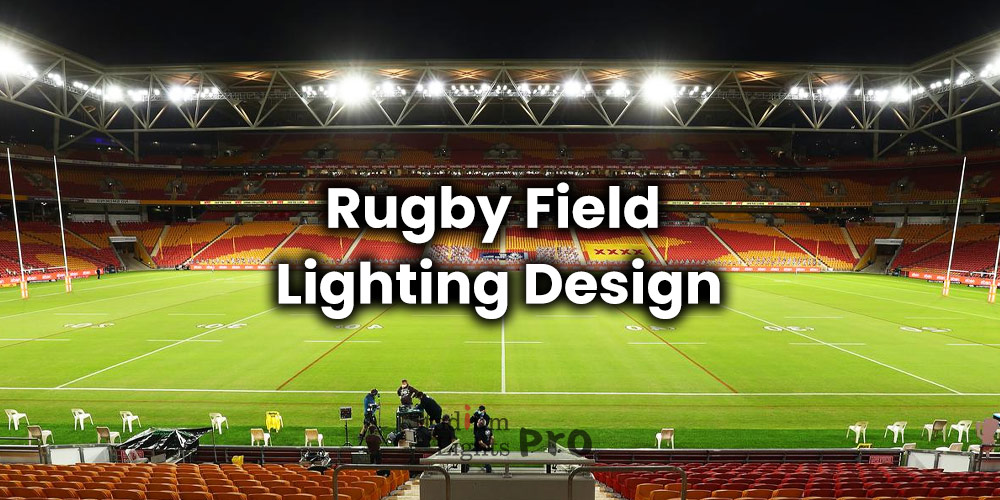
When you think about a rugby match, most people picture the players charging down the field, the roar of the crowd, and maybe a dramatic try in the last few minutes. What doesn’t often get noticed is the lighting. Lighting on a rugby field can make or break the game experience, not just for players but for spectators and broadcasters as well. The design and layout of rugby field lighting is more than just putting up a few floodlights—it’s a science that combines brightness, uniformity, angles, and even the kind of bulbs you use. Let’s take a closer look at how to get it right.
Key Factors in Rugby Field Lighting Design
Brightness and Playing Conditions
One of the first questions when planning a rugby field lighting setup is how bright the field actually needs to be. Brightness isn’t just about making the pitch look good—it affects how players react, how the ball is tracked, and even how fast-paced games feel. For most amateur or community rugby fields, around 200 to 300 lux is usually enough to keep things visible for both players and spectators. But once you move into professional leagues or televised matches, that number jumps dramatically. Stadiums often need 500 to 800 lux, or even more in some cases, to meet broadcast standards and ensure cameras capture every tackle, pass, and try clearly.
It’s also worth noting that brightness alone doesn’t guarantee a great experience. How the light spreads across the pitch matters just as much. Uneven illumination can create hot spots—bright patches that can blind players—or darker areas where it’s hard to see the ball. Proper brightness planning takes into account the field’s dimensions, orientation, and even the local weather conditions, since fog, rain, or cloud cover can affect visibility.
Uniformity and Field Coverage
Ever been at a stadium where one corner of the pitch seems almost shadowy compared to the rest? That’s poor uniformity, and it can be more than just annoying—it can impact game performance and safety. Uniform lighting is all about making sure every section of the field receives consistent illumination. Lighting designers usually aim for a uniformity ratio of 0.7 or higher, meaning the darkest area is at least 70% as bright as the brightest spot.
Achieving uniformity requires careful planning of luminance distribution, fixture placement, and beam angles. Even a small misalignment of a few degrees can create uneven coverage, leaving patches where players misjudge the ball or make risky moves. For high-level games, uniformity ratios often exceed 0.8, which provides professional-grade visibility for athletes and ensures cameras capture smooth, shadow-free footage.
Light Pole Placement and Height
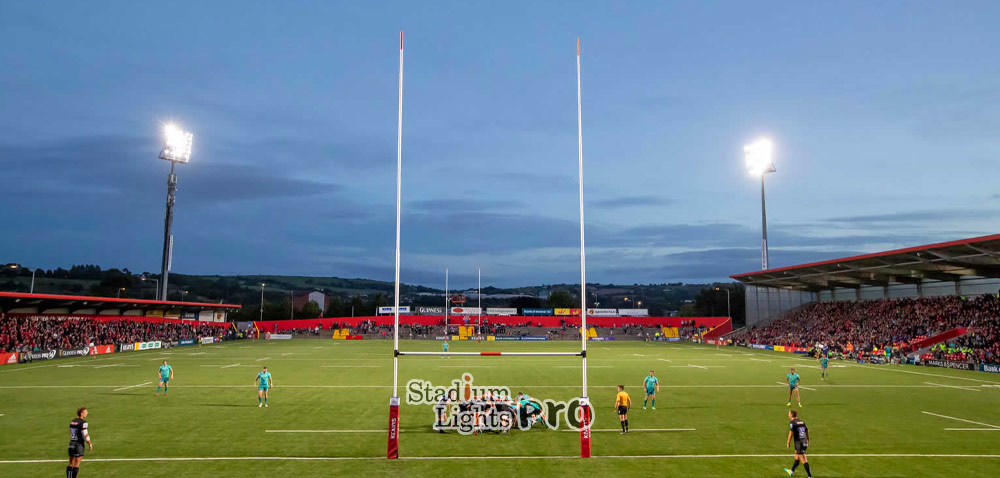
Where the lights are positioned—and how tall the poles are—plays a huge role in both brightness and uniformity. If poles are too short, shadows stretch across the field, particularly during scrums and tackles, which can be dangerous. If they’re too tall, a lot of light gets wasted because it spreads too thin and may spill beyond the field, causing glare for nearby homes or streets.
For a standard rugby pitch, poles generally range from 18 to 35 meters high depending on stadium size, crowd capacity, and surrounding structures. Placement is usually along the sidelines and behind the goal posts, angled so that the light converges on the playing area rather than shining straight into players’ eyes. Some modern stadiums even use twin pole setups or staggered arrays to reduce shadows and improve light uniformity across wider fields, which can be up to 100 meters long and 70 meters wide.
Beam Angle and Spill Light
The beam angle of each fixture affects how the light spreads and how evenly it covers the field. Narrow beams concentrate light in a small area, which can create hot spots and uneven shadows. Wide beams distribute light more evenly but can reduce intensity at the center of the field if not designed properly. Most modern rugby stadiums use medium to wide beam angles between 20 and 40 degrees, depending on the distance of the pole from the playing surface.
Spill light is another concern. This is the light that escapes beyond the pitch and can cause glare or light pollution for neighbors or nearby roads. Proper beam shaping, louvers, and precision optics help direct the light where it’s needed while minimizing waste. Some top-level stadiums even model beam angles digitally before installation to predict coverage patterns and eliminate dark spots.
Types of Luminaires
Choosing the right lights—or luminaires—has a big impact on both performance and long-term costs. LED floodlights have become the go-to option for most rugby fields because they’re energy-efficient, long-lasting, and provide excellent color rendering. A typical 2,000-watt LED luminaire can replace a 4,000-watt metal halide fixture, cutting energy costs nearly in half.
Metal halide and high-pressure sodium lights are still used in some older stadiums, but they have drawbacks. They consume more power, have a shorter lifespan (around 15,000 hours), and take several minutes to reach full brightness. LEDs, on the other hand, can last 50,000 hours or more and reach full brightness instantly, which is particularly useful during sudden night games or power interruptions. Luminaires also vary in beam control, IP rating for water resistance, and glare suppression features, all of which affect how well the field is lit.
Glare Control and Visual Comfort
Nobody enjoys being temporarily blinded during a match, whether you’re a player trying to catch the ball or a spectator watching from the stands. Glare control is all about making sure lights are angled properly and shielded to minimize direct light in the eyes. Even small adjustments—like tilting a floodlight by 5 to 10 degrees—can dramatically improve visibility and reduce eye strain.
For professional stadiums, glare control often involves computer modeling to predict how shadows and reflections will behave across the field at different times of day and night. Using visors, louvers, or shielded luminaires ensures that the lights focus on the field while keeping spectators and players comfortable. This also helps with broadcast quality, as cameras capture cleaner images without bright streaks or hot spots.
Integrating Technology for Precision
Modern rugby field lighting doesn’t just rely on putting poles in the right spot. Many stadiums now use smart control systems that adjust brightness dynamically based on time of day, weather conditions, or game requirements. Some systems allow for zone control, dimming sections of the pitch when full brightness isn’t needed, which saves energy and extends the life of the fixtures.
Combining LED luminaires, adjustable beam angles, and smart controllers can create a stadium environment where the light feels natural, even during intense night matches. It also makes maintenance easier because problems can be detected remotely, and energy consumption can be monitored to keep running costs in check.
Special Lighting Consideration for Broadcast and Media
Higher Lux Levels for Televised Games
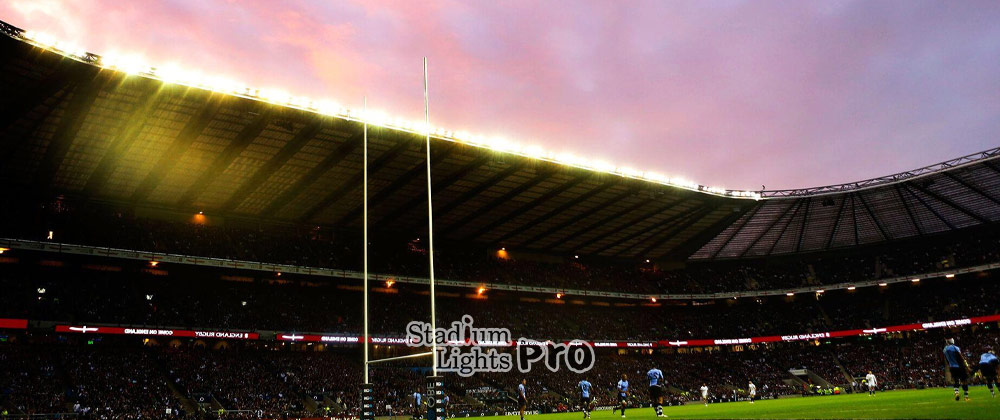
When a rugby match is being televised, the lighting setup suddenly becomes a lot more demanding. Human eyes are forgiving, but cameras pick up every little shadow, glare, or uneven patch. To make sure every tackle, pass, and try looks crisp on screen, stadiums often need higher lux levels than non-broadcast fields. While community pitches might do fine with 200–300 lux, televised matches usually require 600 to 1,200 lux, depending on the league and camera setup. High-level international games can even push above 1,500 lux to meet strict broadcast standards.
It’s not just about making the field brighter. Uniformity is key—cameras notice even minor variations in light that humans barely see. Lighting designers aim for uniformity ratios of 0.8 or higher, meaning that shadows are minimal and every part of the pitch is evenly illuminated. Flicker-free lighting is also critical, especially for slow-motion cameras that record up to 1,000 frames per second. Any flicker from traditional lights can ruin replay quality, so LED luminaires are usually preferred for broadcast-level setups.
Color Temperature and Visual Accuracy
Another often-overlooked factor is color temperature. Broadcasters want the pitch to look vibrant but natural, with the grass appearing rich green and players’ jerseys showing true colors. Most broadcast-quality setups aim for a color temperature of 5,500 to 6,500 Kelvin, which mimics daylight and reduces post-production adjustments. Some stadiums even use tunable LEDs that allow for fine adjustments depending on the time of day, cloud cover, or TV broadcast requirements.
Considering Camera Angles
Lighting for broadcast isn’t just about vertical brightness—it has to account for multiple camera angles. End-to-end cameras, sideline cameras, and high-angle shots all interact differently with shadows and reflections. Poorly positioned lights can create streaks, hotspots, or dark patches that look strange on TV. For example, a single glare from a poorly angled floodlight can make a player’s jersey appear washed out on a main camera, even if it looks fine to spectators in the stands.
To solve this, stadium designers often create 3D lighting models of the pitch, testing how light falls from every pole to every corner. These simulations help ensure that every angle—from broadcast cameras to mobile media platforms—gets consistent, clean illumination without interference from reflections or glare.
Glare Control for Media
Glare control is also amplified when TV cameras are involved. Even a small amount of direct light hitting a lens can create flares or streaks that ruin key moments in slow-motion replays. To prevent this, stadiums use shielded luminaires, anti-glare lenses, and precise beam aiming, often combined with dimming zones to control light levels dynamically. This way, players aren’t blinded mid-game, and every tackle, kick, or try looks sharp on broadcast feeds.
Integration with Modern Broadcast Technology
Modern rugby stadiums also integrate lighting systems with broadcast control rooms. Lighting intensity can be adjusted in real-time to suit live streams, high-definition cameras, or slow-motion rigs. Some setups even allow programmed lighting sequences for pre-game shows or evening events, ensuring that the stadium’s visual appeal is consistent whether it’s a daytime match or a prime-time broadcast.
Cost and Budgeting
Average Cost to Buy and Install Stadium Lights
Lighting a rugby field is definitely an investment. For a standard community or amateur field, a full LED setup can run anywhere between $30,000 and $50,000, including poles, luminaires, and basic installation. Once you move up to professional stadiums designed for international games or televised events, the numbers jump significantly. A high-end stadium lighting system can easily hit $500,000 to $1 million, sometimes more depending on the scale of the venue and broadcast requirements.
Several factors influence the cost. Pole height is a big one—taller poles need stronger foundations and more advanced fixtures. The number of luminaires also matters; a smaller field might only need 20 to 30 high-quality LEDs, while a stadium hosting 50,000 fans could require 60 or more fixtures. Installation itself isn’t cheap either. Trenching for cables, connecting power lines, and setting up control systems can easily add tens of thousands of dollars to the final bill. And if you want things like dimming zones, smart controls, or integration with broadcast systems, that can push costs even higher.
Running Expenses
Once your lights are up, the next question is how much it costs to keep them running. LED lights may have a higher upfront cost, but they save a lot of money over time. They typically consume around 50% less electricity than older metal halide systems. On a standard 100-meter by 70-meter rugby pitch, running a full LED system for a 3-hour night match usually costs about $200 to $300 in electricity, compared to $400 to $600 if you’re still using metal halide.
Maintenance is another factor. LEDs can last 50,000 hours or more, meaning they might not need replacement for over 10 years if used moderately. Metal halides, by contrast, last about 15,000 hours and require frequent bulb swaps, which adds both cost and downtime. Smart lighting controls can also reduce running costs by dimming lights in unused zones or adjusting brightness based on natural light conditions.
Funding and Grants Available
If budget is tight, there are ways to ease the financial burden. Many local governments, sports councils, and rugby associations offer grants or subsidies for upgrading sports facilities, particularly if the upgrade improves player safety or community access. Energy-efficiency programs can also help, especially for LED installations, where you might get rebates or tax incentives for reducing energy consumption.
Clubs can also consider sponsorships or partnerships. A well-lit stadium is more appealing for televised matches or evening events, which can attract sponsors willing to contribute to the cost of installation or maintenance. Crowdfunding or community fundraising campaigns can also work, particularly if the pitch is a local hub for youth and amateur rugby.
In short, while the upfront investment for rugby field lighting can be significant, careful planning, energy-efficient fixtures, and exploring funding options can make it much more manageable. Over time, good lighting doesn’t just pay for itself—it can boost stadium usability, player performance, and even revenue from events and broadcasts.
Importance of Good Lighting in Rugby Field
Player Performance and Safety
Good lighting goes far beyond making the pitch look nice. It directly affects how the game is played. Rugby is a fast-moving sport, and players need to track the ball, teammates, and opponents in real-time. Even a small shadow or dim corner can lead to misjudged passes or tackles, increasing the risk of injuries. Clear, consistent lighting allows players to react quickly, judge distances accurately, and maintain coordination—especially during night games or in stadiums with high stands that block natural light.
Research shows that well-illuminated fields can reduce on-field accidents by up to 20%, particularly in amateur and semi-professional leagues where players might not be used to evening matches. For example, proper uniform lighting ensures that lineouts, scrums, and kicks are executed more safely because players can better anticipate movement across the whole pitch.
Enhancing Spectator Experience
Lighting also plays a huge role in how spectators experience the game. Fans in the stands or watching from home enjoy a match far more when every tackle, pass, and try is visible without straining their eyes. Poor lighting can make the game feel blurry or disjointed, which can reduce engagement. For televised games, inconsistent lighting can ruin camera shots, with shadows or bright spots making it hard to follow the ball or action. Stadiums aiming for 500–800 lux not only improve player visibility but make the match visually satisfying for thousands of fans in attendance and millions watching on screens.
Boosting Attendance and Revenue
Well-designed lighting can also have a tangible financial impact. A stadium that feels safe, well-lit, and visually appealing encourages fans to arrive early, stay longer, and return for future matches. This naturally boosts concessions, merchandise sales, and ticket revenue. For professional venues, even a 5–10% increase in attendance from improved lighting can translate into tens of thousands of dollars per match.
Enabling Broadcast and Media Opportunities
Having high-quality lighting opens the door to bigger events and media coverage. Venues equipped with broadcast-level illumination—uniform lighting above 1,000 lux, flicker-free LEDs, and controlled glare—can host televised league games, international matches, or tournaments. This exposure not only elevates the stadium’s profile but can generate sponsorship deals, advertising revenue, and long-term partnerships with media networks. In many cases, investing in good lighting pays off multiple times over through enhanced revenue streams and wider audience reach.
Community and Multi-Purpose Benefits
Finally, good lighting makes a stadium more versatile. Fields can host evening training sessions, youth leagues, or community events safely, extending the usage hours well beyond daylight. For local clubs, this means more engagement, higher participation, and even opportunities for rental income from external events. By combining safety, visibility, and media readiness, lighting transforms a standard rugby pitch into a venue that works for everyone—players, fans, and organizers alike.
Conclusion
Rugby field lighting might not grab headlines, but it’s a huge part of what makes matches run smoothly and look amazing. From choosing the right brightness and beam angles to figuring out pole placement and glare control, each decision has a ripple effect on player performance, spectator experience, and media quality. While it takes careful planning and a solid budget, the payoff is a field that looks great, plays well, and can even become a draw for bigger events. Lighting isn’t just illumination—it’s part of the rugby experience, shaping every tackle, try, and cheer that happens under the floodlights.