Common Lighting Technologies in Use
Metal Halide Systems
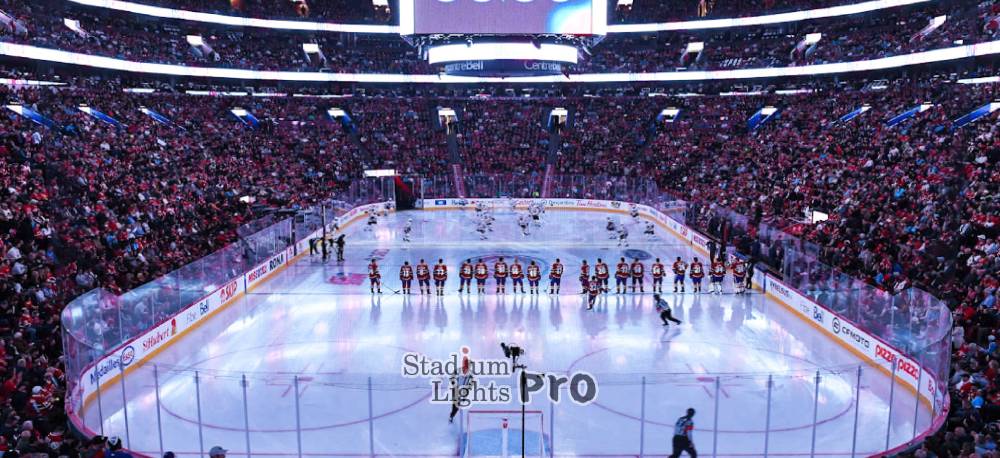
Metal halide fixtures were long considered a standard for indoor sports lighting, including hockey. These lights produce high-intensity output and cover large areas effectively. Their color rendering and brightness meet many performance needs, but they do come with drawbacks. The warm-up time is lengthy, and once turned off, they require a cooldown period before restarting. Additionally, energy consumption is on the higher end, and lamp replacement is frequent due to shorter lifespan.
LED Lighting Solutions
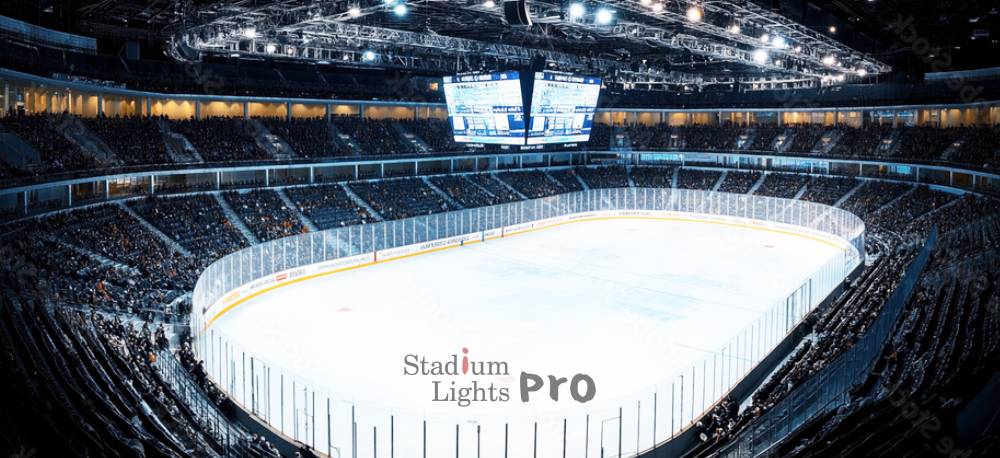
LED lighting has become a common upgrade in recent years. These systems offer a wide range of benefits, such as longer operational life, minimal warm-up times, and lower energy consumption. LEDs can also be configured for dynamic controls, allowing arena operators to adjust brightness, direction, and even colors for pre-game shows or intermissions. They provide a uniform light field that reduces shadows and helps cameras maintain better clarity during fast motion.
Fluorescent and Legacy Fixtures
Some older or smaller facilities still rely on fluorescent lighting or older incandescent fixtures. While functional, these options often fall short in delivering the uniformity and brightness expected in modern rinks. Their inefficiency and maintenance demands often drive rink managers to consider replacements as funding allows.
Design Priorities in Ice Rink Lighting
| Rink Use |
Recommended Lux Levels |
Purpose and Considerations |
| Recreational and Training Environments |
300 – 500 lux |
Provides adequate light for safe movement and casual games. Prioritizes comfort and energy savings over high performance. Broad beam angles and wider fixture spacing are used to ensure general coverage. |
| Competitive Match and League Play |
800 – 1000 lux |
Increases game visibility for fast-paced play, accurate puck tracking, and enhanced spatial awareness for coaches and referees. Requires consistent lighting across the rink with no shadows or variations in brightness. |
| Professional and Broadcasted Events |
1200 – 1500 lux |
Supports high-quality broadcast, ensuring clarity under high-speed motion and various camera angles. Prevents glare and lens flare, with specialized broadcast optics and low flicker rates to maintain visual fidelity. |
Recommended Lux Levels for Various Rink Uses
Lux levels measure the amount of luminous flux per unit area and are a foundational aspect of lighting design for ice rinks. Because ice is both reflective and expansive, the quantity and quality of light play a vital role in how well the game is seen and played.
Lighting requirements vary depending on the purpose of the rink, ranging from casual skating to professional broadcasts. Understanding how to tailor
lux levels to each situation ensures that players and spectators get the most from the facility.
Lux Levels for Recreational and Training Environments
Recreational rinks or those used primarily for training do not need the same degree of intensity found in competitive arenas. These environments benefit from moderate
lux levels, typically between
300 and
500 lux. This range offers enough light for skaters to move safely, coaches to observe player movement, and casual games to proceed without visual strain. At this level, energy consumption is lower, making it a cost-effective solution for facilities where high-end performance is not a priority.
These settings often prioritize comfort and
energy savings over elite visibility. Lighting solutions in these cases may rely on broader beam angles and wider spacing, ensuring general coverage rather than precision targeting. While
color quality and uniformity are still relevant, they are balanced against affordability and operating hours.
Competitive Match and League Play Requirements
Rinks designed for league matches, tournaments, and semi-professional play require higher
lux levels—typically ranging from
800 to
1000 lux. In this setting, the pace of the game increases and accurate puck tracking becomes vital. Fast transitions, precise puck handling, and long-distance passes demand that the entire surface be clearly visible without shadows or variation in brightness.
Increased
lux levels in competitive settings also support coaches, referees, and scorekeepers by enhancing depth perception and spatial awareness. The lighting must support both horizontal and vertical movement while making sure players remain distinguishable from the background and each other, regardless of where they are on the rink.
Lighting for Professional and Broadcasted Events
For televised games and professional-level tournaments,
lux levels must often reach between
1200 and
1500 lux. These elevated values are not solely for gameplay but also for ensuring high-quality image capture. Broadcast lighting must maintain clarity under high-speed motion and variable camera angles, all while preventing glare or lens flare. These rinks must also meet strict lighting guidelines provided by broadcasters and sports federations.
Cameras need consistent brightness and
color rendering across every inch of the ice. Shadows or areas with poor lighting can create visual artifacts on screen and reduce the quality of the broadcast. Lighting designers use advanced simulation software to model
glare control,
lux uniformity, and fixture behavior before the installation phase. In many cases, specialized fixtures with broadcast-rated optics and low flicker rates are selected to maintain visual fidelity.
Even Distribution Across the Ice
Uniform lighting across the entire surface is a foundational element in ice rink design. A well-lit rink ensures that players can maintain spatial awareness, accurately judge distances, and stay engaged with the game flow. Inconsistencies in brightness or dark patches across the ice can lead to missed passes, misjudged puck movement, or delayed reactions. For referees, consistent light helps with interpreting plays and enforcing rules with greater precision.
The lighting grid must be carefully engineered, with fixtures placed and angled to deliver balanced coverage from one end of the rink to the other. Mounting height, beam angle, and luminaire type must be selected to reduce vertical shadows and avoid excessive brightness in localized areas. This configuration allows for a seamless playing experience where lighting becomes a supportive background element rather than a distraction.
Color Quality and Temperature
The visual appearance of the ice and surroundings is strongly influenced by
color temperature. Lights that produce a
color temperature in the
5000K to
6000K range generally produce a clean, white light that closely resembles daylight. This spectrum brings out the crisp contrast between white ice, black pucks, and colored jerseys, improving the clarity of fast-paced gameplay for both players and spectators.
Color rendering index (CRI) also plays a role in perception. Higher CRI values, closer to
90 or above, allow more accurate differentiation of colors. This is particularly helpful in televised games and during moments of visual congestion when player movement is dense. Poor color balance or lighting that’s overly warm or cold in tone can make it harder to identify players and puck location, especially in peripheral areas of the ice.
Managing Reflections on the Ice
The unique nature of ice as a reflective surface adds an extra layer of complexity to rink lighting design. Smooth, polished ice can create mirrored reflections and
glare if lighting is not properly managed. These glare points can distort player vision and reduce depth perception, especially in fast transitions or when tracking the puck along the boards.
Reducing glare involves selecting light fixtures with precise
beam control and careful aiming. Indirect lighting techniques, such as bouncing light off ceilings or walls, can also minimize the chance of harsh reflections. Some setups utilize
diffusers to soften the light before it reaches the ice surface, spreading it more evenly and reducing sharp, concentrated points of brightness.
Choosing Lights with the Right Temperature to Protect Ice Integrity
Color temperature plays a major role in how lighting looks on the ice, but it also relates directly to the physical impact of lighting systems on ice maintenance. Ice is a delicate surface that relies on stable temperatures to perform consistently. When lighting systems emit
heat, especially over long durations or at high intensities, the surface can begin to soften, leading to uneven skating conditions, higher energy costs, and increased wear on refrigeration systems.
Why Ice Temperature Stability Matters
A high-performing ice surface depends on keeping the temperature within a narrow range. Even minor variations caused by radiant heat from lighting can degrade surface quality. Softer patches can develop where heat is concentrated, leading to inconsistent puck behavior, disrupted skating rhythm, and even player safety concerns. Softer ice absorbs more energy from skates, slowing movement and increasing fatigue. Maintaining
temperature integrity is also essential for long events, where lighting remains on for hours.
Infrared Radiation and Its Effects
Traditional lighting systems, such as halogen and metal halide fixtures, release large amounts of
infrared radiation. This invisible heat energy travels in direct lines and warms surfaces it contacts—including the ice. When multiple high-heat fixtures are mounted above the rink, their cumulative output increases the load on
cooling systems, requiring compressors to work harder and consume more power to preserve ice quality.
This increased energy demand leads to higher operational costs and accelerates wear on refrigeration components. Over time, this can result in the need for more frequent maintenance and potentially shorten the life span of rink equipment.
LED Fixtures Minimize Radiant Heat
LED technology has become a preferred solution for ice rinks due to its low radiant heat profile. Unlike older systems, LEDs convert most of their energy into visible light rather than heat. This reduces their thermal footprint and allows them to be operated for long periods without affecting surface temperature.
High-efficiency
LED fixtures can also be tuned to specific
color temperatures, generally between
5000K and
6000K. This range delivers bright, clear light that supports player visibility while staying close to natural daylight in tone. It also ensures that the rink maintains consistent appearance for spectators and video capture without radiating excess heat downward.
Thermal Management in Fixture Design
Well-designed
LED luminaires include built-in
thermal management features that help dissipate residual heat. These include
heat sinks, airflow channels, and insulated housings that prevent any warmth generated by the fixture from traveling toward the ice. By isolating the light-producing components from heat-sensitive areas, manufacturers ensure that lighting systems can perform efficiently in cold environments without contributing to surface instability.
Some fixtures also incorporate active
cooling systems, like miniature fans or phase-change materials, which regulate internal temperatures. This extra layer of control prevents performance degradation over time and contributes to the long-term success of rink lighting strategies.
Fixture Positioning and Directional Control
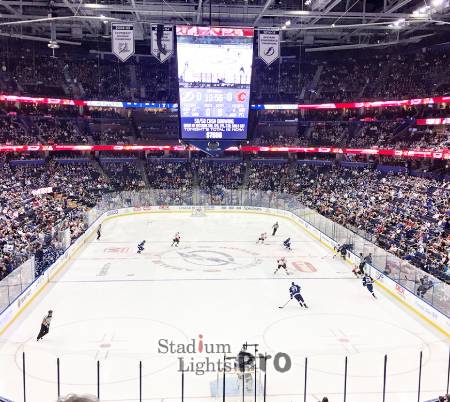
Heat impact isn’t just about fixture type—it also depends on where the lights are placed and how they are aimed. Even a low-heat fixture can contribute to surface warming if it’s positioned too close to the ice or pointed directly downward. Elevating fixtures and angling them properly distributes light more evenly while reducing the intensity of any residual heat reaching the ice.
Directional optics are often used to narrow the beam spread and focus light only where it’s needed. This approach not only enhances visual clarity but also avoids excess energy being directed toward the rink surface. The more precisely light is delivered, the less risk there is of unwanted warming or glare.
Ice Surface Longevity and Refrigeration Efficiency
Protecting the ice from unnecessary heat does more than preserve gameplay quality—it extends the lifespan of the entire rink infrastructure. When lighting systems are optimized to limit
heat output, refrigeration systems don’t have to compensate for added thermal load. This reduces
energy usage and minimizes the strain on chillers, pipes, and surface systems, all of which are critical to rink operation.
Less frequent cycling of compressors and fewer fluctuations in ice temperature contribute to smoother performance, fewer shutdowns for repairs, and overall lower utility costs. Over the long run, this adds up to substantial savings while preserving ideal skating and game conditions.
Directional Control and Beam Shaping
Beyond the type of fixture, how the light is delivered matters just as much. Fixtures with poorly controlled beam patterns can scatter light and heat inefficiently, with some of that energy reaching the ice directly and warming it over time. Modern
LED luminaires designed for sports settings often include optics that focus light downward in a narrow, controlled beam while diffusing excess brightness that would otherwise contribute to heat concentration.
Using precision optics and
beam shaping allows lighting designers to deliver just the right amount of light to specific zones of the rink without flooding the surface with thermal energy. This level of control is especially useful in indoor arenas where airflow is limited, and heat can build up more easily above the ice.
Illumination Standards and Guidance
Professional League Benchmarks
Top-tier leagues such as the
NHL operate under strict lighting requirements that go far beyond basic visibility. These guidelines address
horizontal illuminance (how much light hits the playing surface),
vertical illuminance (how well players are lit from multiple angles), and
uniformity ratios that ensure even lighting throughout the rink. Maintaining consistent brightness from one end of the rink to the other helps players perform reliably and enhances the accuracy of referee calls.
Broadcast and Media Requirements
Professional games are often broadcast in
ultra-high definition, which requires precise lighting to prevent shadows, ensure facial visibility, and capture fine details like puck movement. Lighting must eliminate
flicker, which can interfere with slow-motion replays or cause banding on video feeds. To support high frame rate capture and streaming demands, modern rinks use
flicker-free drivers and high
color rendering index (CRI) fixtures to ensure accurate color reproduction.
Compliance and Technical Standards
Standards from organizations like the
Illuminating Engineering Society (IES) and international sports lighting bodies define target
lux levels and
color consistency for professional settings. For example, televised arenas might require horizontal illuminance levels of 1200 to 2000 lux, depending on the level of play and camera placements. Vertical illuminance in those environments must also be carefully considered so that players are well-lit when moving toward or away from the main cameras.
Community Rink Expectations
Community-level rinks are typically designed with practicality and affordability in mind. While they don’t need to meet broadcast requirements, they still require thoughtful lighting to provide a safe and enjoyable experience for skaters, players, and spectators. Organizations like
USA Hockey, the
International Ice Hockey Federation (IIHF), and local municipal boards offer baseline recommendations for illumination to support youth leagues, public skating, and intramural sports.
Meeting the Needs of Diverse Users
Community rinks serve a broad range of users, from young children in hockey training programs to adults enjoying recreational skating. Proper lighting ensures that users of all skill levels can navigate the ice safely. This often translates to horizontal illuminance levels between
300 and 500 lux, depending on the age of users and the type of activity. Spectator areas and walkways also benefit from consistent lighting to enhance visibility and reduce accidents.
Balancing Quality and Budget
Smaller arenas must often work within constrained budgets. As a result, they rely on cost-effective fixtures that provide good performance with low maintenance. Many communities are transitioning from older high-pressure sodium or metal halide systems to
LED retrofits, which offer longer life cycles and reduced power demand. Choosing a solution that balances
durability with affordability helps these rinks deliver a stable lighting environment without creating unsustainable operating costs.
Energy Considerations and Operating Costs
Power Use Across Technologies
Lighting technology plays a major role in the overall energy footprint of an ice rink. Older systems, such as
metal halide or
halogen, consume a large amount of electricity and require time to warm up to full brightness. These fixtures often operate at wattages between
400 and 1500 watts per unit, with many units needed to reach the desired brightness. This results in substantial
utility bills and increased
HVAC load, particularly in temperature-controlled environments like ice rinks.
Efficiency of LED Systems
In contrast,
LED technology has transformed energy efficiency in sports lighting.
LED fixtures can achieve equivalent or higher brightness at nearly half the power draw. Typical LEDs range between
150 and 600 watts per fixture, yet deliver superior
luminous output. Their
instant-on capabilities also eliminate the need for extended warm-up periods, reducing unnecessary runtime and lowering
energy costs.
The
directional nature of LEDs further enhances efficiency, since more light reaches the ice and less is wasted in the rafters or directed at seating areas where high brightness is not required.
Long-Term Value and Payback
Investing in modern lighting systems brings long-term value that extends beyond monthly
utility savings. LEDs boast
lifespans of
50,000 to 100,000 hours, drastically reducing the frequency of replacements. This not only minimizes downtime but also cuts
labor costs associated with servicing high-mounted fixtures in difficult-to-reach places. Since lighting maintenance often requires specialized lifts or scaffolding, fewer service intervals mean less operational disruption.
Return on Investment
Although the initial investment for LED systems can be higher than legacy systems, the lower ongoing costs frequently lead to a favorable
return on investment. When
energy savings are combined with reduced maintenance, many rinks report full payback within
three to five years.
Rebates from utility companies or government energy-efficiency grants can further shorten the payback period.
Smart Controls and Additional Savings
Modern
LED systems can be integrated with
smart lighting controls, allowing rinks to adjust brightness based on
time of day,
type of activity, or
occupancy. During practice sessions or public skating, lighting can be dimmed to reduce
energy consumption without compromising visibility.
Sensors and
timers also help prevent lights from running when the rink is unoccupied, further conserving power.
These control systems can be accessed remotely or integrated into
facility management software, offering arena managers
real-time data on usage and performance. Over time, this data enables fine-tuning of schedules and settings for maximum efficiency.
Environmental Benefits
In addition to financial savings,
energy-efficient lighting contributes to
environmental goals. Reduced
electricity usage means lower
greenhouse gas emissions, particularly if the energy grid relies on fossil fuels. Some rinks pursue certifications such as
LEED or
ENERGY STAR as part of broader
sustainability initiatives, and efficient lighting plays a key role in meeting those standards.
By lowering overall energy consumption and optimizing performance, modern lighting strategies support both financial and environmental stewardship—goals that align well with
community values and long-term facility planning.
Installation and Upkeep of Lighting Systems
New Builds and Retrofitting
When constructing a new ice rink,
lighting design can be seamlessly integrated into the overall architectural and electrical planning process. This allows engineers and designers to map out
fixture placement,
mounting height,
wiring paths, and
control system accessibility without the constraints of existing infrastructure. The result is often a cleaner, more efficient installation that maximizes performance and minimizes installation complications.
Design Integration Benefits
Integrating lighting at the design stage enables optimized
fixture spacing and angles, which helps avoid issues like
glare,
shadowing, and
light spill. It also allows space for future upgrades, with
conduits and
controls positioned to accommodate newer technologies as they emerge. By coordinating lighting with
HVAC,
scoreboard systems, and
camera mounts, designers can create a more cohesive and efficient venue layout.
Retrofitting Existing Arenas
For older rinks,
retrofitting presents a cost-effective alternative to complete overhaul. Modern
LED lighting systems are frequently engineered to be compatible with
legacy mounting points and
electrical lines, reducing the time and expense of rewiring. This compatibility allows for straightforward upgrades that offer substantial performance benefits without the need for
architectural modifications or prolonged facility closures.
Retrofitting can involve
fixture-for-fixture replacements or partial upgrades, depending on
budget constraints and immediate lighting goals. In many cases, rinks upgrade incrementally, targeting the main playing surface first and expanding to auxiliary areas over time as funds allow.
Installation Costs and Labor
Installation costs vary based on
fixture type, number of units,
mounting complexity, and
control systems. For a full-sized ice rink, lighting installation—whether new or retrofitted—can range from
$50,000 to $150,000 depending on the quality of equipment and labor rates. Retrofits tend to cost less, particularly if the existing electrical system is in good condition.
Labor expenses can be reduced by working with contractors experienced in
sports facility lighting. Using
modular LED fixtures that are pre-tested and pre-configured also shortens installation timelines and helps avoid unexpected wiring or compatibility issues.
Routine Care and System Reliability
Once installed, lighting systems must be maintained to perform consistently over time.
Dust buildup,
misalignment, and
aging components can gradually degrade light quality. Establishing a regular
maintenance routine ensures that
brightness levels,
uniformity, and
color accuracy remain within target parameters.
Typical Maintenance Activities
Standard care involves
cleaning lenses and reflectors to prevent diffusion loss, checking fixture alignment to preserve uniformity, and inspecting mounting hardware for wear. For traditional systems,
lamp replacement is a frequent task, sometimes requiring
lifts or
scaffolding, which adds to cost and time.
LEDs reduce this burden, but still benefit from periodic checks of
drivers,
wiring, and
thermal performance to detect issues before they cause outages.
Predictive vs. Reactive Maintenance
Facilities that use
smart lighting controls can take advantage of
predictive maintenance, where system software alerts staff to irregular performance or power fluctuations. This proactive approach helps avoid reactive maintenance, which often results in unplanned downtime or the need for last-minute labor. Preventing failures before they impact games or events improves
reliability and reduces long-term expenses.
Costs Over Time
Operating costs for lighting systems extend beyond
energy usage to include
maintenance labor,
equipment replacement, and
lifecycle management. Traditional systems may have lower upfront costs, but they often incur higher operational expenses due to shorter lamp lifespans and frequent maintenance. A
metal halide fixture, for example, may last 6,000 to 10,000 hours, while a quality
LED fixture can exceed 50,000 hours with minimal degradation.
Comparing Total Cost of Ownership
When comparing systems,
total cost of ownership (TCO) offers a clearer financial picture than initial investment alone.
LED systems tend to have a higher purchase price, but their longevity, reduced maintenance needs, and superior
energy efficiency usually lead to savings over the course of 5 to 10 years. For example, replacing a full rink of
metal halide fixtures with
LEDs could reduce
energy use by up to 60%, saving tens of thousands of dollars annually.
Budget Planning for Upgrades
Planning for lighting upgrades or maintenance requires a multi-year outlook. Many facilities establish a
capital reserve for lighting based on predicted service intervals and the age of existing fixtures. Partnering with
energy consultants or
equipment vendors can also uncover
rebate programs or
financing plans that spread costs over time. In some regions,
utility rebates for energy-efficient upgrades can cover 20% to 40% of project costs.
Lifecycle Management and Sustainability
Beyond performance, lighting systems contribute to a facility’s long-term sustainability goals.
LEDs not only use less power, but also contain no
mercury or
hazardous materials, making
disposal easier and safer. Fixtures with replaceable components allow facilities to swap out
drivers or
lenses without replacing the full unit, reducing waste and extending service life.
Environmental and Operational Impact
LED lighting reduces
carbon emissions through decreased
electricity use, which is particularly impactful in regions powered by
fossil fuel-based energy grids. Fewer service intervals also mean less
lift operation, fewer disruptions, and reduced safety risks for
maintenance staff. These
operational advantages align with broader objectives in facility design, where
efficiency,
safety, and
environmental responsibility are increasingly emphasized.
How Lighting Shapes the Experience
For Players and Coaches
Lighting affects how well athletes can track the
puck, read body movements, and anticipate plays. Subtle shifts in lighting uniformity can influence a
goalie’s depth perception or a
forward’s accuracy on a shot.
Coaches also benefit when visibility allows them to better assess
formations,
performance, and tactical opportunities in real time.
For Fans and Media Teams
Spectators appreciate clear, evenly lit rinks where every detail is visible from the stands.
Lighting can amplify crowd excitement, especially when integrated with
music,
effects, and
pre-game shows. For those watching on screens, modern
lighting ensures high-definition
video capture, supporting
frame-by-frame replays and immersive viewing experiences.
Media crews rely on accurate lighting to manage
color correction and avoid
motion blur during live broadcasting.
Conclusion
Lighting in ice hockey rinks goes far beyond basic illumination. From enhancing player visibility to elevating audience engagement, its presence touches every part of the game. The shift toward LED systems offers greater control, efficiency, and versatility, allowing rinks of all sizes to improve their environments. Design decisions must consider brightness, color quality, reflection control, and long-term value, whether in a community facility or a professional arena. As technology evolves, lighting will continue to be a central feature in shaping how hockey is played, viewed, and experienced, bringing a modern edge to one of the sport’s most enduring traditions.