
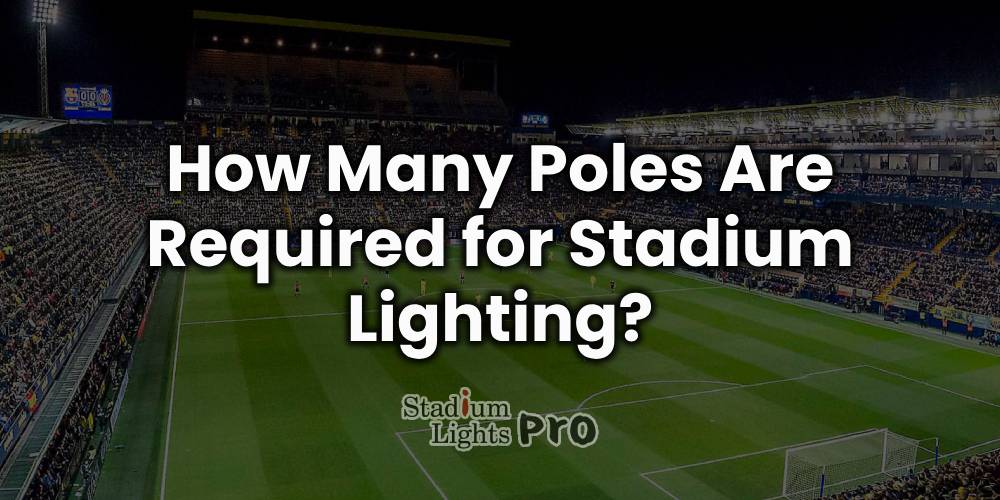
Lighting a stadium involves more than simply placing poles and mounting fixtures. It requires a well-thought-out approach that balances performance, visibility, safety, and aesthetics. At the foundation of this process is the number and placement of lighting poles, which directly influence how evenly light spreads across the field. A successful layout minimizes shadows and glare while maximizing coverage and uniformity. The number of poles isn’t standardized; instead, it is tailored to suit each stadium’s unique features.
Field Dimensions and Their Influence on Pole Quantity
| Sport | Typical Field Dimensions | Approx. Area (sq ft) | Typical Pole Count | Lux Requirement |
|---|---|---|---|---|
| Soccer (FIFA) | 110–120 yds × 70–80 yds | 77,000–96,000 | 6–12 | 500–1,200 lux (broadcast) |
| American Football | 120 yds × 53.3 yds | 57,600 | 4–8 | 300–1,200 lux |
| Baseball | Varies (300–410 ft outfield) | 65,000–90,000 (est.) | 6–10 | 500–1,000 lux |
| Cricket | Up to 500 ft diameter | Up to 160,000 | 8–12 | 800–2,000 lux |
| Multi-Use (Soccer/Rugby/Lacrosse) | Varies by event | 60,000–100,000 | 6–12 (flexible design) | 400–1,000 lux |
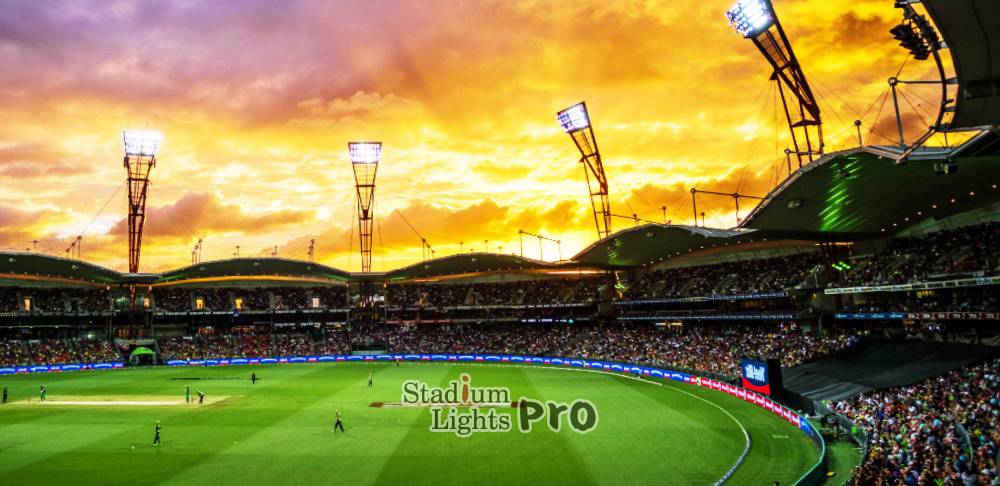
One of the most foundational elements in stadium lighting design is the overall size and shape of the playing field. These parameters directly determine how many lighting poles are required and how those poles must be positioned to achieve uniform illumination. In general, a larger surface area increases the demand for higher pole counts or more powerful fixtures. For instance, lighting a 100,000-square-foot field compared to a 60,000-square-foot one results in different coverage challenges. The aim is to eliminate any shadows or under-lit areas regardless of whether the venue is a 3,000-seat high school stadium or a 70,000-seat professional arena.
Variation in Field Sizes by Sport
Each sport brings its own unique set of dimensions, impacting how many poles are needed for complete illumination. A FIFA-regulation soccer field typically measures 110 to 120 yards in length and 70 to 80 yards in width, covering approximately 77,000 to 96,000 square feet. An American football field, including end zones, is 360 feet long and 160 feet wide, totaling 57,600 square feet. Baseball fields are more complex due to their non-rectangular layout, with distances to outfield fences often ranging from 300 to 410 feet and requiring asymmetrical lighting setups. A full-size cricket field can span up to 160,000 square feet, demanding a highly coordinated lighting grid. The larger the playing area, the more intricate the pole configuration becomes, often requiring 6, 8, or even 12 poles strategically placed at varying heights and beam angles.
Impact of Perimeter Length and Sightline Zones
Field area isn’t the only factor—perimeter dimensions and surrounding zones influence lighting pole quantity as well. A standard football field perimeter is approximately 1,040 feet, while a full-size track-and-field stadium perimeter may reach 1,320 feet or more. This additional space between the edge of the field and the stands or track can mean poles must be spaced farther out and positioned higher, which sometimes requires using 80- to 100-foot tall poles. To avoid glare and maintain uniformity, the light angle must compensate for this distance, often increasing the number of poles from six to eight or more. If a facility includes bleachers on all sides or has steep grandstands, the poles must also be placed in a way that preserves clear sightlines for fans while avoiding shadow zones on the playing surface.
Heightened Requirements for Professional and Broadcast Fields
For stadiums used in televised games or professional competitions, lighting requirements are often set by organizations such as FIFA, the NFL, or broadcasting agencies. For HD broadcasting, fields must meet lux levels ranging from 1,000 to 2,000 lux, with uniformity ratios typically greater than 0.7. A high school field may need 30–50 foot-candles (approx. 300–500 lux), while a pro stadium must exceed 1,200 lux. Achieving such high standards often requires using more poles and advanced optics to ensure that every corner, sideline, and end zone is evenly lit. Broadcast fields usually incorporate 8 to 12 poles with high-wattage LED fixtures capable of delivering precise beam control. These setups may also feature dual-level lighting modes to switch between practice and event configurations, further affecting pole count and placement strategy.
Design Adaptability for Multi-Use Fields
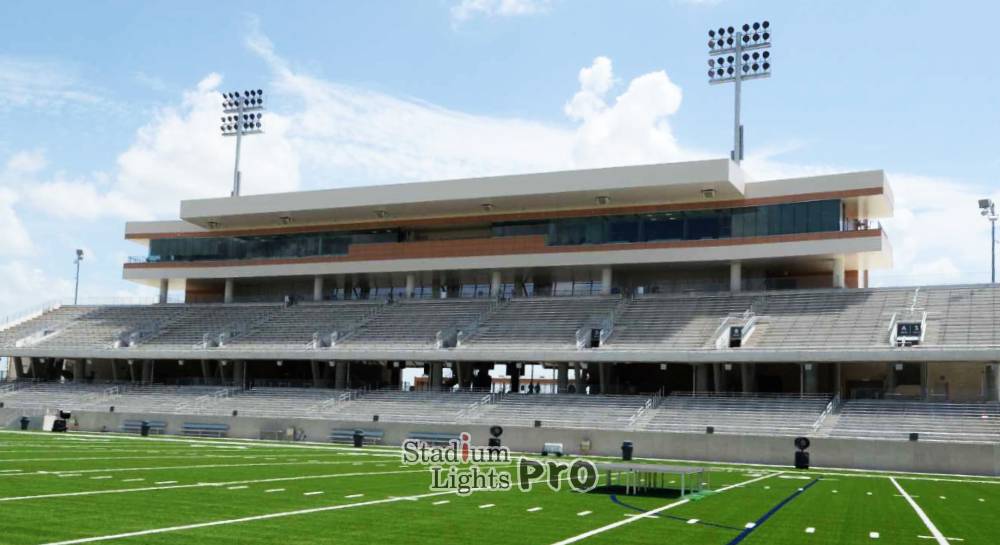
Multi-sport stadiums add another layer of complexity, as the field layout can change frequently. A field used for both soccer and rugby may shift its effective boundaries and action zones by several meters depending on the sport. Similarly, lacrosse and American football may share a field but differ in goal placement and width of play. In these cases, lighting designers often use adjustable beam fixtures or multi-angle poles that can adapt to different layouts. Pole configurations must account for these shifting requirements, and the number of poles might be increased to allow for greater flexibility. Instead of a symmetrical four-pole setup, designers may opt for an eight-pole system, where fixtures can be aimed or adjusted according to the sport being played. This type of versatility also accommodates temporary events, such as concerts or track meets, which may require lighting zones beyond the regular playing area.
Ultimately, the dimensions of the field and its surrounding infrastructure are central to determining the correct number of poles for stadium lighting. From a modest 50,000-square-foot local field requiring four 50-foot poles, to a 100,000-square-foot pro arena needing a dozen 100-foot poles, the calculation must take into account area, perimeter, broadcast needs, and usage versatility. Each of these variables influences the overall pole layout and fixture selection. A well-designed lighting system not only provides the required illumination levels but does so efficiently, with minimal waste and maximum comfort for players and spectators alike.
Height and Spacing Considerations for Poles
The vertical and horizontal positioning of lighting poles defines the core geometry of any stadium lighting system. The height of the poles determines how widely and evenly light can be distributed across the playing area, while the spacing between poles controls how that light overlaps and blends from fixture to fixture. Both factors are interdependent and must be carefully coordinated to avoid common problems such as dark spots, over-illumination, and inconsistent brightness levels that can interfere with both gameplay and spectator comfort.
Benefits and Challenges of Using Taller Poles
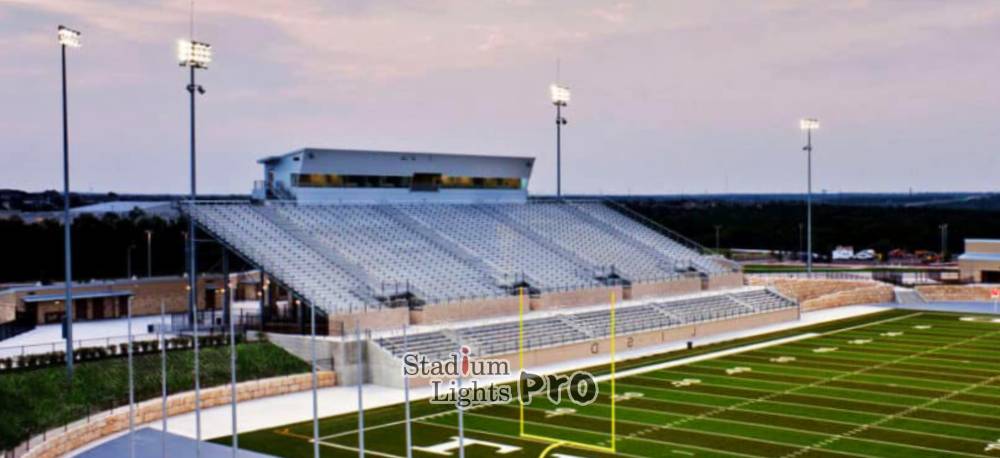
Taller poles offer a wider lighting footprint, allowing fixtures to project light over longer distances. This helps reduce the number of poles required for large or open stadiums. By elevating the light source, designers can improve light uniformity across vast stretches of the field, often achieving a more balanced illumination. However, this height introduces its own set of challenges. Stronger materials and deeper foundations are needed to support taller structures, especially in regions with high winds or seismic activity. Taller poles also demand more powerful fixtures to maintain sufficient intensity at ground level, which can increase energy consumption and maintenance complexity.
Shorter Poles in Space-Limited Environments
Not all stadiums have the luxury of wide-open surroundings. In urban settings or enclosed facilities, shorter poles are often used due to zoning restrictions, architectural constraints, or visual design preferences. These poles must be placed more frequently to achieve the same light coverage as their taller counterparts. As a result, layouts using shorter poles may require a higher total count, increasing installation and maintenance efforts. Despite these trade-offs, shorter poles can provide more targeted lighting and are easier to service, making them ideal for compact venues or multi-use sports complexes where flexibility is key.
Optimal Pole Spacing for Uniform Illumination
The spacing between poles is not fixed but rather calculated based on field dimensions, pole height, and fixture specifications. Poor spacing can lead to areas of excessive brightness directly beneath poles and darker zones in between. This uneven lighting negatively affects athlete perception, camera performance, and audience satisfaction. The goal is to overlap light cones in a way that creates seamless brightness without sharp transitions. The use of advanced lighting design software allows engineers to simulate illumination gradients and adjust pole spacing accordingly. In practice, pole spacing must work in tandem with height to optimize light dispersion and energy efficiency.
Balancing Pole Quantity and Structural Load
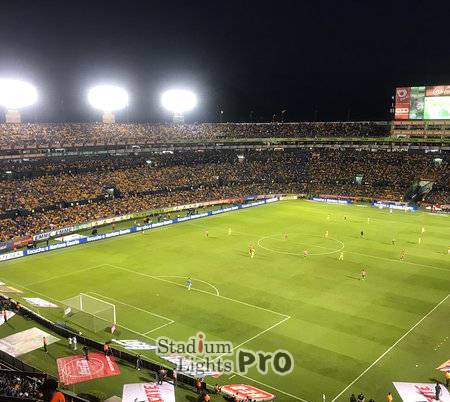 Every additional pole adds cost, both in terms of materials and ongoing upkeep. Yet too few poles, even if they are tall and powerful, can place excessive strain on individual components and increase the risk of failure. The ideal solution often lies in a hybrid configuration, where moderate pole heights are combined with calculated spacing to reduce total pole count while maintaining performance. Structural engineers and lighting designers must collaborate closely to ensure that load-bearing capacities are not exceeded and that light uniformity is preserved without overburdening the infrastructure.
The height and spacing of poles shape the entire lighting environment in a stadium. The choice between taller or shorter poles is not solely aesthetic or budgetary—it’s a technical decision with direct impact on visibility, safety, and the overall atmosphere. Where space is abundant, fewer high poles might be the optimal solution. In tighter venues, a denser arrangement of shorter poles may yield better results. What remains constant is the need to find a delicate equilibrium between height, distance, fixture type, and site-specific conditions. By understanding and applying the principles of height and spacing coordination, designers can create lighting systems that meet performance expectations while enhancing the stadium experience for every player and spectator present.
Types of Sports and Lighting Requirements
The number of poles required in a stadium lighting setup is directly influenced by the type of sport being played. Each sport has specific characteristics such as speed, movement pattern, ball size, and viewer expectations, all of which shape lighting design and performance targets. The lighting must not only make the field visible but also enhance visual comfort, player safety, and spectator enjoyment. These requirements often result in varied pole counts, beam angles, and fixture types depending on the activity hosted within the venue.
High-Speed Team Sports
Fast-moving sports like American football, rugby, and soccer demand higher levels of illumination to accurately follow the ball and players during rapid play. In these sports, uniformity and brightness across the entire field are fundamental. For instance, football involves quick directional changes and frequent aerial passes, requiring vertical and horizontal lighting precision. Soccer, with its wide field and continuous movement, benefits from pole configurations that minimize shadow zones and maintain consistent brightness across long distances. A typical professional-level football or soccer stadium might use 8 to 12 poles, each supporting LED fixtures that provide 1,000 to 1,200 lux to comply with game and broadcast standards.
Ball Tracking and Visibility in Precision Sports
Sports like tennis, cricket, and baseball involve smaller balls and more precise tracking. The ball in cricket can travel over 90 mph, while tennis balls exceed 100 mph in professional matches. Lighting must be calibrated to support fine visual tracking of fast, small objects through varying arcs and heights. In cricket, the ball can be lofted high into the sky, making vertical illuminance critical. Baseball fields require specialized lighting layouts due to asymmetrical field geometry and ball trajectory patterns. These requirements often translate into the use of more lighting poles or enhanced beam distribution, particularly in outfield zones and along foul lines. Cricket venues may employ 10 to 12 poles that reach lux levels between 1,000 and 2,000 for televised events, especially when the action spans from close-in batting to deep field catching.
Indoor vs. Outdoor Sports
Lighting demands also shift based on whether the sport is played indoors or outdoors. Indoor arenas typically use overhead lighting structures, which eliminate the need for external poles but still require precise lux distribution over the playing surface. Sports like basketball or volleyball rely on fixtures mounted at ceiling heights ranging from 25 to 50 feet. Outdoor sports, by contrast, depend on strategically spaced poles that can reach 60 to 120 feet high, depending on the venue and viewing distance. The outdoor environment introduces challenges such as weather and ambient light, which must be overcome with durable, high-output lighting arrays. Consequently, the number and type of poles are heavily influenced by whether the sport takes place in an open-air stadium or an enclosed structure.
Field Shape and Player Movement Patterns
Each sport’s field layout and movement dynamics influence lighting distribution and pole positioning. For example, soccer and rugby involve constant back-and-forth play across rectangular fields, encouraging linear lighting patterns that use poles placed along the sidelines. In contrast, baseball and cricket involve radial or semi-circular player movements. These sports require asymmetric pole arrangements to illuminate outer zones and deep field areas effectively. Sports like lacrosse or field hockey, which blend speed and precision, benefit from hybrid lighting plans that balance wide-angle and concentrated beams. The nature of player movement and how frequently the ball transitions between zones informs how many poles are required and how their lighting output is focused.
Overall, understanding the characteristics of the sport being played allows lighting designers to tailor pole quantity and layout to meet performance needs. Whether it’s delivering broad uniformity for fast-paced football or enhancing visual clarity for baseball’s unpredictable ball paths, the role of lighting poles extends beyond mere illumination. They become instruments of precision, engineered to complement the game’s pace, structure, and visual demands for both athletes and audiences. Designing pole systems that reflect these sporting nuances ensures that every match or event is staged under the right lighting conditions, tailored to the specific athletic environment.
Shadow Management and Pole Arrangement
One of the most nuanced aspects of stadium lighting design is shadow control. Shadows not only reduce visibility but can also disrupt gameplay and cause visual discomfort for athletes and spectators. Effective pole arrangement plays a central role in eliminating these disruptions by ensuring consistent light overlap and beam synchronization. Properly executed, a pole layout can create a seamless lighting blanket across the field, removing distracting contrasts and keeping the focus sharp regardless of ball movement or player positioning.
Beam Overlap and Fixture Orientation
Lighting engineers carefully position fixtures on each pole to generate overlapping beams that contribute to a uniform lighting field. The goal is to eliminate sharp transitions between illuminated and dimmer zones, especially in areas where action frequently occurs, such as midfield, penalty boxes, and goal lines. Each fixture is angled to complement adjacent beams, minimizing shadows from players, goalposts, and sideline equipment. By coordinating beam intensity and spread, lighting designers can balance brightness and contrast while maintaining a visually comfortable environment for both players and the audience.
Strategic Placement Near Key Field Areas
Different zones of a sports field require tailored lighting based on activity levels. Corners, sidelines, and end zones often demand higher lighting concentrations due to their role in set plays and close-quarters competition. These areas are especially vulnerable to shadow formation from both equipment and player clustering. To counteract this, poles may be positioned more densely around these zones, or fixtures with narrower beam angles may be used to penetrate deeper into shadow-prone areas. In fields with asymmetrical layouts, such as baseball diamonds, lighting is carefully adjusted to cover base paths and the infield without casting obstructive shadows into the outfield.
Managing Shadows in Multi-Pole Configurations
The number of poles used in a stadium is directly influenced by the need to minimize cross-shadowing—the occurrence of multiple overlapping shadows caused by poor alignment or inconsistent beam angles. In complex layouts where poles encircle the entire field, engineers rely on lighting simulation software to calculate optimal spacing and orientation. For instance, a rectangular soccer field may be lit by placing poles in all four corners and along the sidelines to create layered beams that intersect in high-traffic zones. This design reduces the possibility of any single pole casting dominant shadows, especially during fast-paced lateral movements.
Technological Enhancements for Shadow Control
Modern lighting systems incorporate advanced optics and LED modules that offer precise beam control, significantly improving shadow management compared to older metal halide systems. LEDs allow for targeted illumination, which can be fine-tuned to cover critical zones without spill light. In some advanced stadiums, adaptive lighting technologies are used to adjust brightness levels based on the real-time position of the action, helping reduce shadows dynamically as gameplay evolves. These innovations often reduce the total number of poles required while still achieving comprehensive lighting coverage.
Effective shadow management is not achieved by lighting power alone—it depends on a deliberate combination of pole count, placement, beam direction, and intensity. Thoughtful arrangement ensures that the playing surface remains clearly visible from every angle, free of disruptive shadows that can impact timing, accuracy, and perception. Whether lighting a soccer pitch, baseball diamond, or multipurpose field, a shadow-free environment remains one of the most sought-after outcomes in professional stadium lighting design. Poles are positioned with careful intent to reinforce that objective and deliver a visually seamless field for both players and spectators.
Uniformity and Beam Angle Distribution
Uniformity is one of the most fundamental lighting goals in any stadium environment. A consistent light level across every square foot of the playing surface contributes to optimal visibility, accurate judgment, and improved performance. Players rely on visual clarity to track high-speed motion, and even slight variations in brightness can distort perception, leading to hesitation or error. From the audience’s perspective, uniform lighting creates a visually pleasing and immersive experience, especially during night games or televised events where inconsistencies are easily noticed.
Balancing Wide and Narrow Beam Fixtures
The type of beam angle selected for a lighting design significantly influences how many poles are required and where they should be placed. Wide-beam fixtures can cover a larger area, allowing designers to use fewer poles while still maintaining reasonable light spread. However, excessively wide angles risk creating unwanted spill light that escapes the field boundary, reducing energy efficiency and potentially creating glare in spectator areas or even neighboring properties.
Conversely, narrow-beam fixtures deliver concentrated lighting with more control. They are especially effective at targeting specific field zones such as goal areas, sidelines, or midfield sections. This precision helps reduce spill and sharpen contrast but usually requires a higher number of poles to eliminate gaps between beams. The trade-off is between control and quantity—narrow beams demand closer pole spacing and a more intricate layout to achieve uniformity, which increases infrastructure complexity.
Designers must also account for beam tilt and elevation. Adjusting the fixture angle impacts how light travels across the field and whether it blends effectively with adjacent beams. Misaligned angles can result in overlit or underlit patches, undermining uniformity even when lux levels appear adequate on paper. This underscores the need for fine-tuned beam calibration, often done with software modeling before physical installation begins.
In modern LED-based lighting systems, beam angle adjustments can be made with greater accuracy, often using specialized lenses and reflectors that modify light distribution. These technologies allow lighting engineers to sculpt the beam to match field dimensions, which supports a more even light footprint and helps reduce the number of poles required. Still, the initial selection of beam angle type—whether wide, medium, or narrow—remains a foundational decision that ripples through the entire lighting strategy.
Striking the right balance between beam angle and uniformity is ultimately a design challenge with both visual and practical consequences. Using wide beams to reduce pole count might sound efficient, but without the proper field modeling and adjustment, it can lead to uneven lighting. On the other hand, relying too heavily on narrow beams might achieve excellent visual precision but at the cost of higher installation and maintenance overhead. A well-designed stadium lighting system finds its strength in compromise—blending fixture variety with optimal pole positioning to ensure a seamless and consistent light environment from every vantage point.
Climate and Weather Factors
Weather and climate patterns play a direct role in stadium lighting design, especially when determining the number, height, and construction of lighting poles. In areas that experience harsh seasonal changes or unpredictable storms, lighting systems must be engineered not only for optimal performance but also for long-term durability. Poorly anchored or inadequately rated poles can fail under pressure from high winds, ice accumulation, or heavy rain. These environmental challenges influence pole design, foundation depth, material selection, and spatial arrangement across the field perimeter.
Wind Load and Structural Stability
High wind speeds are a major concern in open stadiums or regions prone to extreme weather. Taller poles, while beneficial for broader light distribution, present a larger surface area for wind to impact. To counteract this, lighting designers must consider wind load resistance in both the poles and their mounting foundations. In coastal or mountainous regions, where gusts can reach dangerous levels, poles are often built with tapered or cylindrical designs that reduce wind resistance. Structural reinforcements such as guy wires or thicker pole walls may be integrated to enhance stability. These enhancements contribute to safety and also influence the total number of poles that can be used without compromising structural performance.
Snow, Ice, and Temperature Extremes
In colder climates, snowfall and ice buildup pose additional challenges. Lighting poles and fixtures must be designed to handle added weight loads from accumulated snow, as well as thermal expansion and contraction from temperature swings. Corrosion-resistant coatings, galvanized steel, or weather-treated aluminum are often selected to extend pole life in such environments. Foundations may be installed below the frost line to prevent shifting or heaving during freeze-thaw cycles, and maintenance access must be considered in case of ice-related fixture damage. These conditions often result in choosing pole configurations that are slightly shorter but more numerous, improving resilience without sacrificing lighting coverage.
Rainfall and humidity also affect lighting systems. In tropical regions where heavy rain is common, water ingress protection becomes a priority. Fixtures must have high IP ratings to ensure they remain sealed against moisture. Pole placements in flood-prone areas may need elevated bases or drainage accommodations. By adapting the lighting system to these environmental risks, stadium operators can maintain lighting reliability year-round, even during unpredictable weather events.
Ultimately, climate considerations demand that lighting systems be tailored not just for illumination but also for environmental endurance. The number of poles used must account for the balance between performance and sustainability. Whether mitigating wind load or preparing for snow accumulation, design strategies must integrate both meteorological data and engineering precision. This leads to pole layouts that are not only effective in light distribution but also capable of withstanding the natural forces acting on a stadium throughout the year.
Case Study Comparisons: Small vs. Large Stadiums
Stadium lighting strategies vary widely depending on the size of the venue, the level of competition, and the intended use of the field. Examining small community stadiums alongside large, professional arenas reveals distinct differences in the number of poles, their placement, and the lighting technologies employed. These comparisons highlight how factors such as budget constraints, viewing experience, and regulatory requirements shape the overall pole configuration.
Small Community Stadiums
In smaller stadiums or community fields, lighting needs are generally less complex. A common setup might include just four to six poles strategically positioned at the field’s corners or along the sidelines. These poles usually support several fixtures each, providing adequate illumination for local leagues, school events, or recreational use. The relatively compact field size, often measuring around 100 yards long by 50 to 60 yards wide, means fewer poles are needed to achieve uniform lighting coverage.
Smaller stadiums tend to prioritize cost-efficiency, so poles may be shorter—typically ranging from 30 to 50 feet—and fixtures may use wide beam angles to maximize coverage per light source. While broadcast requirements are minimal or nonexistent, these venues still focus on eliminating dark spots and minimizing shadows to maintain player safety and spectator enjoyment. Poles are often mounted on concrete bases with standard electrical connections, emphasizing simplicity and ease of maintenance.
Large Professional and Televised Stadiums
By contrast, large stadiums designed for professional sports or televised events demand a far more elaborate lighting system. These venues may feature eight to twenty or more poles, with some international stadiums exceeding thirty poles depending on field size and seating configuration. Poles are typically taller, often ranging from 80 to 150 feet, to achieve broad, even light distribution that meets the rigorous broadcast standards required for high-definition cameras and live television production.
Lighting layouts in large stadiums frequently combine perimeter poles around the outer edges of the field with additional poles placed along the centerline or behind the goals. This multi-angle approach ensures consistent illumination across all field areas, reducing shadows and flicker that can interfere with televised broadcasts. Fixtures are often fitted with narrow-beam optics and advanced LED modules to allow for precise control of light intensity and direction.
The complexity of pole arrangements in large stadiums also reflects the need to accommodate diverse usage scenarios, including concerts, multi-sport events, and ceremonies. Poles may be equipped with adjustable fixtures to modify beam patterns based on the event, requiring sophisticated mounting systems and electrical controls. Maintenance access is factored into pole design, often involving built-in ladders or lift attachments to facilitate fixture servicing without disrupting event schedules.
Comparative Analysis of Pole Strategies
The fundamental difference between small and large stadium lighting systems lies in the balance between quantity and quality of poles. Small stadiums achieve their lighting goals with fewer poles and simpler setups, focusing on cost-effective solutions that still deliver safe and pleasant illumination. Large stadiums, on the other hand, invest heavily in pole quantity and technological sophistication to satisfy both the athletes’ needs and the expectations of broadcast audiences worldwide.
Moreover, large stadium lighting plans often incorporate redundancy, with extra poles or fixtures that can be activated if others fail, ensuring uninterrupted lighting during critical moments. This level of reliability is seldom required in smaller venues, where downtime is less impactful. The trade-off is that larger stadiums bear higher initial installation costs and ongoing maintenance expenses, justified by the elevated profile of their events and audiences.
Ultimately, analyzing these case studies reveals how the scale and function of a stadium directly influence the number and configuration of lighting poles. While a small community field might operate efficiently with just a handful of poles, a major stadium uses an extensive network of poles to achieve uniform brightness, shadow control, and broadcast readiness that support professional play and global viewership.
Compliance with Standards and Guidelines
Stadium lighting design is not merely a matter of aesthetics or functionality; it is also governed by a framework of standards and guidelines set forth by various sports organizations and regulatory bodies. These guidelines help maintain consistent lighting quality across venues and ensure conditions that support player performance, spectator experience, and broadcasting needs. Adherence to these standards shapes the number, height, and placement of lighting poles in stadium projects.
Governing Bodies and Their Influence
Different sports governing organizations establish their own recommended or mandatory lighting levels. For instance, FIFA sets minimum illumination requirements for soccer stadiums used in international matches, emphasizing uniformity and minimum lux levels for both training and competition fields. Similarly, the NCAA provides guidelines tailored to collegiate sports facilities, which often influence the lighting design for football, baseball, and basketball stadiums in the United States. Beyond sports-specific entities, local and national building codes and safety regulations also impose standards regarding light pollution, pole structural safety, and energy efficiency.
Role of Computer-Aided Lighting Simulations
Modern stadium lighting design relies heavily on advanced computer-aided design (CAD) software and simulation tools to ensure compliance with these standards. These simulations model how light from each pole and fixture interacts with the playing surface, surrounding stands, and open sky. Designers can evaluate light uniformity, checking for even distribution without hotspots or dim patches, which could impair player visibility or spectator enjoyment. They also assess glare ratings to minimize discomfort or distraction for players, officials, and audiences.
Additionally, simulations consider the visual impact of the poles themselves. Excessively tall or poorly positioned poles can obstruct sightlines or create unwanted shadows. The visibility of poles to television cameras and in person is factored into the layout to avoid interfering with the viewer experience or broadcast quality. This process often requires multiple iterations to fine-tune pole height, spacing, and fixture angles until all performance and regulatory metrics are met.
Energy Efficiency and Environmental Compliance
Beyond illumination standards, many jurisdictions now require stadium lighting to meet energy efficiency and environmental guidelines. These may include mandates on the use of LED technology, automatic dimming controls during non-event times, and shielding to reduce light spill into neighboring areas. Compliance with such regulations impacts pole choice and fixture types, as well as the overall number of poles needed. Lighting systems designed with these considerations help reduce operational costs while aligning with broader sustainability goals.
Inspection, Approval, and Ongoing Compliance
After the design and installation phases, stadium lighting systems undergo inspection by governing bodies or local authorities to verify compliance with applicable standards. These inspections often include measurements of illuminance and uniformity across the field during operational hours. In some cases, certifications or official approvals are required before a stadium can host sanctioned events.
Ongoing compliance also requires regular maintenance and periodic reassessment of lighting performance. Over time, fixture degradation or pole misalignment can lead to uneven lighting, which may violate standards and necessitate corrective action. Proactive maintenance plans help stadium operators retain lighting quality and ensure that pole configurations continue to meet evolving regulations and expectations.
Conclusion
Designing a stadium lighting system begins with a deep understanding of the venue’s purpose, architecture, and audience expectations. The number of poles needed to achieve effective illumination is never a fixed number but a product of careful consideration. From the field size and sport type to technology selection and environmental factors, each variable shapes the layout. More poles might be required in one setting, while fewer may suffice in another when supported by advanced lighting systems. The balance lies in achieving uniformity, optimizing cost, and creating an engaging environment for both players and fans. Through thoughtful design, the arrangement of poles transforms from a structural necessity into an integral part of the stadium experience. By weighing factors like technology, spacing, maintenance, glare control, and audience impact, one can determine the right number of lighting poles to bring a stadium to life, match after match.