

Lighting a racecourse involves much more than simply placing a few lights around the track. The lighting design must ensure visibility, safety, and enhance the overall experience for spectators and participants alike. Determining how many lights are required depends on various factors, including the size of the racecourse, the type of events held, and the desired lighting quality.
Understanding the Purpose of Racecourse Lighting
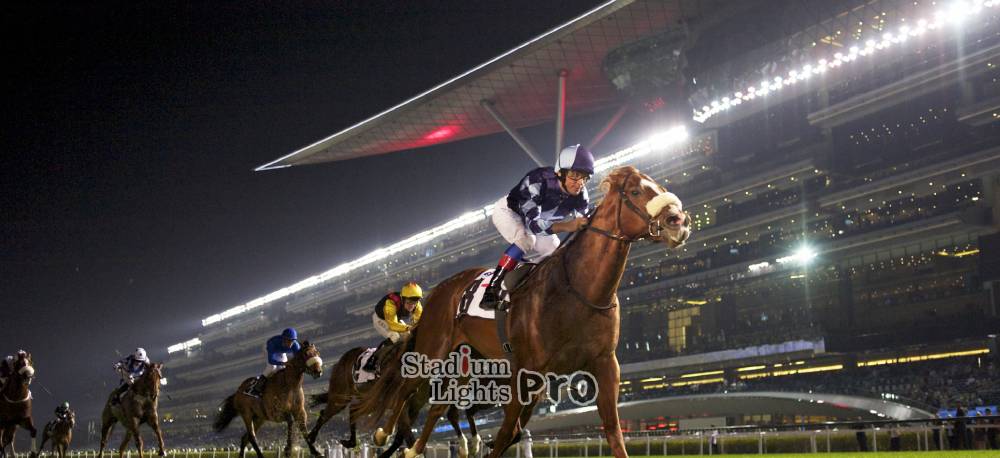
Racecourse lighting serves several purposes. Primarily, it provides visibility for racers to perform safely during low light or nighttime conditions. Spectators benefit from better viewing experiences when the track and surroundings are well illuminated. Additionally, lighting enhances the broadcast quality for television and streaming audiences, which has become a growing consideration in sports event planning.
Beyond functionality, well-designed lighting contributes to the ambiance and atmosphere of the venue. It can highlight architectural features and landscaping, creating a visually striking environment. The number of lights plays a significant role in balancing all these aspects effectively.
Calculating the Number of Lights for a Racecourse
| Parameter | Typical Range / Value | Notes |
|---|---|---|
| Racecourse Area | 100+ acres (e.g., 1.5 miles / 2.4 km track length) | Includes track, spectator stands, walkways, parking |
| Fixture Lumen Output | 20,000 to 60,000 lumens | Determines brightness per light |
| Beam Angle | 20° to 60° | Affects light spread width |
| Mounting Height | 40 to 80 feet (12 to 24 meters) | Impacts coverage distance and illumination angle |
| Target Average Illumination | ~50 lux on track | Level needed for safe racing conditions |
| Uniformity Ratio (Average to Minimum Illumination) | 0.7 to 0.8 | Ensures even light distribution |
| Initial Fixture Count Example | 60 fixtures | May require increase to improve dark zones |
| Adjusted Fixture Count | 70 to 75 fixtures | To improve uniformity and reduce shadows |
| Fixture Count Increase for Narrower Beam Angles | Up to 2x compared to wider angles | Narrower beams reduce glare but increase fixture numbers |
| Fixture Count Increase When Using Lower Brightness Fixtures | 20% to 50% | More fixtures with lower output improve comfort and safety |
Detailed Process for Determining the Number of Lights
The process of calculating how many lights are needed for a racecourse begins with a thorough evaluation of all areas requiring illumination. This evaluation covers not only the race track itself but also surrounding spaces such as spectator stands, walkways, and parking lots if they are included in the lighting plan. For example, a standard 1.5-mile (2.4 km) racecourse can cover an area exceeding 100 acres, and each zone has its own lighting intensity demands depending on its use during events.
Lighting designers then gather detailed data about the fixtures intended for installation. Common fixtures for racecourse lighting deliver between 20,000 and 60,000 lumens each. Beam angles typically range from 20° to 60°, influencing how wide the light spreads. Mounting heights usually vary from 40 to 80 feet (12 to 24 meters) to balance coverage distance and illumination intensity.
These fixture specifications serve as essential inputs for specialized lighting design software. The software models how each fixture will illuminate the racecourse, producing photometric maps that display light intensity distribution and uniformity. For a typical racecourse, the target average illumination level might be around 50 lux on the track, with a uniformity ratio (average to minimum illumination) close to 0.7 to 0.8 to ensure consistent visibility.
Using Photometric Data to Adjust Fixture Numbers
Photometric maps enable designers to identify dark zones or hotspots that may require adjustments. For example, initial simulations might show that 60 fixtures spaced evenly around the track provide average illumination but leave some areas below 30 lux, which is inadequate for fast-paced racing. Adding 10 to 15 fixtures in these darker areas can raise the minimum illumination and improve uniformity.
The software allows iterative modifications to the number and placement of fixtures to optimize coverage. This iterative process aims to reduce overlap between light beams, which can cause wasted energy and uncomfortable glare. By reducing overlap, fixture numbers can be kept efficient while maintaining required brightness levels.
Collaboration and Practical Considerations
Throughout the design process, collaboration with racecourse operators, event organizers, and broadcast specialists helps tailor lighting to specific needs. For example, night races may require higher illumination levels and fixture counts than training sessions or daytime events. Broadcast requirements often call for higher color rendering indexes and uniform lighting, potentially increasing the fixture count by 10% or more.
Maintaining Uniform Lighting and Managing Fixture Quantity
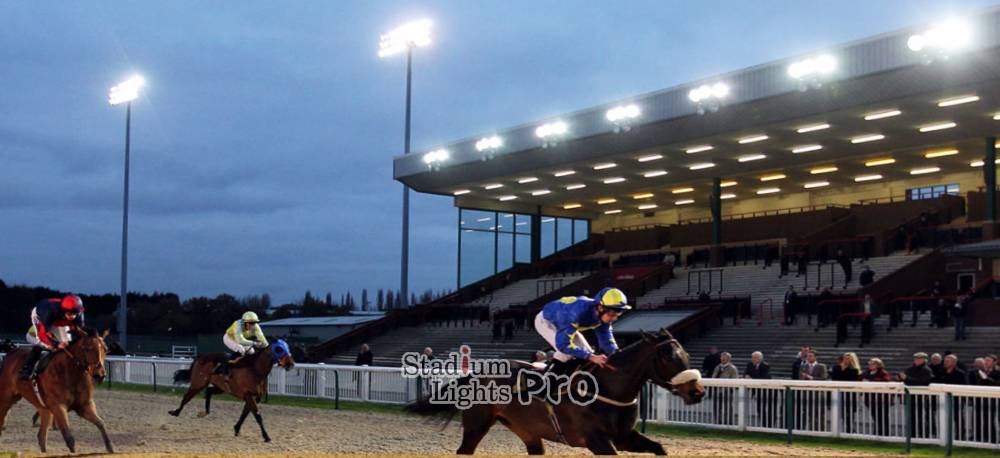
Uniformity is measured as the ratio of average to minimum illumination, with higher ratios indicating smoother lighting transitions. For racecourses, a uniformity ratio above 0.7 is generally sought to avoid abrupt light variations that could impair racer focus or spectator enjoyment.
Designers strategically add fixtures where terrain or structures cause shadows or uneven lighting. For instance, lighting around grandstands might require additional fixtures mounted on lower poles to avoid shadowing from taller structures. Adjusting fixture tilt and aiming angles helps concentrate light precisely, often improving uniformity without increasing fixture counts significantly.
Glare Control and Fixture Selection
Glare reduction plays a role in determining how many fixtures are used and where they are positioned. Excessive glare can reduce visibility and cause discomfort for racers and viewers. Fixtures with built-in shields or optics designed to limit upward and horizontal light spill reduce glare and light pollution.
Choosing fixtures with narrower beam angles focused directly on the track or spectator zones reduces glare but may require more fixtures to cover the same area evenly. For example, using 30° beam angles might double the fixture count compared to 60° angles but improves comfort and safety.
Balancing Brightness and Fixture Quantity
To balance brightness with visual comfort, designers often opt for more fixtures with lower individual brightness rather than fewer extremely powerful lights. For example, instead of 40 fixtures at 60,000 lumens each, a design might use 60 fixtures at 40,000 lumens to distribute light more evenly and reduce glare.
This approach typically increases fixture count by 20-50% but creates a safer and more visually comfortable environment for racers, staff, and spectators alike. The slight increase in fixture numbers is offset by improved performance, energy efficiency, and reduced maintenance costs due to less intense individual fixture loading.
Factors Influencing the Number of Lights Needed
Size and Layout of the Racecourse
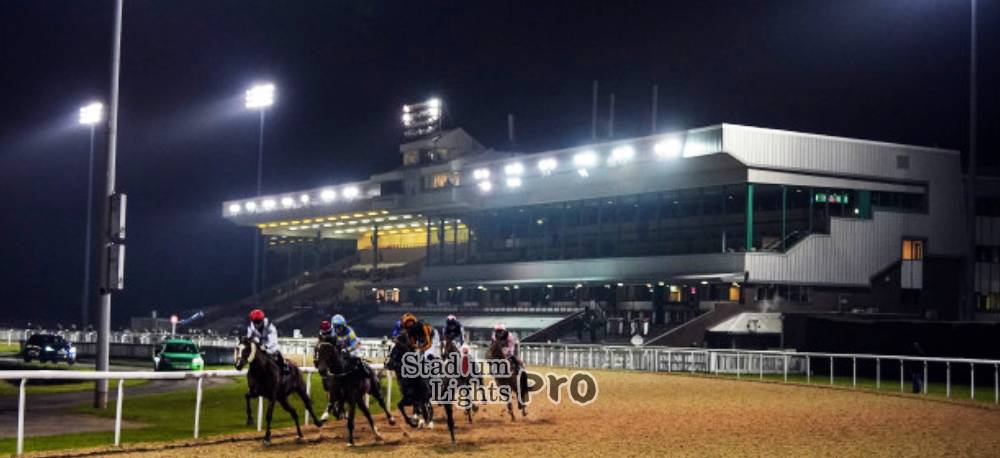
The total size and shape of the racecourse play a major role in determining how many lights are required. Larger venues naturally demand more fixtures to ensure that the entire surface receives adequate illumination. For example, an oval or circular track benefits from lights spaced evenly around the perimeter, providing consistent coverage. In contrast, racecourses with irregular or elongated shapes often require custom lighting plans with fixtures placed strategically to fill in areas that could otherwise remain dim or shadowed. Additionally, the presence of elevation changes, berms, or obstacles on the track can complicate the lighting layout, necessitating additional fixtures or varied mounting heights to maintain even illumination.
Height and Type of Light Poles
The height of light poles significantly affects how many fixtures are necessary to achieve the desired coverage. Poles commonly range between 30 feet (9 meters) to over 100 feet (30 meters). Taller poles can illuminate a broader area with fewer lights, reducing the total number needed, but they often require sturdier foundations, more complex installation processes, and higher maintenance costs. Conversely, shorter poles concentrate light more narrowly, which can improve brightness and reduce glare in localized zones but may increase the overall fixture count to cover the entire racecourse. The choice of pole type also affects fixture placement flexibility and the ability to adjust aiming angles to optimize light distribution.
Type of Lighting Fixtures
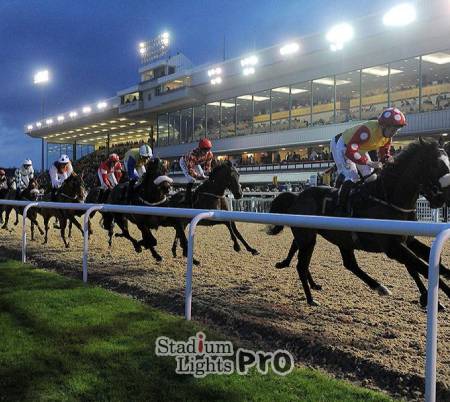 Fixture technology influences brightness, energy consumption, and the total number of lights installed. LED lighting has become increasingly favored for racecourse illumination due to its energy efficiency, long lifespan, and precise light control. LEDs offer directional output, allowing designers to target light exactly where it is needed, which often lowers the fixture count compared to older technologies like metal halide or high-pressure sodium lamps. Metal halide lights, while once popular for their bright, white light, consume more power and have shorter lifespans. High-pressure sodium lamps provide warmer light but tend to have broader beam spreads and lower energy efficiency. Selecting fixtures that balance brightness and beam control is key to optimizing the number of lights while maintaining performance.
Lighting Levels and Standards
The type of racing activity influences the target lighting levels. Different events demand different visibility standards, usually measured in lux or foot-candles. For instance, horse racing tracks might require around 30 to 50 lux to ensure safe visibility of horses and jockeys, while car racing tracks, especially those televised, often need 100 lux or more to meet broadcast quality standards. Greyhound racing may have lower requirements but still needs even coverage to prevent shadows. Meeting these standards uniformly across the course affects the number of fixtures because lower output fixtures need to be more numerous to reach the required brightness, whereas higher output lights can reduce fixture count but might increase glare.
Environmental and Regulatory Considerations
Local environmental rules and regulations influence the lighting design and thus the number of fixtures required. Many jurisdictions enforce limits on light pollution, energy consumption, and stray light to protect nearby communities and ecosystems. These rules might mandate the use of shielded fixtures, cut-off optics, or specific light intensity caps. As a result, lighting designers may need to use more fixtures with lower intensity and carefully aimed beams to comply with these regulations while still achieving the desired illumination. Incorporating such environmental safeguards can increase the fixture count but helps minimize light spill and enhances sustainability.
Event and Broadcast Requirements
The variety of events held at a racecourse impacts lighting needs. High-profile races that are televised live have stricter requirements for lighting uniformity, color rendering, and intensity to ensure quality video capture. These needs often require more fixtures or higher specification lights with advanced optical control. Additionally, events with nighttime audiences or those held in low-light seasons require more robust lighting systems. The flexibility to adjust lighting levels for different events can also affect fixture quantity, with designers sometimes incorporating dimmable or programmable systems that may use more fixtures but offer operational versatility.
Maintenance and Operational Factors
The ease of maintaining fixtures and their operational lifespan factor into decisions about quantity. Installing fewer, higher-powered lights might reduce the total fixture count but can lead to higher maintenance challenges and costs if those lights fail. Using a larger number of moderate-powered fixtures may spread the risk of outages and facilitate easier replacement schedules. Moreover, the choice of lighting control systems, such as sensors or automated dimming, can influence how many lights are installed and how they are managed over time to optimize energy use and performance.
Budget and Energy Efficiency
Financial constraints and energy efficiency goals shape fixture selection and numbers. While fewer high-powered fixtures may reduce initial installation costs, they often increase energy consumption and maintenance expenses. Conversely, more numerous LED fixtures with lower wattage might have a higher upfront cost but deliver long-term savings through reduced power usage and longer operational life. Balancing upfront expenditure against ongoing operational costs is a major factor influencing the total number of lights installed on a racecourse.
Examples of Lighting Requirements for Various Racecourses
| Racecourse Type | Typical Track Size | Illumination Level (Foot-Candles) | Number of Fixtures | Fixture Lumen Output | Pole Height | Pole Spacing |
|---|---|---|---|---|---|---|
| Horse Racing Tracks | 1 – 2+ miles (1.6 – 3.2+ km) | 20 – 50 | 60 – 120 | 30,000 – 70,000 lumens | 40 – 70 feet (12 – 21 m) | 100 – 150 feet (30 – 45 m) |
| Car Racing Circuits | 1.5 – 4+ miles (2.4 – 6.4+ km) | 50 – 100 | 100 – 150 | 60,000 – 120,000 lumens | 80+ feet (24+ m) | 100 – 130 feet (30 – 40 m) |
| Greyhound Racing Tracks | 1,000 – 1,200 feet (300 – 365 m) | 10 – 20 | 20 – 50 | 15,000 – 30,000 lumens | 20 – 40 feet (6 – 12 m) | 50 – 80 feet (15 – 25 m) |
Horse Racing Tracks
Horse racing tracks usually span from around one mile (1.6 kilometers) to over two miles (3.2 kilometers) in circumference, often designed as large ovals. The recommended lighting levels on the track surface typically range from 20 to 50 foot-candles (215 to 540 lux), depending on whether the venue hosts casual or professional racing events. Because of the vast area involved—which can easily exceed 100,000 square feet (over 9,000 square meters)—the lighting setup must be carefully designed to provide consistent brightness throughout. For a standard one-mile horse racing track, between 60 and 120 fixtures are generally required. These are often mounted on poles between 40 and 70 feet (12 to 21 meters) tall, with each fixture producing between 30,000 and 70,000 lumens, commonly using high-efficiency LED technology. Poles are spaced roughly 100 to 150 feet (30 to 45 meters) apart to create overlapping light coverage that minimizes shadows and enhances uniformity. The final fixture count also depends on additional zones such as grandstands, stables, and parking areas that may need lighting.
Car Racing Circuits
Car racing circuits vary widely in size, often covering from 1.5 miles (2.4 kilometers) to over 4 miles (6.4 kilometers) and including complex track layouts with multiple turns and straights. The lighting intensity on these circuits is higher than horse racing, generally ranging from 50 to 100 foot-candles (540 to 1,080 lux) to accommodate the high speeds and the need for rapid driver reaction times. Large professional speedways can utilize over 100 fixtures, mounted on poles that often exceed 80 feet (24 meters) in height to cover extended sightlines and reduce shadows in critical areas like sharp curves and straightaways. Each fixture typically emits between 60,000 and 120,000 lumens and employs advanced LED arrays designed to reduce glare and focus light efficiently. Depending on the track’s complexity, the number of poles can range from 40 to 80, spaced approximately 100 to 130 feet (30 to 40 meters) apart. For example, a 2.5-mile oval speedway might require 120 to 150 lights to maintain uniform illumination, whereas road courses with many twists demand additional fixtures to eliminate shadowed zones.
Greyhound Racing Tracks
Greyhound racing tracks are smaller in scale, usually around 1,000 to 1,200 feet (300 to 365 meters) in circumference. Their lighting requirements are less intense, with illumination levels commonly between 10 and 20 foot-candles (110 to 215 lux), reflecting the slower speeds and smaller venue size compared to horse and car racing. Because of this compact size, fewer fixtures are needed, often ranging from 20 to 50 lights placed on poles between 20 and 40 feet (6 to 12 meters) tall. These fixtures generally output between 15,000 and 30,000 lumens. Poles tend to be spaced closer together, approximately 50 to 80 feet (15 to 25 meters), to ensure even light distribution and avoid shadows that might startle the dogs during a race. Adjacent areas such as spectator stands and walkways require lighting at lower intensities, which can be satisfied with fewer and less powerful fixtures.
Comparative Overview of Lighting and Fixture Characteristics
When comparing these types of racecourses, it becomes clear that the number of fixtures and their specifications vary significantly depending on the size, speed, and lighting demands of the venue. Horse racing tracks generally require between 60 and 120 fixtures, each producing 30,000 to 70,000 lumens, mounted on poles that range from 40 to 70 feet in height, aiming to provide illumination levels between 20 and 50 foot-candles. Car racing circuits demand a higher fixture count—often 100 to 150—with lumen outputs of 60,000 to 120,000 per fixture and pole heights exceeding 80 feet, maintaining lighting intensities between 50 and 100 foot-candles. Greyhound tracks, being smaller and less bright, typically use 20 to 50 fixtures with outputs of 15,000 to 30,000 lumens, mounted on poles 20 to 40 feet tall, achieving illumination levels of 10 to 20 foot-candles.
Understanding these variations helps in planning a lighting system that balances fixture quantity, energy consumption, and the visual and safety needs specific to each type of racecourse.
Technological Advances Impacting Light Quantity
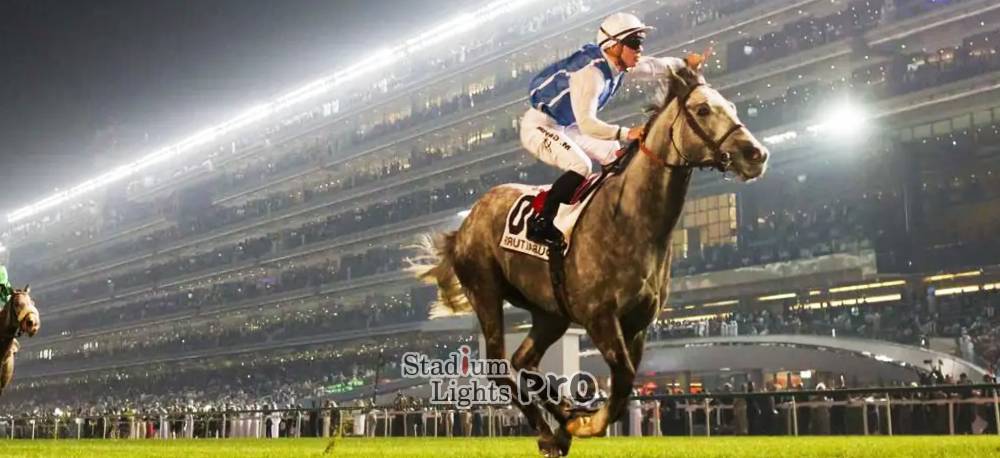
LED Lighting Systems
The emergence of LED technology has significantly changed how racecourses are illuminated. Compared to traditional lighting options such as metal halide or high-pressure sodium lamps, LEDs provide much higher luminous efficacy, often reaching 100 to 150 lumens per watt, whereas older fixtures typically range from 40 to 70 lumens per watt. This means LEDs produce more light while using less electrical power, resulting in energy savings up to 50% or more.
LED fixtures also have much longer lifespans, commonly lasting 50,000 to 100,000 hours, which can reduce replacement frequency and maintenance costs. Their highly directional nature allows for precise beam control, focusing light exactly where it is needed. This precision limits light spill and reduces glare and light pollution, which are common challenges in racecourse lighting.
Because LEDs can achieve desired brightness with fewer total lumens wasted, designers often find they can use 20% to 40% fewer fixtures than with older technologies while maintaining or even improving illumination quality. For example, a large horse racing track that might have required 100 traditional fixtures may now only need 60 to 80 LED fixtures to achieve the same or better lighting standards.
Smart Lighting Controls
Modern racecourse lighting systems increasingly incorporate smart controls and automation technologies. These controls enable dynamic adjustment of light levels depending on various factors such as time of day, weather conditions, event requirements, or occupancy of different zones within the venue.
Using sensors and networked controls, the lighting can be dimmed during periods of low activity, such as before and after events or in unused sections like parking lots. This adaptability not only lowers energy consumption by up to 30% but also extends the lifespan of the fixtures by reducing operating hours at full power.
Although smart controls do not reduce the physical number of light fixtures needed, they optimize their use and improve operational efficiency. The ability to precisely regulate light output enhances the overall lighting experience, supports sustainability goals, and provides flexibility to accommodate various event types, from practice sessions to nighttime competitions.
Together, the integration of advanced LED systems with intelligent control technology allows racecourse operators to achieve a well-lit environment that is energy-efficient, cost-effective, and tailored to specific operational demands.
Maintenance and Operational Considerations
Impact of Fixture Quantity on Maintenance and Reliability
The total number of lights installed at a racecourse directly affects the maintenance workload and operational expenses throughout the system’s lifespan. Each fixture represents a potential point of failure, so as the number of fixtures increases, so does the complexity of upkeep and the likelihood of encountering malfunctions. This relationship requires lighting designers and facility managers to carefully balance fixture quantity with reliability to avoid excessive maintenance burdens.
Selecting lighting fixtures that combine high efficiency with durability can greatly reduce the frequency of replacements and repairs. For instance, LED fixtures, known for their long lifespan—often exceeding 50,000 hours—tend to lower maintenance cycles compared to traditional lighting technologies such as metal halide lamps, which may require replacement after only 10,000 to 20,000 hours of operation. Using more robust fixtures designed for harsh outdoor environments also minimizes risks related to weather exposure, vibration, and dust ingress, all common challenges at racecourses.
Installation Practices and Operational Cost Management
Maintenance considerations extend beyond fixture durability. Proper installation techniques are crucial to ensure longevity and ease of access. For example, mounting fixtures at heights that balance optimal light distribution with manageable reach for maintenance personnel can reduce labor time and costs. Incorporating access pathways, such as service ladders or maintenance platforms, in the lighting layout facilitates safe and efficient servicing without disrupting racecourse activities.
Operational planning should also include scheduled inspections to identify issues early before they lead to major failures. Regular cleaning of lenses and fixture housings preserves optimal light output, as accumulated dirt and debris can significantly reduce illumination levels. Additionally, monitoring systems that track fixture performance can alert maintenance teams to failing lights, enabling proactive replacements that minimize downtime.
From an operational cost perspective, more fixtures generally mean higher electricity consumption and increased energy bills. This reality reinforces the value of integrating energy-efficient technologies and smart controls that help optimize light usage according to demand, ultimately reducing both environmental impact and operating expenses.
In summary, the number of lights installed has a cascading effect on maintenance routines, labor requirements, replacement schedules, and energy consumption. Thoughtful fixture selection, strategic installation, and ongoing management all contribute to a lighting system that performs reliably while controlling costs over the long term.
Safety and Visibility Aspects
Balancing Visibility and Risk on the Track
Ensuring safety through adequate lighting is a paramount consideration in designing a racecourse lighting system. The number and placement of lights must be carefully planned to create an environment where participants, officials, and spectators can navigate the venue safely and confidently. Poorly lit areas can increase the risk of accidents, injuries, or even more serious incidents during events, making thoughtful illumination a vital part of racecourse operations.
Insufficient lighting can lead to reduced visibility of track surfaces, obstacles, and other participants, which can compromise the performance and safety of racers, whether they are horses, cars, or greyhounds. Dimly lit zones or shadows may cause participants to misjudge distances or fail to detect hazards promptly. On the other hand, excessive brightness or poorly aimed fixtures may produce intense glare, which can momentarily blind or distract racers and drivers, increasing the likelihood of errors or collisions.
Achieving Uniform Lighting and Glare Control
The arrangement of fixtures to achieve uniform lighting plays a significant role in mitigating these risks. Uniform illumination minimizes the presence of dark spots and sudden contrasts between bright and shaded areas, creating a visually comfortable environment that reduces eye strain and improves reaction times. Careful attention to fixture angles, mounting heights, and shielding helps control glare, ensuring that light is directed where it is needed without spilling into the eyes of racers or spectators.
Enhancing Safety for Spectators and Emergency Response
Beyond the participants on the track, well-planned lighting improves safety for spectators by illuminating walkways, seating areas, parking lots, and access routes. Proper lighting reduces trip hazards, aids crowd control, and helps prevent unauthorized access to restricted zones. It also enhances surveillance capabilities, supporting security personnel in monitoring the venue effectively throughout events.
Visibility improvements extend to emergency responders as well. Clear, well-lit paths allow for rapid response in case of accidents, medical emergencies, or other urgent situations. The ability for emergency teams to quickly locate and reach incident sites can make a significant difference in outcomes, emphasizing the role of lighting as part of a broader safety infrastructure.
Effective lighting also contributes to the overall management and flow of events. For example, illuminated signage, entry points, and service areas help attendees navigate the racecourse with ease, minimizing confusion and potential crowding. The psychological effect of well-lit environments fosters a sense of security and comfort, enhancing the experience for all who attend.
In summary, the number and configuration of lighting fixtures at a racecourse are integral to creating a safe, visible, and welcoming environment. Achieving the right balance between sufficient brightness, uniform coverage, and glare control supports the well-being of everyone involved while elevating the quality and success of the events hosted at the venue.
Environmental Impact and Energy Efficiency
Reducing Light Pollution and Protecting Surroundings
Minimizing the environmental impact of racecourse lighting is becoming an increasingly important part of venue planning and design. Excessive or poorly directed lighting can lead to light pollution, which affects not only the aesthetics of the night sky but also the health of local ecosystems. Wildlife can be particularly sensitive to artificial light, which may disrupt natural behaviors such as feeding, mating, and migration. Light spilling beyond the racecourse boundaries into nearby residential areas can also cause discomfort and complaints, reducing community support for the venue.
Careful selection of the number of lights installed, combined with advanced optical controls, helps direct illumination precisely where it is required. Fixtures equipped with cutoff shields, narrow beam angles, and focused optics reduce stray light escaping into the environment. By reducing unnecessary light spill, racecourses can operate in harmony with their surroundings, respecting local flora, fauna, and residents while maintaining adequate visibility for events.
Environmental regulations and local ordinances increasingly mandate limits on light pollution, guiding designers to adopt lighting solutions that comply with these standards. In many regions, implementing such regulations involves limiting brightness levels, curbing upward light emission, and establishing curfews for lighting usage, especially in sensitive habitats. Adhering to these requirements often affects the total number of fixtures used, encouraging more efficient layouts rather than simply increasing brightness through additional lights.
Energy Efficiency Through Advanced Lighting Technologies
Energy consumption is a major consideration when deciding the number and type of lights for a racecourse. The operational cost of running hundreds of fixtures can be substantial, so adopting energy-efficient technologies has both environmental and economic benefits. LEDs have emerged as the preferred lighting technology due to their superior energy efficiency compared to traditional metal halide or high-pressure sodium lamps.
LED fixtures produce higher lumen output per watt of energy consumed, meaning fewer lights or lower wattage fixtures can achieve the same brightness levels. Their long lifespan also reduces replacement frequency and maintenance demands, further enhancing cost savings over time. These advantages allow designers to optimize the fixture count without compromising illumination quality or uniformity.
In addition to efficient fixtures, integrating smart lighting controls plays a pivotal role in energy management. Systems equipped with dimmers, motion sensors, and programmable schedules can adjust lighting levels dynamically based on time of day, event type, or occupancy. This adaptability reduces power consumption during off-peak hours or less demanding events, prolonging fixture life and lowering the racecourse’s carbon footprint.
The combined effect of using fewer but more efficient fixtures alongside intelligent control systems allows racecourse operators to balance performance needs with sustainable energy use. This approach influences the overall number of lights installed by emphasizing quality and flexibility over quantity alone, ensuring a lighting system that is both effective and environmentally responsible.
Final Thoughts on Lighting a Racecourse
Determining how many lights a racecourse requires involves a complex interplay of factors including size, layout, event type, and environmental constraints. While there is no one-size-fits-all answer, understanding the variables helps create a tailored lighting design that meets visibility, safety, and ambiance needs.
The number of lights installed impacts not only how well the track is illuminated but also affects operational costs, environmental footprint, and maintenance efforts. Advances in lighting technology, especially LED fixtures and smart controls, offer opportunities to reduce fixture counts without compromising performance.
Effective racecourse lighting balances brightness and uniformity, controls glare, and complies with regulations while enhancing the overall event atmosphere. Careful planning and simulation with lighting design software ensure an optimized layout that serves racers, spectators, and broadcasters alike.
At the heart of every lighting setup is the goal of clear visibility that supports safe and exciting racing events. Paying attention to each factor and choosing the right fixtures and layout creates a well-lit environment that elevates the racecourse experience.