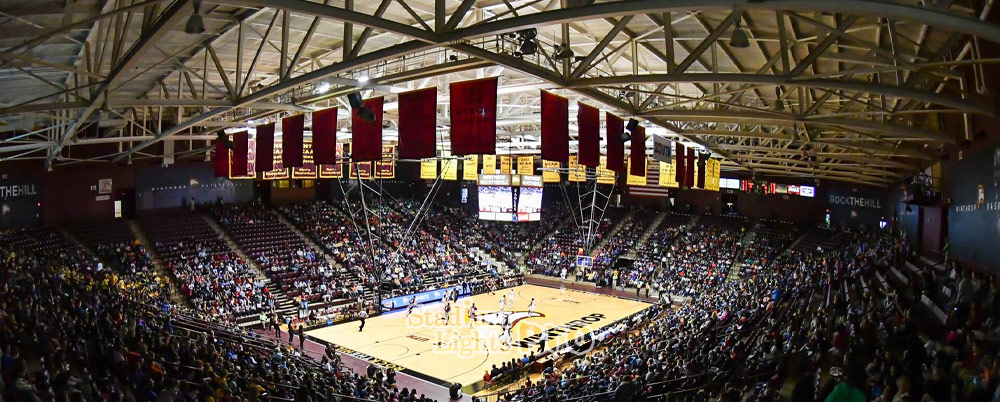
Outdoor basketball courts have a certain magic when the sun goes down. The sound of the ball bouncing, sneakers squeaking, and friendly trash talk all feel sharper under good lighting. But once the lights are off or poorly designed, the whole experience drops fast. Shadows creep across the key, players lose depth perception, and even simple shots feel off. Good basketball court lighting is less about decoration and more about how the game actually feels and flows.

Why Basketball Court Lighting Shapes the Playing Experience
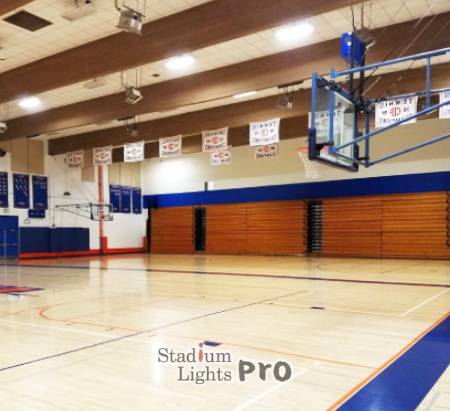 Lighting affects more than visibility. It changes reaction time, shooting confidence, and even injury risk. When players can’t clearly judge distance or track the ball in the air, the game becomes slower and less accurate.
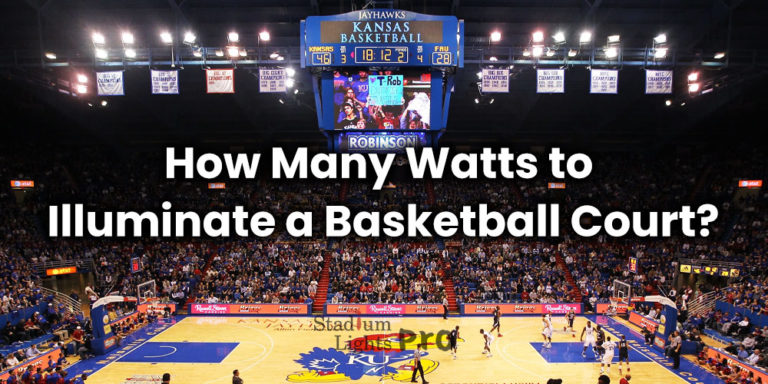
Most outdoor recreational courts aim for around 200 to 300 lux, while more competitive setups often target 500 lux or higher. That jump doesn’t just look brighter on paper, it directly impacts how smoothly fast-paced play feels.
There’s also the psychological side. Even lighting across the entire court creates a sense of balance. When one corner feels dimmer, players naturally avoid it, which subtly breaks the flow of the game. Good lighting removes that hesitation and lets players focus entirely on movement and timing.
Types of Basketball Court Lighting Systems in Use Today
LED Basketball Court Lighting
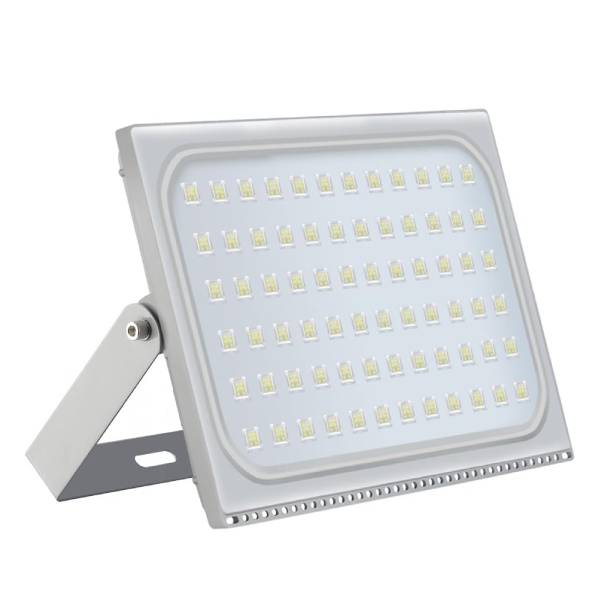
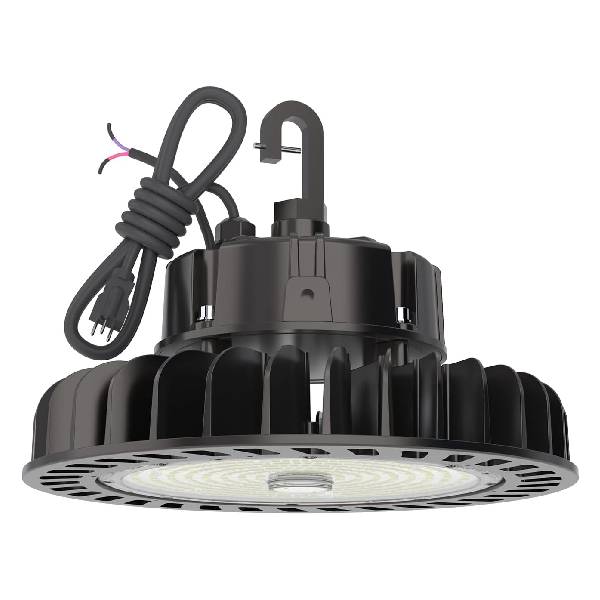
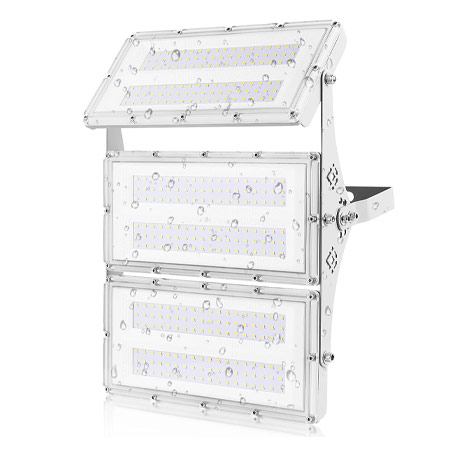
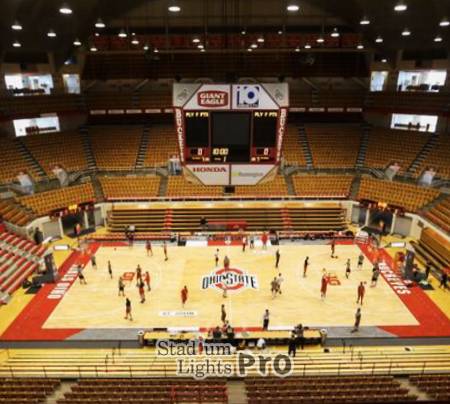 LED lighting has basically taken over modern basketball court design, and it’s not hard to see why. In most new installations today, around 80% to 90% of outdoor courts are now built with LED systems instead of older tech. The shift mainly comes down to efficiency, durability, and how clean the light feels on the court.
A typical LED basketball court floodlight system can run anywhere between 50,000 and 100,000 hours. To put that into real-life terms, if a community court runs 5 hours a night, 6 nights a week, that’s still roughly 15 to 25 years of usable life. That’s a big deal for schools, housing estates, and sports facilities that don’t want to keep replacing lighting every few years.
Another thing people immediately notice is how fast LEDs respond. There’s no waiting around. You flip the switch and the court is fully lit in under a second. That sounds simple, but for evening games where daylight disappears quickly, it keeps everything smooth and uninterrupted.
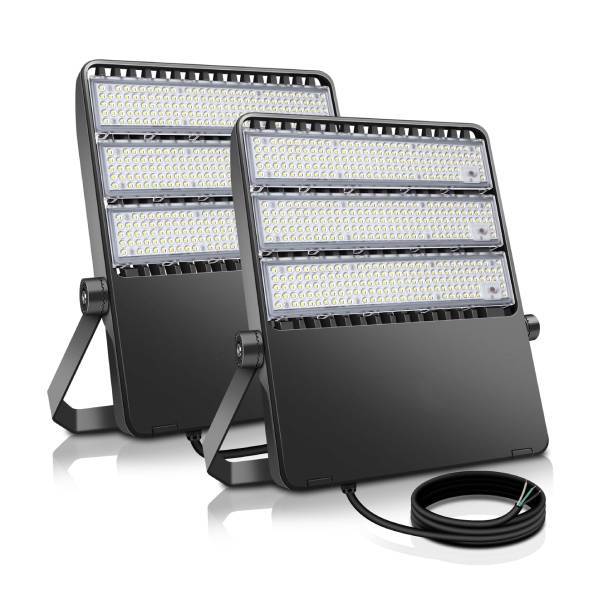
Modern LED basketball court lighting systems also come with more advanced optical design. You’ll often see terms like asymmetric beam distribution, anti-glare lens technology, and cut-off angle control. These features help push light exactly where it’s needed while reducing spill light outside the court.
In terms of energy use, LED systems typically cut electricity consumption by 50% to 70% compared to older lighting technologies. For a full outdoor court, that can mean dropping from something like 3,000–5,000 watts total load down to around 1,200–2,500 watts depending on design.
Metal Halide Systems
Metal halide lighting used to be the default for sports courts for a long time, especially in larger parks and school facilities. Even today, you’ll still find them in many older basketball courts that were built 10 to 20 years ago.
The light quality is actually decent once fully warmed up. It produces a fairly bright white output that can reach good visibility levels, often in the range of 300 to 600 lux for properly designed setups. The problem is everything around it feels a bit outdated now.
One of the biggest drawbacks is warm-up time. Metal halide lamps usually take 10 to 20 minutes to reach full brightness. That means if someone flips the switch right before a game, the first few minutes can feel dim and uneven, which isn’t great for fast-paced play like basketball where reaction time matters.
Another issue is lumen depreciation. Over time, these lights lose brightness more noticeably than LEDs. After a few thousand hours of use, it’s common to see output drop by 30% or more, which leads to uneven lighting patches across the court.
Maintenance is also becoming trickier. Replacement lamps and ballasts are not as widely stocked anymore, and energy efficiency is significantly lower, often consuming 2 to 3 times more power than modern LED systems for similar output.
High-Pressure Sodium Lighting
High-pressure sodium lighting has a very distinct look. It produces that warm orange-yellow glow that you often see in street lighting. While it works fine for general outdoor visibility, it’s not really built for sports performance environments like basketball courts.
The biggest limitation is color rendering. The CRI (Color Rendering Index) is usually quite low, often below 30, which makes it harder to distinguish the basketball clearly against the court surface or background. That becomes especially noticeable during fast passes, rebounds, or long-range shots.
In practical terms, even if the court is bright enough in lux value (usually around 150–300 lux in many older setups), the visual clarity still feels off. Players often describe it as “flat” or “foggy,” especially under fast movement.
Energy consumption is somewhat better than metal halide, but still not close to LED efficiency. These systems also tend to have slower response times and limited control options, which makes them less flexible for modern sports facilities that want dimming, zoning, or smart control features.
Portable and Temporary Lighting
Portable basketball court lighting systems are usually used for temporary setups like tournaments, outdoor events, or multi-use spaces where permanent installation isn’t possible. These setups often use mobile LED towers or trailer-mounted lighting rigs.
A typical portable setup might deliver anywhere between 150 to 500 lux, depending on the number of towers and fixture power. They’re designed more for flexibility than perfection, so coverage can sometimes feel slightly uneven at the edges of the court.
The advantage is speed and mobility. Many systems can be installed in under an hour, which makes them useful for pop-up courts or community events. Some newer models also come with battery backup or solar-assisted charging, although full solar-powered court lighting still struggles to consistently match grid-powered brightness levels.
These systems make the most sense when the court is used for short bursts rather than daily competitive play. They’re flexible, but they don’t usually match the uniformity or long-term stability of fixed installations.
How to Evaluate a Basketball Court Lighting Setup
| Category | Metric | Typical Range |
|---|---|---|
| Court Size | Full court dimensions | 28 m × 15 m |
| Lighting Poles | Number of poles | 4 – 8 |
| Pole Height | Installation height | 6 – 12 m |
| Recreational Lighting | Lux level | 200 – 300 lux |
| Competitive Lighting | Lux level | 500 – 750 lux |
| Broadcast Lighting | Lux level | 1000+ lux |
| Beam Angle | LED floodlights | 60° – 120° |
| IP Rating | Outdoor protection | IP65 – IP67 |
Court Size and Layout
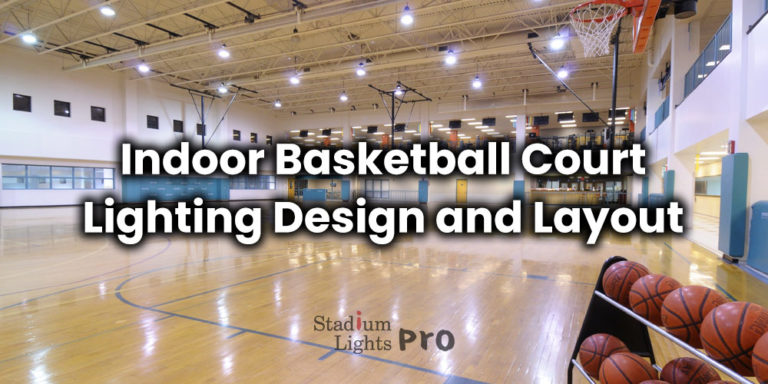
A full-size basketball court usually measures around 28 meters by 15 meters, which sounds simple on paper but gets a bit tricky once lighting comes into play. The goal is not just to “make it bright,” but to make sure the whole surface feels evenly lit, from baseline to baseline, without weird dark corners or overly bright hotspots.
Even small design choices can change how the court feels during play. If poles are slightly off in positioning or spacing, players often notice shadow streaks during fast breaks or when driving along the wings. These shadows might not seem like a big deal at first, but during quick transitions, they can affect how clearly the ball and other players are perceived.
Most outdoor basketball courts use somewhere between 4 to 8 lighting poles. Lower-end residential setups often stick to 4 poles to keep things simple and cost-friendly, while schools, public parks, and training facilities tend to move toward 6 or 8 poles to get smoother coverage across the entire court surface.
Pole height is another detail that quietly makes a big difference. Typical installations range from 6 meters up to 12 meters. The higher the pole, the softer and more spread-out the light becomes, which helps reduce glare and avoids that “spotlight effect” players sometimes complain about. Higher mounting also helps keep light out of players’ direct line of sight, especially during jump shots or fast drives to the basket.
Brightness and Lux Levels
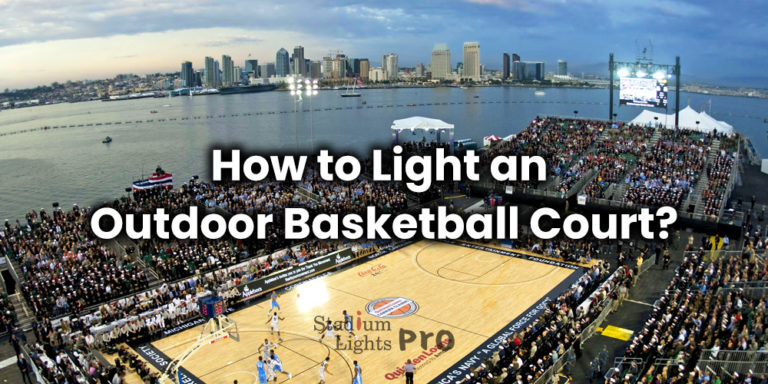
Basketball court lighting is usually measured in lux, which basically tells you how much usable light actually hits the floor. For casual outdoor courts, something around 200 to 300 lux is usually enough for comfortable evening play. At this level, players can see the ball clearly, track movement, and enjoy the game without strain.
When you move into more serious environments like school teams, training academies, or semi-competitive leagues, the numbers usually shift upward to around 500 to 750 lux. At this range, fast passes, perimeter shooting, and defensive reads feel noticeably sharper, especially under pressure.
Higher-end courts used for filming or broadcasting can go beyond 1000 lux, where the lighting is designed not just for players but also for cameras. These setups often require tighter control over flicker, color temperature, and uniformity so that footage looks clean and consistent under motion.
One thing that often gets misunderstood is that higher lux doesn’t automatically mean better lighting. A court at 600 lux can still feel awkward if lighting is uneven. On the other hand, a well-balanced 300 lux setup with smooth distribution can feel surprisingly comfortable to play on. That’s where things like uniformity ratio and light blending become just as meaningful as raw brightness numbers.
Beam Angle and Light Spread
Beam angle is one of those behind-the-scenes design choices that quietly shapes the entire playing experience. It controls how light spreads out from each fixture and how it overlaps across the court surface.
Narrow beam angles concentrate light into tighter zones, which can increase brightness in specific areas like the key or perimeter. The downside is that it can create sharper contrasts between lit and unlit areas, which sometimes makes movement feel less natural during fast gameplay.
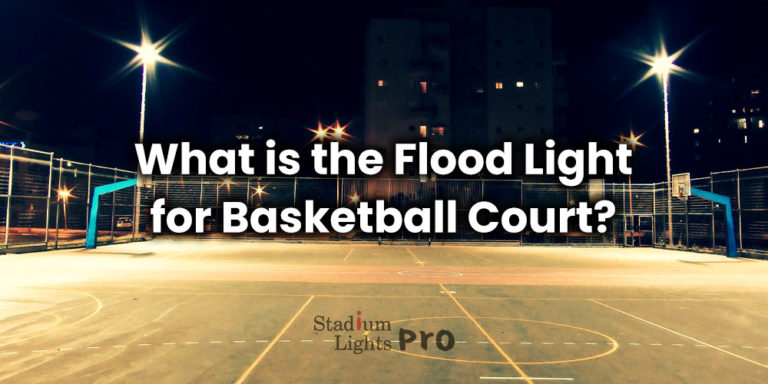
Wider beam angles, on the other hand, spread light more evenly across the court. This helps soften transitions between bright and dim zones and reduces harsh shadows, especially near the sidelines and corners. Most modern LED basketball court floodlights use beam angles ranging from 60° to 120°, depending on pole height, spacing, and court layout.
In practice, the goal is simple: create a lighting field where players don’t consciously notice changes in brightness as they move. When a court is well balanced, the lighting just “disappears” into the background and the focus stays on the game itself.
Weather Resistance and Outdoor Durability
Outdoor basketball court lighting has to handle a lot more than just nighttime visibility. Rain, dust, humidity, heatwaves, and even cold snaps all affect how long a system lasts and how well it performs over time.
That’s where protection ratings like IP65, IP66, and IP67 come in. Most solid outdoor sports lighting systems start at IP65, which means they’re fully dust-tight and can handle water jets from multiple directions without issues. In regions with heavier rainfall or more extreme conditions, IP66 or IP67 ratings are often preferred for extra protection against stronger water exposure or temporary flooding conditions.
Wind load is another factor that tends to get overlooked during planning. Lighting poles above 8 meters are especially sensitive to long-term structural stress. If the foundation or anchoring system isn’t designed properly, even slight movement over time can shift beam angles and gradually throw off lighting uniformity across the court.
Materials also matter more than they seem at first glance. Galvanized steel and powder-coated aluminum are commonly used because they resist corrosion and hold up well under outdoor exposure. Over a few years, this can be the difference between a system that stays stable and one that slowly starts to degrade in performance.
Choosing the Right Basketball Court Lighting Setup
Matching Lighting to Use Case
Picking a basketball court lighting setup really starts with one simple question: how is the court actually going to be used day to day? A home court that sees a few evening shootarounds each week doesn’t need the same level of output or system complexity as a school court that runs practices, PE classes, and weekend games back-to-back.
When usage is light, something in the range of 200 to 300 lux usually feels comfortable and practical. It gives enough visibility for casual play without pushing energy bills too high or overengineering the setup.
Once you move into school or club environments, the requirements naturally shift upward. Courts used for training sessions, recorded games, or competitive play tend to sit closer to 400 to 600 lux, and sometimes even higher if filming or night tournaments are part of the plan. At this level, players can track fast movement more clearly, and the camera footage also looks noticeably cleaner.
Mounting Height and Pole Placement
Pole height is one of those decisions that quietly influences everything else in the lighting design. Most basketball court lighting systems use poles somewhere between 6 and 12 meters, depending on how wide the light needs to spread and how much glare control is required.
Higher mounting points help soften the light and distribute it more evenly across the court surface. This reduces harsh shadows and helps avoid that uncomfortable “in-your-eyes” glare when players shoot or rebound near the basket.
But taller setups come with their own trade-offs. They require stronger foundations, more precise engineering, and careful aiming of each fixture. If the alignment is slightly off, it can create uneven patches of brightness that become obvious during fast transitions or diagonal passes across the court.
Pole placement is just as important as height. Even spacing across the perimeter ensures that light overlaps correctly, avoiding dark zones near corners or sideline areas where players often move during defensive plays or fast breaks.
Energy Efficiency and Operating Cost
Energy use is one of the biggest long-term factors in any basketball court lighting system. LED setups have changed the game here, often reducing electricity consumption by around 40% to 60% compared to older metal halide systems while delivering the same or better brightness levels.
To make that more real, a full outdoor court that previously required around 4,000 watts might now operate comfortably at 1,500 to 2,500 watts depending on design. That difference adds up fast, especially for facilities that run lights nightly.
Over a 10-year period, those savings can easily reach into the thousands in electricity costs alone. For schools, municipalities, and sports clubs, this is often one of the strongest reasons to upgrade to LED systems.
Cost Breakdown and What Buyers Usually Overlook
Basketball court lighting costs can swing quite a bit depending on how ambitious the setup is. A small residential court with a simple LED floodlight arrangement might start in the range of a few thousand dollars, especially if the layout is straightforward and electrical work is already in place. On the other end, a fully designed sports facility with multiple courts, high poles, and controlled lighting zones can easily move into the tens of thousands or even more, depending on design standards and equipment quality.
But here’s where things get a bit interesting. The fixture price people usually focus on is only one slice of the overall budget. In many real installations, the lights themselves might account for less than half of the total spending. Everything else around them quietly builds up the final number.
What Actually Makes Up the Installation Cost
Once the design is locked in, the physical work begins, and that’s where hidden complexity shows up. Installing basketball court lighting typically involves trenching for underground electrical cables, which ensures safe and clean power distribution across the court perimeter. Depending on soil conditions and distance from the main power source, trenching alone can add a noticeable cost per meter.
Then there are the pole foundations. Each lighting pole usually requires a reinforced concrete base designed to handle wind load and long-term structural stress. For taller setups in the 8 to 12 meter range, these foundations become deeper and more heavily reinforced, which naturally increases labor and material costs.
Wiring systems also play a big role. This includes electrical conduits, waterproof junction boxes, surge protection devices, and proper grounding systems. In more advanced setups, there may also be circuit breakers and load balancing panels to make sure the entire court lighting system runs safely under different usage conditions.
In some modern courts, especially schools and commercial sports centers, control systems are added on top. These might include dimming modules, timed lighting schedules, or smart control panels that allow operators to adjust brightness levels based on usage. While these features improve flexibility, they also add to both hardware and installation costs.
When everything is combined, installation and infrastructure work can easily account for around 30% to 50% of the total project budget. That’s why two lighting systems that look similar on paper can end up with very different final pricing once the site work is included.
Why Lighting Specs Don’t Tell the Full Cost Story
It’s common to compare lighting systems based on wattage, lumens, or lux levels, but those specs don’t reflect how complex the actual installation will be. For example, a high-power LED system installed on short poles in an open area might end up cheaper overall than a lower-power system that requires taller poles, longer cable runs, and more complicated foundation work.
Site conditions matter a lot more than people expect. Things like soil type, distance from electrical supply, existing infrastructure, and even local weather conditions can all influence how expensive a project becomes. That’s why lighting design is often just as much about engineering planning as it is about the fixtures themselves.
Maintenance Costs That Often Get Missed
One of the biggest advantages of LED basketball court lighting is that it’s generally low-maintenance compared to older systems like metal halide or high-pressure sodium. There are no bulbs that need frequent replacement, and energy systems tend to be more stable over time.
Still, “low maintenance” doesn’t mean “no maintenance.” Over time, small things start to accumulate. Dust and dirt can build up on lens surfaces, slightly reducing brightness output. In outdoor environments, especially near trees or dusty areas, this effect becomes more noticeable after a couple of years.
Pole stability is another subtle factor. Even small shifts caused by wind, ground settling, or long-term vibration can slightly change beam direction. It doesn’t always look dramatic, but it can slowly affect lighting uniformity across the court surface.
In real-world usage, many facility managers schedule periodic inspections every 6 to 12 months. These checks usually include fixture cleaning, alignment verification, and electrical safety inspections. For high-usage courts, occasional recalibration helps keep lighting levels consistent and ensures the court still feels evenly lit during fast gameplay.
Over a 5 to 10 year span, these small maintenance steps make a noticeable difference in keeping the system feeling stable and reliable instead of gradually drifting into uneven brightness or reduced performance.
Lighting Grants and Funding Opportunities for Basketball Courts
How Lighting Grants Support Court Upgrades
In many regions, upgrading or installing basketball court lighting can qualify for public or private funding programs. These lighting grants are usually designed to support community sports development, energy efficiency improvements, or safety upgrades in public spaces.
For schools, municipalities, and sports organizations, these grants can significantly reduce upfront costs. In some cases, funding can cover anywhere from 20% to 80% of total installation expenses, depending on the program and location.
The main focus of most grant programs is usually energy efficiency and community impact. LED basketball court lighting fits well into this because it reduces long-term energy use while extending usable hours for sports activities in the evening.
Common Types of Funding Programs
Different types of funding programs exist depending on the region. Some are government-backed initiatives aimed at improving public sports infrastructure, while others come from energy efficiency programs focused on reducing electricity consumption in public facilities.
There are also community development grants that prioritize youth sports access, especially in areas where outdoor recreational facilities are limited. In these cases, lighting upgrades are often included as part of broader sports facility improvement projects.
In some cases, utility companies also offer rebates or incentives when facilities switch from older systems like metal halide to LED lighting. These programs typically reward reductions in energy consumption and improved efficiency ratings.
Why LED Systems Improve Grant Approval Chances
LED lighting systems tend to align well with grant requirements because they directly support energy-saving goals. Many funding programs specifically look for measurable reductions in electricity usage and carbon emissions.
Since LED basketball court lighting can reduce energy consumption by up to 60%, it often meets or exceeds the efficiency thresholds required for approval. Combined with longer lifespan and lower maintenance needs, it becomes easier for applicants to justify long-term value.
In practice, projects that clearly demonstrate both community benefit and energy savings tend to have a stronger chance of approval, especially when the lighting design includes proper lux planning and modern LED specifications.
Getting the Right Setup with Professional Guidance
Choosing a basketball court lighting system can feel a bit overwhelming because there are many variables working together at once: brightness, pole height, beam angle, cost, and durability all influence each other. A small misstep in design can affect performance for years, especially in outdoor environments where adjustments are harder once everything is installed.
For anyone planning a new court or upgrading an existing setup, reaching out for tailored lighting design advice can save time, money, and a lot of trial and error. If there’s interest in building or improving a basketball court lighting system, feel free to reach out for a more detailed consultation so the setup fits the space, budget, and long-term usage goals in a clean and efficient way.