
Upgrading stadium lights can feel like a huge task for any high school. Between safety concerns, energy efficiency, and keeping the stadium usable for night games, the price tag can climb into tens of thousands of dollars—or even more. Luckily, there are grants that can help schools cover a big chunk of the cost. But how do you actually get one? It’s not as simple as filling out a form, and there are a few things to keep in mind if you want your application to have a real shot.
Understanding Grants for School Facilities
Different Types of Grants You Can Go For
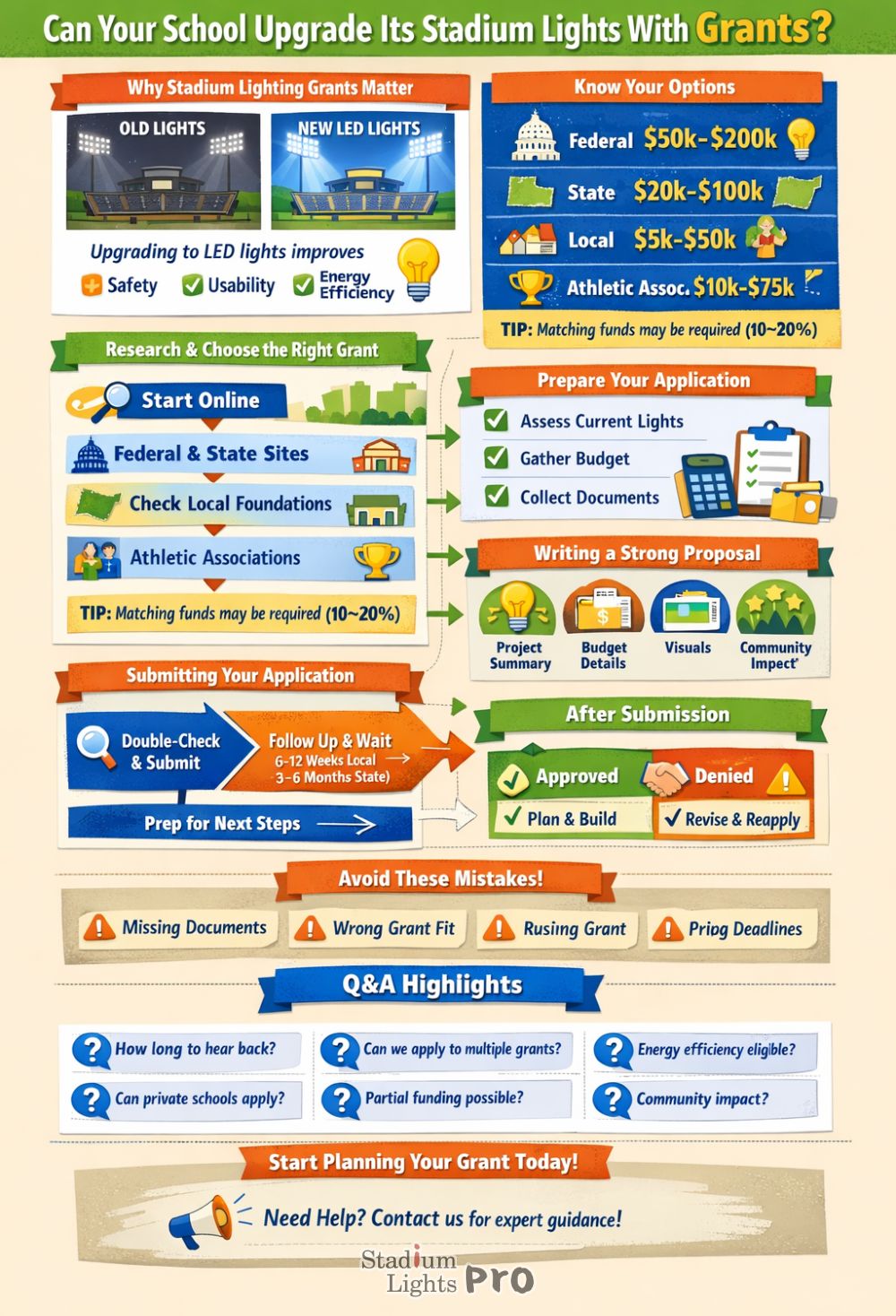
Before you start thinking about applications, it’s good to know what kinds of grants are actually available. There are federal programs that can cover up to $100,000 for school infrastructure improvements, including stadium and athletic facility upgrades. Then there are state-level initiatives—for example, some state education departments set aside $50,000–$200,000 annually for energy-efficient projects in schools, which often includes installing LED stadium lights. On top of that, local government funds or city improvement programs sometimes offer $10,000–$50,000 for schools that host community events, like football games, graduation ceremonies, or local sports leagues.
Don’t forget about private foundations and nonprofits. Many of these groups focus specifically on school athletics, youth programs, or community engagement. Grants from these sources often range between $5,000 and $75,000 and can be easier to secure because they’re less competitive than big federal programs. Some foundations even provide technical support, like helping with energy audits or connecting schools to certified lighting contractors.
Who Can Apply?
Eligibility can feel a little confusing because it changes from grant to grant. Some grants are strictly for public schools, while others allow private or charter schools to apply. A few grants specifically require that your school demonstrates a certain number of student-athlete participants—say, at least 200 students involved in sports programs—to qualify. Some programs also prioritize schools that host regional tournaments or community events, since that makes the stadium lighting benefit a wider audience.
In some cases, your school might need to contribute 10–20% of the total cost. So, if a lighting upgrade costs $150,000, you might be expected to put in $15,000–$30,000. This isn’t unusual, and many grants actually look more favorably on applicants who are willing to share some of the investment. Showing that your school can cover part of the project demonstrates commitment and makes your proposal stronger.
What Types of Stadiums Can Get These Grants
Grants for stadium lighting aren’t just for football fields. Most programs are open to any school athletic facility that hosts regular sports activities or community events. Highlighting all the ways your field is used can make your application much stronger because reviewers like to see projects that benefit multiple teams, students, and the wider community. Here’s a detailed look at the types of stadiums and fields that often qualify.
Football Stadiums
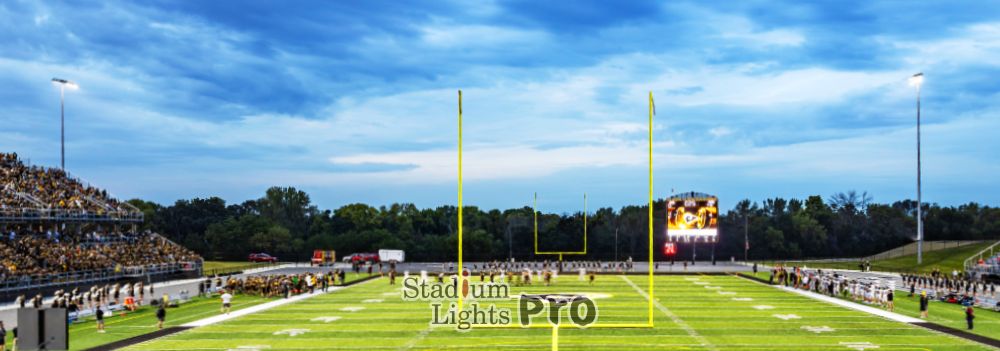
Football fields are the most common type of facility to receive grants. Night games, homecoming events, varsity practices, and playoff tournaments make these stadiums highly eligible. Multi-use football stadiums that also host community leagues, regional tournaments, or marching band practices are particularly attractive because they demonstrate broad impact.
Even smaller high school football fields can qualify, especially if the current lighting is outdated, flickering, or leaving parts of the field in shadow, which poses safety risks for athletes and spectators.
Soccer Fields
Soccer fields, especially those used for evening practices and regional tournaments, are highly eligible for grants. Schools that share fields with club leagues, youth soccer programs, or adult recreational leagues have an extra edge because it shows the project benefits a wider population.
If your field doubles as a practice space for multiple teams, mentioning this helps reviewers understand the multifunctional value of the lighting upgrade. You can also include details like extending practice hours after school or allowing tournaments to be scheduled in the evenings.
Baseball and Softball Fields
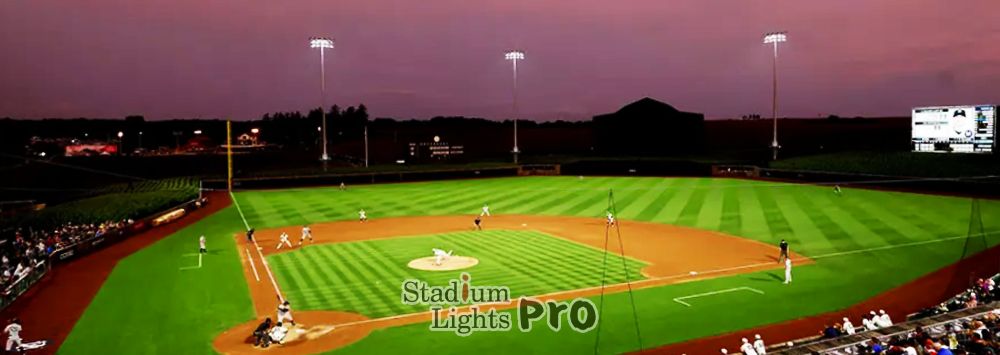
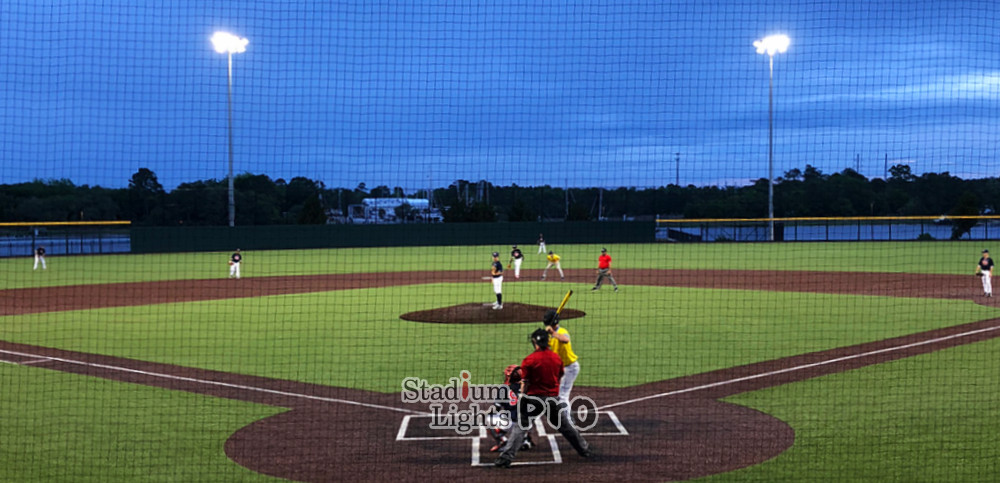
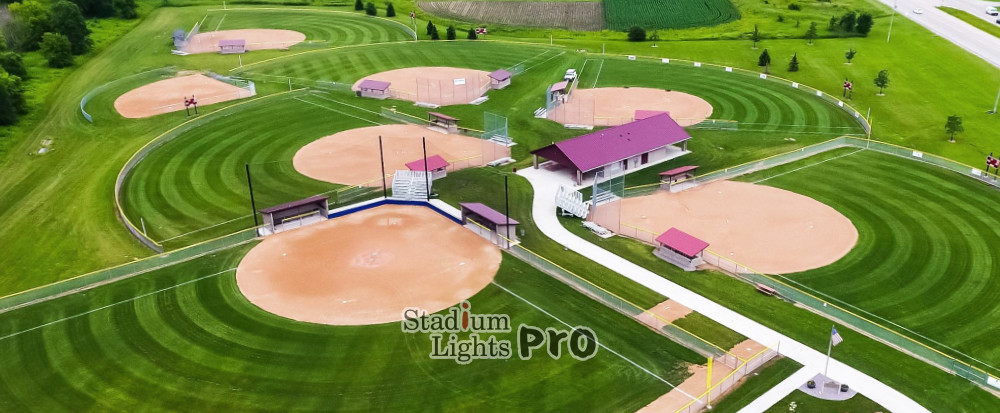
Evening baseball and softball games are extremely common, and older or dimly lit fields are perfect candidates for lighting upgrades. Grants can cover:
- Infield and outfield lighting
- Dugouts and spectator areas
- Scoreboards and perimeter lighting
Schools that host community leagues, travel teams, or tournaments can show additional impact, which strengthens the grant application. Highlighting safety improvements for players running bases or catching balls in poorly lit areas can make your proposal more persuasive.
Lacrosse Fields
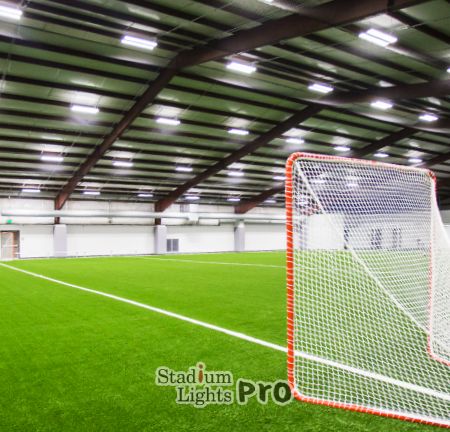 Lacrosse often uses multipurpose athletic fields, which can be shared with soccer or football. Lighting improvements on these fields benefit not only school teams but also community leagues and summer camps.
Emphasize how better lighting increases safety during high-speed games, reduces shadows that could cause injuries, and allows more evening practice sessions, helping student-athletes improve their skills while accommodating tight schedules.
Track and Field Facilities
Track and field venues are generally used during the day, but evening meets, relays, and practice sessions are becoming more common. Lighting upgrades along the track lanes, jumping pits, and throwing areas improve both safety and usability.
Grants may also cover field event areas like shot put, javelin, and discus, especially if these are part of evening competitions or community athletics programs. Schools can show how the upgrades benefit multiple sports simultaneously, which strengthens the application.\
Tennis Courts
High school tennis courts are often used for evening matches, tournaments, and community leagues. Adding lights extends practice hours, supports team training schedules, and allows schools to host regional competitions after sunset.
If your school has multiple tennis courts, you can highlight that upgrading all courts will improve capacity and safety, ensuring more students and community members can use the facilities efficiently.
Gymnasiums and Indoor Multipurpose Arenas
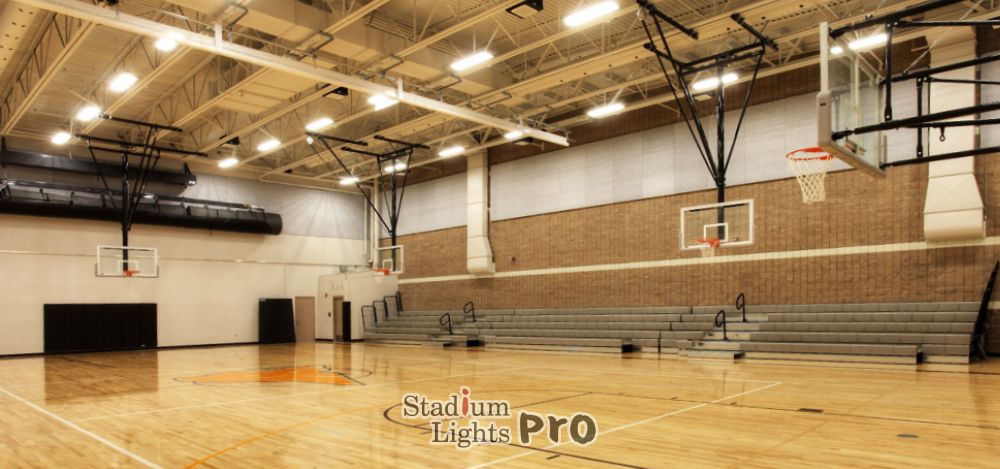
Some grants cover indoor stadiums or gym lighting, particularly for basketball, volleyball, wrestling, or other indoor evening events. Upgrading to energy-efficient lighting in gyms not only improves visibility but also reduces long-term electricity costs.
If your indoor arena is used for school events, community leagues, or graduation ceremonies, be sure to include that. Highlighting multiple uses shows broader community impact, which grant reviewers appreciate.
Rugby, Field Hockey, and Emerging Sports
Fields used for rugby, field hockey, ultimate frisbee, or other emerging sports can also qualify. Grants favor projects that benefit multiple student-athletes and teams, even if the sport is newer or less common in your area.
Detail how lighting upgrades allow safe evening practices, community tournaments, and shared use with other sports programs. This demonstrates efficiency and broad impact, two key points that can improve your application.
Multipurpose Community Fields
Some grants extend to fields that host non-athletic events, like graduation ceremonies, concerts, festivals, or summer camps. The more diverse the field use, the stronger the case for funding.
Schools can highlight:
- Evening youth leagues or adult recreational programs
- Community concerts or cultural events
- Multi-sport practices in shared fields
Even smaller programs, like club lacrosse teams or youth soccer leagues, count toward community impact. Reviewers appreciate seeing that the project benefits both students and local residents, not just a single athletic team
Why Knowing the Rules Matters
Understanding these details upfront can save a ton of stress later. For instance, if a grant only accepts applications from public schools, spending weeks preparing a proposal for a private school is a wasted effort. Similarly, if a grant prioritizes energy-efficient LED lighting, you’ll want to emphasize that in your application rather than proposing older halogen-style lights.
Also, pay attention to deadlines, required documents, and scoring criteria. Grants sometimes have very specific rules about how to present a budget, photos, or field diagrams, and missing even one detail can lower your chances. Schools that do their homework upfront often see a 30–50% higher chance of approval compared to those that rush through the process.
Making Your Project Stand Out
To give your grant application a better shot, it helps to highlight the multiple benefits of stadium lighting. Think safety, like reducing accidents during night games; community use, such as hosting local sports leagues or high school graduation ceremonies; and energy savings, which can reduce annual electricity bills by thousands of dollars if using LED lighting. Including numbers like projected energy savings or estimated community attendance can make your proposal much more persuasive.
Preparing for the Grant Application
Take a Close Look at Your Stadium
Before writing a single word of your application, you need to really know the state of your stadium lighting. Are the lights old and flickering? Do certain areas of the field stay dark during night games? Are the current fixtures meeting safety and sports league standards? Documenting these issues with photos, videos, and written notes makes your case much stronger. For example, if you can show that poor lighting caused at least three canceled games last season or safety incidents during practices, grant reviewers will see the real-world impact.
It’s also worth noting the type of lights you have now. Many grants, especially those focused on energy efficiency, prefer LED or other low-energy options, so if your stadium still uses halogen or metal-halide lights, that’s something to mention. Adding this context helps reviewers understand why your upgrade is not just nice to have—it’s practical and cost-effective in the long run.
Build a Realistic Budget
Once you understand the problem, it’s time to figure out the money side. Reach out to at least two or three lighting contractors to get detailed quotes. Make sure these quotes include installation, wiring upgrades, fixture replacement, and any necessary electrical work. But don’t stop there—think about ongoing costs, too. Maintenance, replacement bulbs, and electricity usage all factor into the real price tag.
If you plan to go for LED or smart lighting, highlight potential savings. For instance, many schools report reducing energy costs by 30–40% per year after switching to LEDs. Including numbers like “saving $3,000 annually on electricity” makes your proposal more persuasive and data-driven, which reviewers love.
Gather the Right Documents
Good documentation can make your application stand out. Letters of support from your school board, PTAs, local businesses, or community leaders show that the project has backing beyond just the athletic department. Photos of the field, diagrams of where new lights will go, and even short video clips of current games at night help grant reviewers picture the problem and the solution.
If your stadium is used for community events—like local youth leagues, summer camps, or graduation ceremonies—include that information too. Some grants are designed for projects that benefit the wider community, not just the school, so emphasizing this angle can increase your chances of success.
Create a Timeline
While not always required, having a rough installation timeline can strengthen your proposal. Outline when the project could start, how long installation will take, and when the stadium would be fully operational. Showing that you’ve thought about practical logistics—like avoiding major sports seasons or coordinating with other school events—demonstrates organization and readiness.
Researching and Choosing the Right Grant
Where to Start Looking
Finding the right grant for stadium lighting can feel overwhelming, but knowing where to start makes a big difference. Federal programs are often the largest sources of funding, with grants ranging from $50,000 up to $200,000 for school facility improvements. Some of these programs even target athletic facility upgrades, including stadium lighting, safety enhancements, or energy-efficient systems. If your school is looking for a major overhaul or complete replacement of old lights, these federal programs are often the best place to start.
State education departments are another strong option. Many states set aside $20,000–$100,000 annually for infrastructure projects that improve safety, accessibility, or energy efficiency. For instance, some states have specific funding streams for LED lighting upgrades or sustainable facility improvements, which could cover not just installation costs but also planning, permits, and even energy audits.
Local foundations and community organizations can also provide smaller but more attainable grants, usually ranging from $5,000–$50,000. These grants are often less competitive than federal programs, making them a good option for schools that are new to the grant process. Some local grants also provide extra support, like technical consulting, project management guidance, or connections to certified lighting contractors, which can be invaluable for schools tackling a big installation project for the first time.
Don’t forget athletic associations. If your school hosts regional tournaments, league championships, or community sports events, some associations offer grants specifically for athletic facilities. Funding from these programs typically ranges from $10,000–$75,000, and they often favor schools that show clear community impact. Highlighting how your stadium is used beyond school sports—like youth leagues, summer camps, or local events—can make your application more competitive.
Matching Your Project to the Grant
Once you know where to look, the next step is making sure your project aligns with the grant’s goals. One of the biggest mistakes schools make is applying for grants that aren’t a good fit. For example, a grant focused on classroom technology, music programs, or arts initiatives is unlikely to fund a stadium lighting project, no matter how strong your proposal is.
Look for keywords in the grant description, such as energy efficiency, athletic facilities, field lighting, or community engagement. If a grant emphasizes “sustainable infrastructure” or “reducing energy costs,” it’s perfect for an LED stadium lighting upgrade that could save thousands of dollars a year in electricity bills. Grants that mention student safety or community benefit are also great matches because upgraded lighting improves both.
Another tip is to check past winners. Many grant programs list previous recipients online. Seeing the types of projects funded before can give you insight into what reviewers prioritize, and it helps you tailor your proposal to match those expectations. Schools that do this research first often see a 30–50% higher chance of success because their application closely aligns with the grant’s stated goals.
Consider Multiple Grants
For many schools, one grant isn’t enough to cover a full stadium lighting upgrade. That’s where combining multiple funding sources comes in. For instance, a large federal or state grant might cover most of the installation costs, while a smaller local foundation or athletic association grant could fund extras, like wiring upgrades, smart lighting systems, or enhancements for community events.
Combining grants also shows reviewers that your project is well-supported and achievable. They like seeing that multiple stakeholders believe in your project and that it won’t stall due to a lack of funding. Even partial grants can help your school move forward—sometimes schools use smaller grants to cover planning, electrical work, or permits, which strengthens future applications for bigger grants.
Track New Opportunities
Grant availability can change from year to year, so it’s a good idea to set up a system for tracking new grants. Some schools subscribe to newsletters from state education departments, athletic associations, or local foundations. Others set reminders to check federal grant databases every quarter. By staying organized and aware of deadlines, your school can jump on new opportunities quickly, giving you a better chance to secure funding before the competition gets fierce.
Evaluate Your School’s Readiness
Finally, before applying, take a moment to evaluate whether your school is ready for the project. Grant reviewers often consider your school’s capacity to complete the project successfully. Do you have a plan for contractors, installation schedules, and maintenance? Are permits or approvals in place? Showing that your school is well-prepared not only strengthens your current application but also positions you favorably for future grants.
Writing a Strong Grant Proposal
Start With a Clear Project Summary
The first thing reviewers see is your summary, and first impressions matter. Your opening should grab attention and clearly explain why your stadium lighting project matters. Don’t just say “we need new lights”—paint the picture. Are the current lights outdated, flickering, or leaving large sections of the field in shadow? Has poor lighting caused games to be canceled or practices to be cut short? For example, if three night games were canceled last season due to inadequate lighting, or if evening soccer and lacrosse practices are limited, include those specifics.
Explain how new lights will improve safety, usability, and energy efficiency. For instance, LED stadium lights not only illuminate the field evenly but can also reduce electricity bills by 30–40% annually, saving thousands of dollars each year. If your stadium serves 300+ student-athletes and community teams, emphasizing the broader impact helps reviewers see that your project is more than just a school upgrade—it benefits the entire community.
You can also briefly touch on long-term value. Well-designed lighting systems can last 15–20 years, reducing maintenance costs and providing consistent performance. Highlighting both immediate and lasting benefits makes your proposal stronger and shows that the project is thoughtful and practical.
Break Down the Budget
A strong budget is more than a single dollar amount—it tells reviewers that your project is realistic and well-planned. Break it down into categories like installation, wiring upgrades, fixtures, maintenance, replacement bulbs, and labor costs. If your proposal involves LED or smart lighting systems, include long-term energy savings, which can make a big difference in the grant’s evaluation. For example, a $150,000 project might save $3,000–$5,000 per year on electricity, and adding that projection can make the financial case more compelling.
Don’t forget to account for contingencies—unexpected costs like additional wiring or electrical work often come up during installation. Including a 5–10% contingency in your budget shows reviewers that you’re planning responsibly.
If the grant asks for measurable outcomes, make it specific and data-driven. Examples include reducing night-game accidents by 50%, extending usable field hours from 10 to 25 hours per week, or cutting electricity costs by a measurable amount. Numbers make your proposal tangible and give reviewers confidence that the project’s impact can be tracked.
Add Visuals to Make Your Case
Visuals are a powerful tool in grant proposals because reviewers often skim dozens of applications. Include field diagrams showing where each new light will go, photos of the current stadium lighting, or charts projecting energy and cost savings. Even a short video of evening games under the current lighting setup can be highly effective—it allows reviewers to see the problem firsthand and imagine the improvement.
You can also create a before-and-after mockup, showing how the upgraded lights will illuminate the field. This visual approach helps your application stand out and shows that you’ve put thought into design and placement.
Highlight Community Benefits
While your school is the primary beneficiary, many grants prioritize projects with wider community impact. If your stadium hosts community leagues, regional tournaments, graduation ceremonies, or local events, make sure to highlight that. Grants are more likely to favor applications that show the project will serve multiple groups, not just the athletic department.
Even small details can strengthen your case. For instance, “upgrading the lights will allow local youth soccer and lacrosse leagues to practice safely after 6 PM” demonstrates tangible community value. If your stadium is used for fundraisers, summer camps, or high school playoff games, include those details too—it reinforces the idea that the investment benefits more than just your school.
Show That You’re Ready
A strong proposal demonstrates that you’re organized and ready to execute the project. Include a timeline for installation, outlining key milestones like ordering materials, installation, testing, and final inspection. Mention any contractors you’ve contacted or plan to hire, and include maintenance plans for the next 5–10 years. Showing that you’ve considered logistics, staffing, and future upkeep reassures reviewers that the project will be completed efficiently and responsibly.
You can also explain how the project aligns with school or district priorities, like sustainability initiatives, student safety, or community engagement. This helps tie your project to broader goals and makes it more compelling.
Add a Strong Closing Statement
End your proposal by emphasizing the lasting impact of the project. Highlight how better stadium lighting will improve safety, energy efficiency, usability, and community engagement. Reinforce that the funding will be used wisely and that your school is ready to implement the project immediately once approved. A clear, confident closing leaves reviewers with a positive impression and increases your chances of approval.
Submitting the Application
Double-Check Every Detail
Before you hit “submit,” take the time to review your entire application thoroughly. Grant reviewers often go through hundreds of submissions, and even a small oversight—like a missing signature, an outdated diagram, or a budget line that doesn’t add up—can hurt your chances. Make sure every form is filled out completely, the budget in your proposal matches the numbers in any spreadsheets or attachments, and that all supporting documents are included.
Supporting documents can include field diagrams, contractor quotes, photos of the current stadium lighting, energy audits, and letters of support from school boards or local community groups. Even minor details, like labeling photos clearly or numbering pages, make your application look professional. Some grants also ask for a statement of prior experience managing projects or handling funds, so check if that’s required and include it if it is.
Pay Close Attention to Deadlines and File Formats
Many applications get rejected simply because schools missed a deadline or submitted the wrong file type. Some grants require PDFs, others accept only Word documents or online form submissions. Others may have strict rules about file size, naming conventions, or attachments. A missing or misformatted file can mean your proposal never even gets reviewed, no matter how solid your project is.
If possible, aim to submit a few days before the official deadline. This gives you time to fix technical issues, double-check attachments, and even ask for clarification if something is unclear. Late submissions almost always get disqualified, so giving yourself a buffer is a smart move.
Keep a Record of Contacts
After submitting, don’t just sit back and wait. Keep a record of who you can contact at the grant office, including email addresses and phone numbers. Some programs respond quickly, while others may take weeks or even a few months to review applications. Having a point of contact is helpful if there’s a technical problem, a missing attachment, or a question about your proposal.
It also shows initiative. If you need to provide additional clarification or documents, reaching out politely and professionally demonstrates that your school is organized and committed. You might even be able to confirm receipt of your application, ensuring nothing got lost in the process.
Be Patient but Proactive
Grant approval can take time. Local or community grants may take 6–12 weeks, while federal or state programs can take 3–6 months or longer. During this waiting period, it’s okay to check in periodically—but always do so politely. A simple, professional email asking for confirmation that your application is complete or for an estimated review timeline is usually acceptable.
At the same time, don’t wait passively. Use this time to finalize project planning. Keep communication open with potential contractors, review your installation schedule, and start preparing any permits or approvals that will be needed. Being proactive shows that your school is ready to implement the project quickly once funding is approved.
Prepare for Next Steps
Even before you get an answer, it’s smart to plan ahead. Make sure contractors are on standby and aware of potential start dates. Ensure all permits, field access approvals, and insurance documents are ready, so if your grant gets approved unexpectedly fast, you can move forward immediately.
Think about how you’ll phase the installation to minimize disruption to games, practices, and community events. For example, if your stadium hosts 12 night games, multiple evening soccer practices, and weekend youth league matches, plan which lights or sections can be installed first to avoid conflicts. Having a flexible, detailed plan ready not only helps you execute efficiently but can also impress grant reviewers, especially for programs that value practical, well-organized implementation.
Keep Track and Document Everything
Finally, maintain a grant tracking system. Record submission dates, confirmation emails, contact information, and notes from any conversations with administrators. This ensures that nothing falls through the cracks and makes it much easier if you need to resubmit, appeal, or apply for another grant later. Schools that stay organized in this way tend to have much higher success rates with multiple funding applications because they can demonstrate professionalism, preparedness, and accountability.
After Submission
What to Do If Your Grant Gets Approved
If your grant gets the green light, congratulations! Now the focus shifts from planning to putting the project into action. Start by mapping out a detailed project timeline, coordinating with contractors, electricians, and your facilities staff. Make sure the installation doesn’t interfere with games, practices, or community events. For example, if your stadium hosts 10 home football games, 15 evening soccer practices, and local youth league tournaments, consider doing the work in phases or during off-season months to minimize disruptions.
Communication is key. Keep in touch with the contractor and grant administrators, especially if the grant requires progress reports or documentation of completed milestones. Staying organized from day one not only keeps you in compliance but also shows the funding organization that your school is responsible and capable of executing the project efficiently.
Think about including contingency plans too. Unexpected delays—like weather, supply chain issues, or scheduling conflicts—can happen. Having a backup timeline or alternative dates ensures the project keeps moving smoothly without affecting events or games.
What to Do If Your Grant Is Denied
If your application doesn’t get approved, don’t be discouraged. Grant programs are highly competitive, and limited funding often means worthy projects don’t get funded on the first try. The best step is to ask for feedback from the grant administrator. They can point out missing documents, unclear budget items, or areas where your proposal could be stronger.
Many schools apply multiple times before securing funding. Take the feedback, revise your proposal, and explore alternative sources. Smaller local grants, athletic associations, or energy-efficiency programs can sometimes provide partial funding, allowing you to start the project in stages rather than waiting for full funding. Even $10,000–$50,000 from a local foundation can help replace lights or upgrade wiring, making your next big grant application more persuasive.
Keep Planning Ahead
Even after submission—whether approved or denied—it’s smart to keep your project moving forward. Maintain relationships with contractors, track upcoming grant opportunities, and update your budget as prices for fixtures, wiring, or labor change.
Being proactive shows that your school is organized, committed, and ready to act. This can make a real difference for future grant applications, as reviewers often favor schools that demonstrate preparation and accountability. The goal is to position your stadium lighting project so that when funding does come through, you’re ready to install quickly and efficiently, bringing safer, brighter lighting to your field and community.
Common Mistakes to Avoid
Not Enough Documentation
One of the biggest mistakes schools make is underestimating how much documentation grant reviewers actually expect. Grants aren’t just about saying “we need new lights”—they want to see proof that your project is well-planned and feasible. That includes photos of the current stadium lighting, diagrams showing where new lights will go, letters of support from the school board, PTA, or local community organizations, and a detailed budget.
Even small details matter. For instance, including a short video of night games under current lighting can make the safety and visibility issues immediately obvious. Providing statistics, like “20% of our field is inadequately lit during evening practices,” adds credibility. Some schools also forget to include quotes from contractors or energy audits, which show reviewers that you’ve done the homework and your cost estimates are realistic.
Applying for the Wrong Grant
Another trap is targeting grants that aren’t really a fit. A stadium lighting project submitted to a technology or classroom-supply grant is almost guaranteed to be rejected, no matter how detailed your proposal is. The key is to look for grants that mention energy efficiency, athletic facilities, community programs, or infrastructure upgrades.
Check past winners if possible. If previous recipients were mostly classroom or tech projects, that grant might not be the best match. Matching your proposal to the right funding source shows reviewers that you understand the program’s goals and can maximize its impact.
Rushing the Process
Rushing your application can easily backfire. Missing a deadline, submitting an incomplete form, or having a budget that doesn’t add up can put your project at the bottom of the pile, even if it’s otherwise excellent. Take time to review every section, double-check numbers, and ensure all supporting documents are included.
A good tip is to have someone outside of your team read the proposal. They can catch unclear wording, missing details, or assumptions you didn’t think needed explanation. Sometimes what makes perfect sense to you might confuse a reviewer.
Forgetting Community Benefits
Many grants favor projects that impact not just the school but the surrounding community. Some schools focus only on athletic improvements and forget to highlight community use, like hosting local youth sports leagues, summer camps, or regional tournaments. Failing to emphasize how the stadium benefits the wider community can weaken your application, especially for grants that specifically prioritize community engagement.
Ignoring Energy Efficiency
If your project includes new lighting, don’t overlook energy efficiency. Grants increasingly favor LED upgrades or smart lighting systems that cut electricity use. Failing to mention potential energy savings or reductions in long-term costs can make your proposal less competitive. Reviewers like to see a project that solves a problem now and saves money in the future.
Not Planning for Maintenance
Some schools forget that grants care about more than installation—they want to know the lights will be maintained. Not including a plan for ongoing maintenance, replacement bulbs, and future repairs can make reviewers skeptical that the project is sustainable. A simple plan showing how often lights will be inspected or replaced can make your proposal stronger.
Overlooking Clear Communication
Finally, clarity matters. Applications full of jargon, unclear sentences, or messy formatting are hard for reviewers to read. Avoid using overly technical terms unless necessary, and make sure your budget, timeline, and goals are easy to follow. A well-organized, readable application immediately looks more professional and convincing.
Thinking Ahead for Future Grants
Avoiding these mistakes doesn’t just improve your chances for one grant—it sets your school up for long-term success in funding athletic facility projects. Keeping templates, photos, diagrams, and letters of support organized means your next grant application can be prepared faster and with fewer errors. Schools that maintain clear records and polished materials are far more likely to win grants consistently over time.
Frequently Asked Questions About Stadium Lighting Grants
Q1 – How long does it usually take to hear back after submitting a grant?
Grant timelines can vary widely depending on the size of the grant and the organization funding it. For local or community grants, schools often hear back within 6–12 weeks, sometimes even sooner if the program has a small number of applications. State or federal grants, especially larger ones for school infrastructure, typically take 3–6 months to review, and in some cases, it can stretch to 9 months if multiple review panels are involved.
Some programs have rolling deadlines, which means applications are reviewed as they come in rather than waiting for a single due date. This can sometimes speed up the process, but it also means applying early can increase your chances of being funded. While waiting, it’s smart to keep in touch with your grant contact—just a polite email to confirm receipt and ask about expected timelines shows organization and commitment.
Additionally, understanding the review process helps manage expectations. Many grants involve multiple stages: initial eligibility screening, scoring by reviewers, and final approval by a board. Larger grants may require interviews or site visits. Knowing this ahead of time helps your school plan logistics, like contractor schedules or community event timing, so you’re ready to move forward immediately once approval comes.
Q2 – Can our school apply for more than one grant at the same time?
Yes! In fact, applying for multiple grants at once is a smart strategy, especially for a large project like stadium lighting. One grant might cover the cost of the lights themselves, while another could fund installation, wiring, or permits. A smaller local foundation or athletic association grant might even cover extras like energy-efficient controls, community-event lighting, or signage upgrades.
The key is to be transparent about overlapping funding. Many grant applications ask if your project is funded in part by other sources. Being upfront shows reviewers that your school is organized and responsible with funds, rather than trying to double-dip. Schools that combine grants strategically often get more total funding and demonstrate a well-supported, feasible project to reviewers.
Another advantage of applying to multiple grants is that partial funding can keep the project moving, even if one grant doesn’t cover everything. For example, a $150,000 stadium lighting project could be partially funded by a $100,000 federal grant and a $25,000 local grant, allowing you to start the project in phases instead of waiting for full funding.
Q3 – Do private or charter schools have a chance at these grants?
Absolutely. While some grants are specifically for public schools, many state, local, and foundation programs welcome private or charter school applicants. Some even prioritize schools with strong community partnerships or unique energy-efficiency plans, which means a private school could be just as competitive.
Eligibility requirements vary by program, so it’s important to read each grant’s guidelines carefully. Some may require proof of nonprofit status or alignment with state educational objectives, while others simply want to see that the project benefits students and the wider community. Highlighting community use of your stadium—for example, youth leagues, summer camps, or local tournaments—can strengthen your case.
It’s also worth noting that private schools often have more flexibility in project management and scheduling, which can make your proposal look more feasible. For instance, if your stadium hosts multiple sports or events, showing that your school can coordinate contractors and installation without disrupting school operations makes your application more persuasive.
Q4 – Can we get funding for energy-efficient upgrades specifically?
Yes, and in fact, many grants are now especially interested in energy-efficient projects. Installing LED or smart stadium lights is often considered a big plus because it reduces electricity costs and demonstrates sustainability. For example, switching to LED lighting could save your school 30–40% on annual energy bills, which can translate to thousands of dollars saved each year.
Even if the grant isn’t strictly for energy efficiency, including these numbers can make your proposal more persuasive. Some programs even provide bonus points for projects that reduce long-term costs or carbon footprint. If your school can include an energy audit or projected savings chart, it helps reviewers see that the lighting upgrade is a smart, responsible investment—not just a cosmetic improvement.
Q5 – How detailed does the proposal need to be?
Very detailed. Grants want to see that your school has done its homework and has a clear plan. This includes a line-item budget for installation, wiring upgrades, fixtures, maintenance, and any energy-efficiency improvements. It also helps to include a timeline showing key milestones: ordering materials, installation, testing, and final inspection.
Supporting documents are critical. Photos of current lighting, field diagrams showing proposed placement, contractor quotes, and letters of support all strengthen your case. Even a short video showing night games or practices under the current lighting can help reviewers understand the need.
Vague proposals are less competitive. For example, simply stating “we need new lights” without showing costs, schedules, or safety concerns won’t convince reviewers. Concrete numbers and visuals make your proposal feel real, credible, and actionable.
Q6 – Is community use really necessary to get funding?
Not always, but it can significantly improve your chances. Many grants value projects that benefit the wider community, not just students. If your stadium hosts youth leagues, regional tournaments, summer camps, or graduation ceremonies, be sure to highlight that. Even smaller uses, like local soccer teams practicing safely at night, can show broader impact.
Demonstrating community engagement also shows that your project has long-term relevance and multiple beneficiaries. Reviewers like seeing that the grant money will serve more than just one program, which can make your application more competitive—especially for local foundations or athletic association grants.
Q7 – Can we apply if our stadium is very old or small?
Yes! Grant programs are generally open to projects of all sizes, whether it’s a small high school field or an older stadium that hasn’t been upgraded in decades. What matters most is demonstrating need and impact.
For example, an older stadium with flickering lights or poorly lit corners creates safety hazards for athletes and spectators. Even a partial upgrade, like replacing a few rows of lights or installing LED bulbs in key areas, can qualify for funding. Highlight how improvements will enhance safety, usability, and energy efficiency, and your project can be competitive regardless of the stadium’s age or size.
Smaller projects can also have a big community impact. A school with a tiny field might host local youth leagues or community events, so even a modest lighting upgrade can benefit dozens or hundreds of participants, which reviewers like to see.
Q8 – What happens if we get partial funding?
Partial funding is actually very common. Grants often cover only part of the total project cost, so schools frequently combine multiple grants, donations, or school funds to complete the project.
If you receive partial funding, you can phase the project. For example, start by upgrading the sections of the stadium that are most used for night games or practices, or replace older bulbs with energy-efficient LEDs first. Partial funding can also allow you to cover permits, wiring, or planning costs, which makes your project more ready for additional funding later.
Reviewers also like seeing a plan for scaling up. Showing that your project can be completed in stages—and that even a partial upgrade has a meaningful impact—makes your proposal stronger and demonstrates that your school is prepared and responsible with funds.
Q9 – Can grant money be used for both lighting and electrical upgrades?
Yes. Many grants allow funding for related infrastructure improvements, not just the lights themselves. This can include rewiring, updating electrical panels, installing smart lighting controls, or even upgrading breaker systems to handle the new load safely.
Including these items in your proposal can make it more realistic and feasible, because most stadium lighting projects require some level of electrical work. Grants often prefer applications that show a full picture of the project, including both installation and supporting infrastructure, rather than just buying fixtures without ensuring they can be safely powered and maintained.
Being specific about electrical upgrades—like “replace outdated 100-amp panels and install circuit breakers to support LED lighting”—shows reviewers that your school has thought through safety, durability, and long-term usability.
Q10 – Do we need professional quotes from contractors to apply?
Most grants strongly recommend—or even require—quotes from contractors. Providing 2–3 detailed estimates shows reviewers that your budget is realistic and achievable, and that your school has done the necessary planning.
For a stadium lighting project, contractor quotes should include fixtures, wiring, installation labor, permits, and potential maintenance costs. Including this level of detail helps reviewers understand the total project cost and demonstrates that your school is serious about completing the upgrade efficiently.
Even if the grant doesn’t strictly require it, professional quotes can give your proposal a competitive edge. For example, showing that LED lighting installation will cost $150,000 but save $3,000–$5,000 per year in energy costs makes the application tangible and credible. It also helps you anticipate and plan for any unexpected costs, which shows foresight.
Q11 – How often can we apply for the same grant if we don’t get approved?
It depends on the program. Many grants allow annual reapplication, while some may require a waiting period of 1–2 years. Always check the grant guidelines carefully.
If your application is denied, request feedback from the grant administrator. Often, the reasons are minor—like missing documents, unclear budgets, or insufficient supporting evidence—rather than your project itself being unworthy. Using this feedback to revise and strengthen your next application greatly increases your chances of approval.
Persistence pays off. Many schools apply multiple times before securing funding, and having previous attempts and documentation makes subsequent applications stronger because reviewers can see that your school is organized and committed.
Q12 – Are there grants that cover ongoing maintenance costs after installation?
Some smaller or local grants may cover part of ongoing maintenance, but most grants primarily focus on installation or upgrades. That said, including a long-term maintenance plan in your application can improve your chances of approval.
For example, a maintenance plan might outline how often bulbs will be inspected, replaced, or cleaned, who will handle electrical checks, and how the school will budget for these costs over 5–10 years. Even if the grant doesn’t fund maintenance directly, demonstrating that you have a clear, realistic plan reassures reviewers that the project will remain safe and functional over time.
Grants are more likely to fund projects when they see the school is prepared to maintain the improvements, reducing the risk of wasted funds or premature failure of the lighting system.
Q13 – Can alumni or booster clubs help improve our chances?
Absolutely. Letters of support or financial backing from alumni, booster clubs, or local community groups can significantly strengthen your application. Grants often look for community engagement and backing, and demonstrating that your project has local support shows that it’s valued and likely to succeed.
For example, if your booster club contributes $5,000–$10,000 toward installation or electrical upgrades, including that in your proposal highlights matching funds and your school’s commitment. Even non-financial support, like volunteers helping with fundraising or community events hosted at the stadium, can make your project appear well-supported and sustainable.
Having these endorsements also gives reviewers a sense that your project will have lasting impact, not just for students but for the wider community, which is often a scoring factor in many grant programs.
Q14 – Is it necessary to show energy savings projections for all lighting grants?
Not for every grant, but it’s always a good idea. Even if a grant isn’t specifically about energy efficiency, showing potential electricity cost reductions makes your proposal more persuasive. For instance, upgrading to LED stadium lights might reduce energy use by 30–40% annually, saving your school $3,000–$5,000 per year. Including charts or estimates gives reviewers a clear, measurable outcome, which makes your application stand out.
Energy savings also ties into long-term sustainability, which many foundations, state programs, and even athletic associations like to see. It shows that the project won’t just be a one-time improvement, but an investment that reduces costs and environmental impact over time.
Q15 – What if our stadium hosts multiple sports?
That’s actually a big advantage. Grants like projects that benefit multiple teams or programs, because it increases the overall impact of the funding. For example, if your stadium hosts football, soccer, lacrosse, and field hockey, explain how each team will benefit from better lighting.
Highlighting multiple uses shows reviewers that the project supports more students, longer hours of activity, and broader community use. Even mentioning off-season activities, like summer leagues, youth tournaments, or community events, strengthens your proposal. It reinforces that the lighting upgrade will serve a wide range of programs rather than just a single sport or school team.
Q16 – Are video submissions or photos required?
Not always required, but including photos or videos can make a huge difference. Grant reviewers often review dozens of applications and visuals help your proposal stand out. For example, a short video of night games under current lighting conditions clearly shows shadows, flickering, or poorly lit areas that need attention.
Photos can also illustrate specific problem areas, like corners of the field that remain dark during evening practices or outdated fixtures that are beyond repair. Even simple diagrams showing proposed light placement can help reviewers visualize the improvement. Visual evidence makes the need immediate and tangible, rather than just something described in words.
Q17 – How should we prioritize upgrades if we can’t fund the whole stadium at once?
Phasing the project is a smart approach if full funding isn’t available. Start with high-impact areas, like sections of the stadium most used for night games, practices, or community events. For example, upgrading the end zones or sidelines first ensures safety and usability while leaving other areas for later phases.
You can also tackle energy-efficient upgrades first, like LED bulbs or smart lighting controls, which can reduce operational costs immediately and free up funds for additional improvements later. Phased projects are also easier to manage, less disruptive to games and school activities, and can make your school more competitive for future grants since it shows careful planning and staged implementation.
Q18 – Can we combine grant funding with school funds or donations?
Yes! Many grants actually encourage matching funds or additional contributions. Schools can use their own budget, booster club donations, or even corporate sponsorships to supplement grant money. Typically, schools might cover 10–20% of the total cost, which can make your application more appealing because it shows commitment and shared responsibility.
Combining funding sources also allows you to cover extra costs, like permits, wiring upgrades, or maintenance plans, without relying entirely on one grant. For example, if a federal grant covers $100,000 of a $150,000 project, a local foundation grant or school contribution can cover the remaining $50,000. This approach demonstrates that your project is realistic, achievable, and well-supported, which reviewers love to see.
Encouragement to Reach Out
Getting a grant can feel overwhelming, but breaking it down into steps makes it manageable. From assessing needs to preparing documents and submitting a polished proposal, following a clear process gives your school a strong shot. If your school wants extra guidance or a consultation on applying for stadium lighting grants, feel free to reach out—we’re here to help. With a little planning and the right support, your stadium could be lit up for game night in no time.