

The number of lights required depends on various physical, technical, and usage factors. A field lit for occasional local games will differ greatly from one designed for professional televised events. Every field has different demands based on size, light quality expectations, and the level of competition hosted there. While the number of fixtures is a measurable component, the quality of light delivery and coverage also shapes the final design.
Recommended Lighting Setup for Different Levels of American Football Fields
| Field Type | Poles Used | Fixtures per Pole | Total Fixtures | Fixture Wattage Range | Target Lux Level | Mounting Height |
|---|---|---|---|---|---|---|
| Recreational / School | 4 | 3–5 | 12–20 | 500W – 1500W | 200 – 500 lux | 40 – 50 ft |
| Semi-Professional / Small College | 6 – 8 | 4–6 | 24–48 | 1000W – 1500W | 500 – 1000 lux | 55 – 70 ft |
| Professional / Televised Stadium | 8+ | 6–10 | 60 – 80+ | 1200W – 1800W | 1000 – 2000 lux | 80 – 100 ft |
Recreational and School-Level Football Fields
For fields used by high schools, local clubs, or municipal recreational programs, lighting typically focuses on safety and basic playability rather than advanced broadcasting standards. A standard configuration includes four poles, often placed at the corners of the field, with each pole supporting 3 to 5 LED fixtures. This results in a total count of approximately 12 to 20 fixtures.
The luminaires installed in these settings usually fall within the 500W to 1500W range, depending on budget and light quality requirements. These configurations aim to provide 200 to 500 lux, which is sufficient for practices, scrimmages, and modest-attendance evening games. In a typical setup designed to achieve 300 lux, using 16 LED fixtures at 1000W each would be common.
This level of lighting is cost-efficient and straightforward to maintain. Fixture heights usually range from 40 to 50 feet, and most installations do not require advanced aiming or controls. These systems balance functionality and cost, providing a solid entry-level lighting design with manageable installation and operating expenses.
Semi-Professional and Small College Stadiums
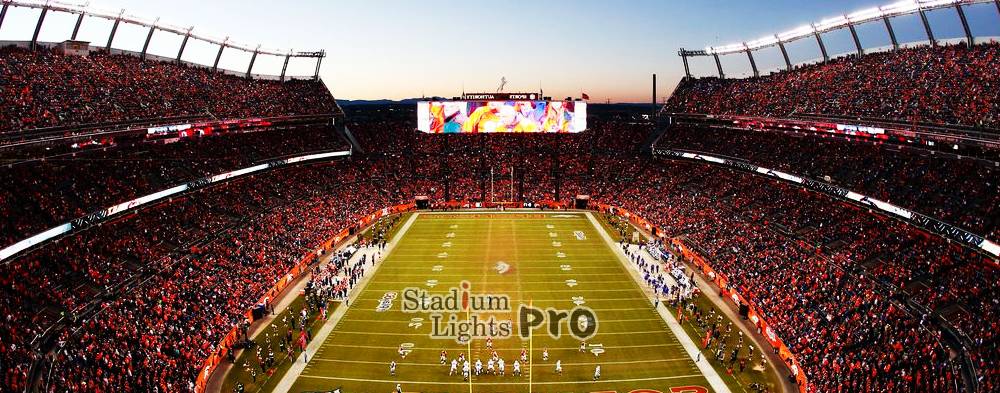
Lighting needs increase at facilities serving semi-professional leagues, regional competitions, or small colleges. Here, the setup is more involved, using six to eight poles, spaced more evenly around the field perimeter to provide improved light coverage and reduce shadows.
Each pole typically holds 4 to 6 fixtures, resulting in a system that includes 24 to 48 LED lights. Fixture wattages usually range from 1000W to 1500W, and the target illumination levels rise to 500 to 1000 lux. A common setup aiming for 700 lux might use 32 fixtures at 1200W each.
Mounting heights are also increased, usually reaching 55 to 70 feet, to allow for wider beam distribution and greater uniformity. These fields often include basic control systems, such as on/off scheduling, and may integrate dimming capabilities for off-peak use.
The lighting setup at this level supports video recording, audience viewing comfort, and more complex gameplay, ensuring the field remains visually consistent even during high-speed action. The extra fixtures help minimize dark spots and maintain clarity throughout the field.
Professional and Televised Stadiums
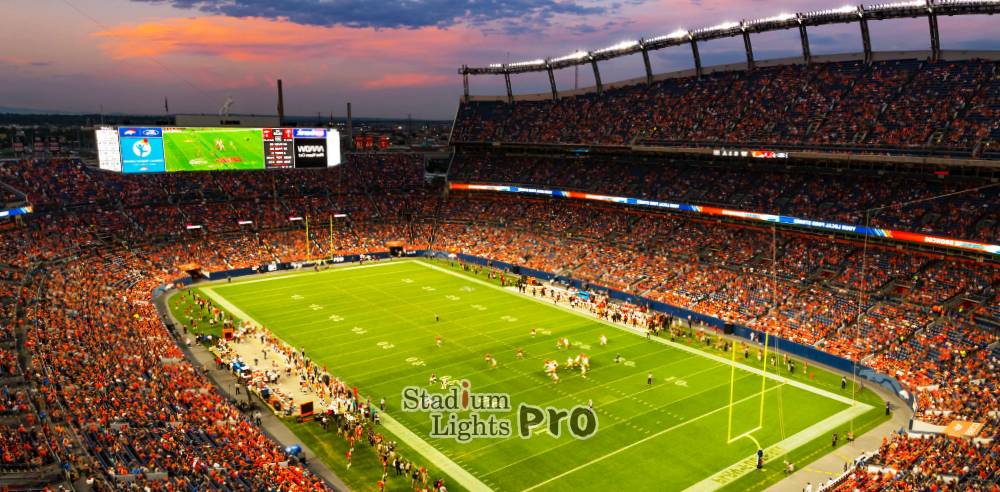
Professional football venues and stadiums hosting national or televised events require a lighting system designed for broadcast clarity, high-speed motion tracking, and crowd engagement. These setups typically involve eight or more mounting structures, sometimes placed on towers, rooftops, or custom trusses, depending on architectural layout.
The total number of lights for such fields often exceeds 60 fixtures, with some stadiums using up to 80 or more high-output LEDs. Fixture wattages typically fall between 1200W and 1800W, and the lighting system is designed to deliver 1000 to 2000 lux, depending on whether the venue supports HD, 4K, or 8K video formats.
For a stadium targeting 1500 lux with maximum coverage and uniformity, a practical solution might include 72 fixtures rated at 1500W each, mounted at heights ranging from 80 to 100 feet. Fixtures at this level include specialized optics, high CRI ratings, and ultra-precise beam angles to eliminate glare and enhance focus.
Advanced lighting control systems are standard at this level, featuring programmable light scenes, reactive dimming, color shifting, and integration with audio/visual systems. These setups are calibrated to accommodate live broadcasts, halftime shows, and post-game events, with every lighting element optimized for both visual impact and operational reliability.
Stadium operators also incorporate real-time diagnostics and automation into their lighting control systems, allowing remote adjustments and predictive maintenance. The precision and adaptability of these systems reflect the highest expectations of modern sports entertainment and viewer engagement.
Factors Affecting the Number of Lights on an American Football Field
Lux Requirements Based on Usage
Lux is the measure of visible light per square meter, indicating how much brightness reaches a surface. The lux level required on an American football field is shaped by how the field is used and who it’s intended to serve. Fields intended for casual practice or local high school games, especially those not broadcasted or held at night, generally require lower illumination levels, typically in the range of 200 to 300 lux. This range provides sufficient visibility for players and spectators under basic conditions without overburdening the lighting system with excessive energy demand.
Fields hosting college, club, or semi-professional matches often aim for 500 to 750 lux, allowing for faster-paced gameplay, larger audiences, and occasional video recording or media coverage. For professional matches, especially those broadcast on television, the lux requirements can rise to 1000 lux or even more, as high-definition and 4K cameras demand precise, uniform, and bright lighting to capture gameplay from multiple angles without shadows or glare.
It’s important to understand that lux requirements don’t work in isolation. Higher lux levels necessitate more than just increasing the number of fixtures. The wattage, aiming angle, lens type, and beam spread must all work together to ensure the field is evenly and adequately lit. A facility targeting 300 lux might use far fewer lights than one needing 1200 lux, but the challenge isn’t just brightness—it’s delivering that brightness consistently across every yard of the field. As the lux target rises, lighting design becomes more intricate, requiring advanced photometric planning, more strategic fixture placement, and sometimes even custom lighting arrays.
Field Size and Area Beyond the Lines
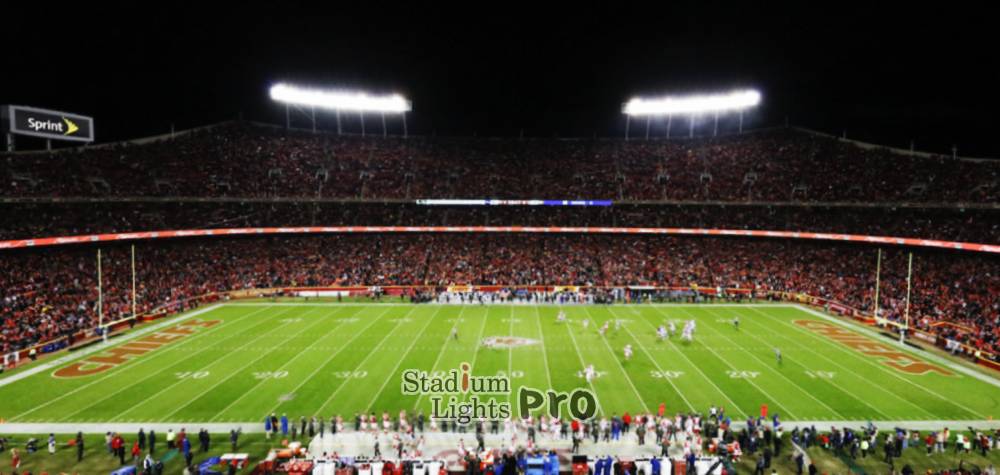
While the standard playing area of an American football field is well defined—360 feet long by 160 feet wide, or roughly 57,600 square feet—the actual area requiring lighting often extends beyond these dimensions. Many fields also accommodate end zones, sidelines, coaches’ boxes, player benches, and running tracks, all of which may need to be illuminated to ensure safety and visibility during events.
The size and purpose of the field strongly influence lighting demands. A facility focused strictly on the regulation play area might function with fewer lights, especially if events are limited to non-professional games. However, fields designed for multi-purpose sports, community use, or with adjacent spectator and pedestrian zones typically demand a wider lighting footprint. This adds complexity to the system design, as each section must be treated with attention to both lux levels and light consistency.
Moreover, lighting layouts must also account for stadium architecture and field boundaries. Large stadiums with seating that extends well beyond the playing surface require not just more light, but different beam types and angles to ensure no area is left dim or washed out. Shadows in corner zones or poorly lit sideline areas can affect both gameplay and spectator experience, making full-field and perimeter lighting a factor in fixture count.
Uniformity and Control of Light Distribution
Uniformity in lighting refers to how consistently light is distributed across the entire field. An ideal setup ensures that every section of the playing surface receives relatively even illumination, avoiding the creation of hot spots or dark zones. The uniformity ratio—often ranging between 0.5 and 0.7—measures this consistency, indicating that even the least lit area receives at least half the brightness of the most lit zone. Lower ratios are unacceptable for most field applications, as they lead to uneven visibility, shadows, and performance challenges for players and officials.
Uniformity directly influences how many lights are needed and where they are placed. Achieving higher uniformity may require additional lights, even if the total lux target has been met with fewer fixtures. It’s not just about brightness, but how that brightness is spread across all areas of the field, including corners and sideline zones where lighting can sometimes fall off.
Another aspect closely tied to uniformity is glare control. Glare occurs when light is too harsh or misdirected, causing visual discomfort or reduced visibility. This is especially relevant in fields used for televised events, where overhead camera views can be disrupted by uncontrolled reflections. To avoid glare, lighting fixtures must be equipped with optics that shape and direct light precisely, reducing waste and ensuring a smoother visual experience for players and viewers. This often leads to a preference for LED sports lights with adjustable lenses and shielding accessories, which allow designers to fine-tune the light output in every direction.
Adding more lights can help with uniformity and glare reduction, but doing so without a strategic plan can lead to inefficiencies and unnecessary power use. That’s why modern designs place heavy emphasis on optical control, beam type, and spacing, using advanced simulation tools before installation begins.
Mounting Height and Pole Positioning Strategy
The height of light poles used in a football field installation plays a central role in determining how many fixtures are needed. Poles that are installed at greater heights allow each light to cover a wider surface area, enabling fewer fixtures to light up larger sections of the field. However, this comes with a need for more powerful fixtures and narrower beam angles to keep light focused and reduce spill.
Conversely, when poles are shorter, more fixtures are usually required to achieve the same coverage. Lower mounting heights mean that each light covers a smaller area, which increases the total fixture count and may also affect beam spread and aiming precision. Shorter poles may be easier to maintain or install in municipal settings, but they demand a denser fixture arrangement to meet lux and uniformity targets.
Pole placement is another factor that affects the number of lights. The most basic lighting layouts often rely on four-pole configurations, with one pole in each corner of the field. This setup can work well for high school or recreational use, especially when equipped with three to five LED lights per pole. However, as performance requirements grow, fields are more likely to use six or even eight poles, strategically positioned along the length and width of the field to maximize beam overlap and reduce shadow zones.
A six- or eight-pole layout allows for more refined lighting control, supporting higher lux levels with less glare. It also gives designers more options when choosing beam angles and fixture wattage, offering greater flexibility in balancing brightness, coverage, and energy efficiency. The number of lights on each pole can be adjusted depending on fixture power and design goals, but spreading them across more poles often helps achieve better light distribution with fewer lighting gaps.
Mounting systems must also consider wind resistance, structural integrity, and maintenance access, especially in outdoor stadiums or facilities in storm-prone areas. The choice between fixed poles, telescoping towers, or tilt-lowering poles can influence the final lighting layout and may lead to different fixture counts or spacing plans.
Additional Considerations for Designing the Lighting Layout
Fixture Technology and Optical Performance
The total number of lights used on a football field is shaped not just by quantity but by the technology and optical performance of the fixtures themselves. Modern LED systems have largely replaced older lighting technologies such as metal halide, due to their energy efficiency, long lifespan, lower maintenance requirements, and instant illumination capabilities. Unlike traditional lamps that require warm-up time, LEDs turn on and off immediately, making them better suited for dynamic sports environments.
One of the key advantages of LED lighting is its precise beam control, which significantly enhances the overall effectiveness of each fixture. Through the use of custom beam angles—narrow, medium, or wide—lighting designers can fine-tune how light is distributed across the field. Narrow beam optics are particularly effective when fixtures are mounted on tall poles and need to project light across long distances, such as toward the center of the field. Wider beam angles, on the other hand, are typically applied closer to the sidelines or end zones, ensuring a smooth transition in brightness without overlap or dead zones.
Another aspect of fixture design that plays a role is the color temperature and color rendering index (CRI). Most football fields adopt a neutral white light around 5000K, which creates a clean, bright environment ideal for both in-person viewing and televised coverage. High CRI ratings improve color accuracy, which is especially helpful when distinguishing between uniforms or tracking the ball in fast-paced play. Accurate color rendering contributes to an immersive experience and enhances visual clarity for athletes, referees, and spectators alike.
Environmental Impacts and Energy Strategy
While brightness and visual coverage dominate the conversation around lighting layout, environmental regulations and sustainability goals also influence fixture selection and configuration. Many local jurisdictions enforce standards that limit sky glow, light trespass, and upward light spill to preserve night skies and reduce impact on nearby communities. As a result, lighting designers are increasingly relying on fixtures equipped with shielding or directional optics to keep light focused only on the intended playing surface.
These environmental considerations often affect the number and placement of fixtures. To remain within legal or voluntary environmental limits, designers may use more focused fixtures or adjust mounting angles, which in turn can alter how many lights are required to maintain uniform illumination.
Energy consumption is another layer to consider. High-performance lighting doesn’t have to equate to high energy use. Many LED systems today are equipped with smart controls that enable dimming, scheduling, and zone-specific operation. This allows fields to reduce output during non-competitive hours, such as during team practice or when the facility is unoccupied. In the long term, such features help manage operational costs and extend system longevity.
In addition to software features, the climate in which the field is located also affects lighting design. In colder regions, fixtures must be able to perform reliably in sub-zero temperatures, while in coastal or tropical areas, there is a need for corrosion-resistant materials that can withstand humidity and salt exposure. While these environmental adaptations may not directly increase the total number of lights, they certainly guide fixture selection, spacing, and installation strategies.
Maintenance Planning and System Longevity
Lighting design must also account for ongoing maintenance, access, and fixture lifespan. While many modern LED fixtures boast operational lifespans of 50,000 hours or more, the ability to maintain and service those fixtures efficiently plays a major role in the overall system layout. For example, using fewer, high-powered fixtures might reduce initial complexity, but it may create challenges for routine maintenance, especially when mounted on very tall poles or structural towers that are hard to access.
To simplify long-term maintenance, some designs favor modular fixture systems or adjustable aiming brackets, which allow technicians to reposition beams or make replacements with minimal disruption. Pole design also contributes to access efficiency—some systems use hinged poles or base-mounted lift mechanisms, reducing the need for heavy equipment and decreasing labor costs over the field’s life span.
Choosing fixtures with high thermal efficiency and robust build quality ensures the lighting system retains its intended performance over many years. Effective thermal management helps prevent overheating, which can degrade LED output over time. In poorly designed systems, brightness can decline gradually, which may result in uneven lighting or reduced lux levels, prompting premature fixture replacement or the addition of new units to maintain visibility standards.
By investing in high-quality fixtures from the outset, field operators can maintain consistent lighting performance without increasing fixture count mid-cycle. Proper system planning, combined with thoughtful product selection, leads to a more resilient and cost-effective solution, reducing the need for frequent servicing while keeping the lighting uniform and reliable throughout the life of the field
Conclusion
Lighting an American football field involves more than simply installing a certain number of fixtures. It requires thoughtful planning around factors such as lux requirements, field dimensions, uniformity standards, fixture optics, energy use, and long-term maintenance. The most effective lighting designs adapt to the specific purpose of the field—whether it’s for casual recreation, competitive school events, or professional broadcast games—ensuring that the lighting meets both visual and functional demands.