Lighting a tennis court may seem simple—flip a switch and the game goes on—but anyone who manages or owns a court knows there’s more to it than just hitting “on.” Running tennis court lights can be surprisingly costly, and understanding what drives that cost is key for anyone trying to balance good visibility with a reasonable electricity bill. Let’s dig into what affects the running costs and how to make smart choices.
Why Do We Need To Consider The Running Cost?
Many tennis court owners or clubs focus on installation costs when thinking about lights, but the ongoing electricity bill can add up fast. Imagine a single court with high-powered lights running for three hours every evening—multiply that by a week, a month, or a year, and you’re looking at significant costs. It’s not just about paying the electric bill either. Energy-efficient choices can reduce maintenance hassles and extend the life of your lights, which also saves money in the long run.
Clubs that host tournaments, leagues, or even casual night games need to be especially aware of how much energy their courts are consuming. For residential courts, the running cost may not break the bank, but for commercial setups, those numbers can spiral if lighting efficiency isn’t considered. Knowing the numbers ahead of time helps make smarter budgeting decisions.
Average Running Cost Of LED Tennis Court Lights
LEDs have really become the top choice for new tennis court setups, and it’s easy to see why. They use far less energy than older lights like metal halide or mercury vapor, give you a cleaner, brighter light, and last much longer without burning out. For a typical outdoor tennis court, a single LED fixture might consume around 400 to 500 watts depending on the brightness you need. If your court has 12 of these fixtures, that adds up to roughly 4.8 to 6 kilowatts per hour.
| Lighting Type | Fixture Wattage | Number of Fixtures | Total kW per Court | Hours per Night | Cost per Night (1 Court) | Monthly Cost (1 Court) | Monthly Cost (4 Courts) | Annual Cost (1 Court) |
|---|---|---|---|---|---|---|---|---|
| LED Standard | 400 W | 12 | 4.8 kW | 3 | $2.16 | $65–$70 | $260–$280 | $780–$840 |
| LED High Power | 500 W | 12 | 6 kW | 3 | $2.70 | $80 | $320 | $960 |
| Metal Halide | 1000 W | 12 | 12 kW | 3 | $5.40 | $160 | $640 | $1,920 |
Calculating The Nightly Cost
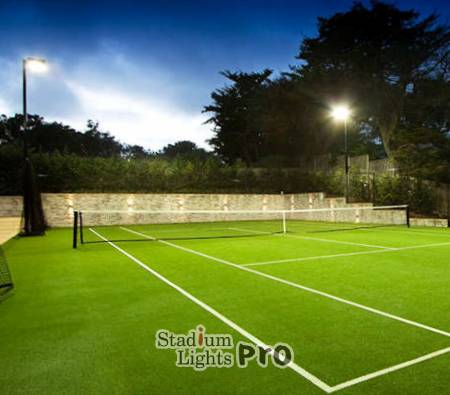 Electricity rates can vary quite a bit depending on where you live. Using a rough average of $0.15 per kilowatt-hour, running 4.8 kilowatts for three hours would cost about $2.16 per evening for one court. That might seem small, but it adds up quickly if you’re running lights every night. Over a month of daily evening play, you could be looking at $65 to $70 per court just on electricity. For a small club with four courts, that’s about $260 to $280 monthly. Over a full year, it could reach $3,000 to $3,500.
If you bump the power up a bit—maybe for a high-level competition court or courts with taller poles—you might be running 500-watt LEDs. That pushes the nightly cost for a single court closer to $2.70, which means $80 monthly per court or over $1,000 per year. Multiply that by multiple courts, and you start to see why understanding running costs is more than just an academic exercise—it really hits the budget.
Comparing With Older Technologies
Older lighting types like metal halide or mercury vapor are a completely different story. A metal halide fixture can easily use 1,000 watts, more than double what an LED does. If you had 12 of these fixtures on a single court, that’s 12 kilowatts per hour. Running them for three hours at the same $0.15 per kilowatt-hour rate would cost about $5.40 per night per court, or roughly $160 per month. A club with four courts would pay around $640 per month, which is more than double what LEDs would cost. Switching to LEDs can realistically cut energy costs by 40% to 60%, which is a huge saving over the long term.
Maintenance And Lifespan
Energy isn’t the only thing that makes LEDs appealing. Metal halide and mercury vapor lights often burn out faster and require frequent replacement of bulbs and ballasts, which adds to yearly costs. LEDs, on the other hand, can last 25,000 to 50,000 hours, meaning you could go 10–15 years without replacing the fixtures in many cases. That alone can save hundreds, sometimes thousands, in maintenance bills, especially for clubs with multiple courts.
Brightness And Pole Height Effects
Running cost isn’t just about wattage. The height of the poles and the brightness required for your courts can also affect energy usage. Higher poles or larger courts might need more powerful LED fixtures to ensure even lighting, which slightly increases the kilowatt usage. For instance, upgrading from 400-watt to 500-watt fixtures for a 50-foot pole setup could add $0.50 per court per night in energy cost, but the light coverage and quality make it worth it for competitive play.
Seasonal And Usage Considerations
Another factor to think about is how often your courts are actually in use. Summer evenings might see courts lit for four or five hours, while winter months might only need two or three. That fluctuates your monthly costs considerably. For a high-use tournament facility, LED lighting could run $3,000 to $5,000 annually, whereas a residential setup with occasional weekend play might be under $300 per year.
Factors Affecting The Cost
Number Of Courts
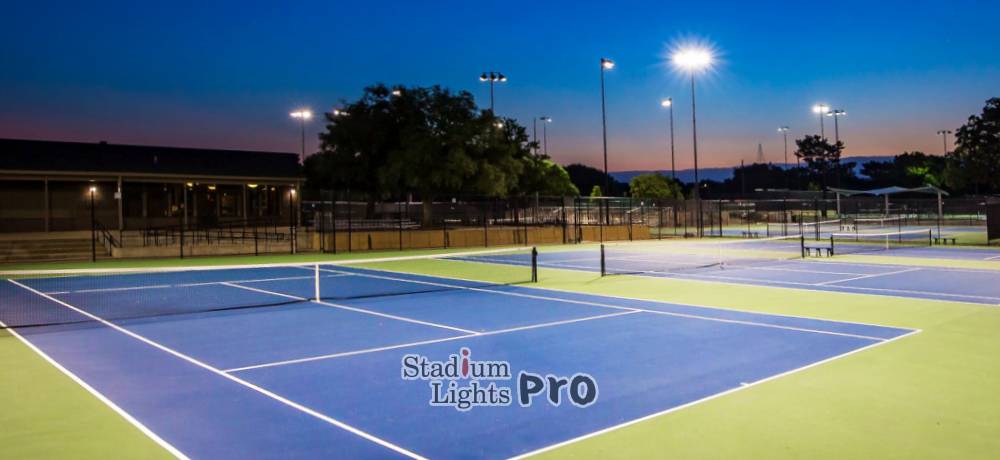
One of the most obvious factors is how many courts you’re lighting. A single court is simple to estimate, but once you get into multi-court setups, costs start to add up fast. For example, running six courts with a standard LED setup for three hours every night could easily push monthly electricity costs over $1,200, assuming an average rate of $0.15 per kilowatt-hour. If your club schedules tournaments or league nights several times a week, those numbers can climb even higher.
It’s not just electricity, either. More courts usually mean more fixtures to maintain, more wiring, and sometimes even additional transformers or upgraded electrical panels to handle the load. So when budgeting, thinking about both energy usage and operational overhead is key.
Pole Height
The height of the light poles can have a surprisingly big effect on running costs. Taller poles often need higher-wattage fixtures to properly illuminate the court evenly. For instance, a 30-foot pole setup might get away with 400-watt LEDs, while a 50-foot pole could require 600-watt fixtures. That’s a 50% jump in energy use, which translates directly into higher nightly bills.
Higher poles also usually mean larger light spreads, so each fixture covers more area. That can help reduce the number of fixtures needed, but only if the lights are designed with good optics. Otherwise, you might end up using extra fixtures to avoid dark spots, which again drives up running costs.
Lighting Type
The type of lights you choose is one of the biggest cost factors. Traditional options like metal halide and mercury vapor burn a lot more power and have shorter lifespans. A standard metal halide fixture can use 1,000 watts, more than double a typical LED. Running a court full of 12 metal halide lights for three hours could cost $5–$6 per night per court, compared to around $2–$3 for LEDs.
Mercury vapor lamps are even less efficient and require frequent bulb replacements, which can add hundreds of dollars a year in maintenance. LEDs, on the other hand, can last 25,000–50,000 hours, reducing the need for constant upkeep.
Solar-powered lights are becoming an option too, especially for residential courts. While the initial cost is higher, they basically eliminate electricity costs, which is huge for weekend or casual play. The downside is they depend on sunlight availability, battery storage, and seasonal variations, so they may not work as reliably for courts with heavy evening usage or during winter months.
| Lighting Type | Fixture Wattage | Nightly Cost (1 Court, 3 Hours) | Lifespan / Maintenance |
|---|---|---|---|
| LED | 400–500 W | $2–$3 | 25,000–50,000 hours; low maintenance |
| Metal Halide | 1000 W | $5–$6 | Frequent bulb replacement |
| Mercury Vapor | ~1000 W | $5–$6+ | Frequent bulb replacement; adds hundreds/year |
| Solar-Powered LED | Variable | ~$0 | Battery-dependent; low maintenance |
Other Influencing Factors
There are also smaller, but still meaningful, factors that can affect your running costs. Local electricity rates obviously play a role; a club in a high-rate area could spend nearly double what a similar facility spends elsewhere.
Usage patterns matter too—are your courts on for three hours every night, or just a few nights a week? Do you run lights at full power, or use dimming options? Many modern LED systems allow for adjustable brightness, so you can reduce power during casual play without compromising visibility.
Even weather and temperature can have minor effects. Extremely cold temperatures can slightly reduce efficiency in some lighting types, though LEDs are far less affected than metal halide or mercury vapor lamps. Additionally, regular maintenance like cleaning lenses or replacing damaged fixtures helps keep energy consumption steady, preventing hidden cost spikes.
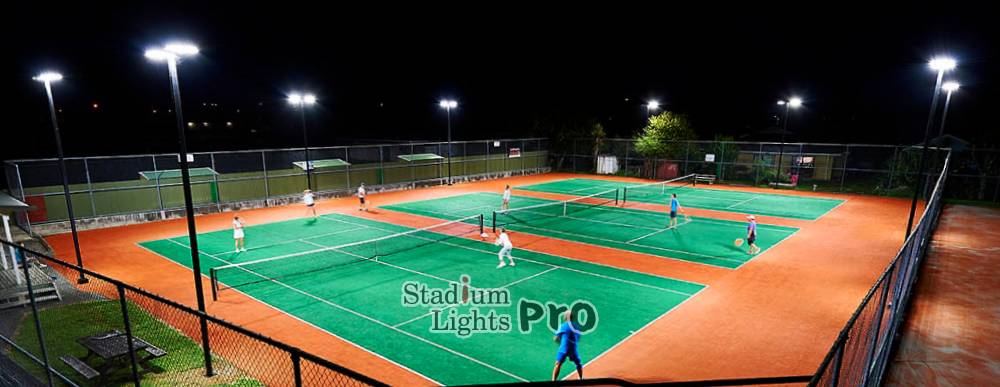
Tips To Reduce Running Cost Of Tennis Court Flood Lights
Saving money on tennis court lighting doesn’t have to mean sacrificing visibility or player experience. There are several practical strategies that can make a noticeable difference on your electric bill.
Limit Usage To Actual Playtime
One of the simplest ways to cut costs is to only run the lights when courts are actually in use. Even trimming an hour off your nightly lighting schedule can add up. For a single court with a standard LED setup, running lights for three hours might cost around $2–$3 per night. Cut that down by one hour, and you save roughly $0.70–$1 per night. Multiply that by 30 days, and you’re looking at a $20–$30 monthly saving per court. For a club with four courts, that’s over $100 saved each month just by being mindful of usage.
Use Timers, Motion Sensors, Or Smart Controls
Investing in timers or motion sensors is another way to keep costs down. Modern systems can automatically turn lights off or dim them when no one is on the court, which prevents electricity from being wasted. For clubs hosting casual evening games or practice sessions, this can reduce energy consumption by 10–20% annually. Some high-tech LED setups even allow gradual dimming, so the lights are not running at full power when only a few players are on the court, further lowering costs.
Choose Efficient Lighting Fixtures
Switching from metal halide or mercury vapor to LED fixtures is one of the biggest money-saving moves. LEDs consume 40–60% less energy and last much longer, which cuts down both electricity and maintenance costs. Within LEDs, selecting fixtures with better optics and directional lighting can also help. These designs focus light where it’s needed and avoid over-illuminating surrounding areas. That way, you’re not wasting power on light that doesn’t improve playability, which can trim nightly costs by 10–15% compared to less efficient LED models.
Regular Maintenance Matters
Even small maintenance tasks can have a big impact on energy efficiency. Dirt, dust, or cobwebs on fixtures can reduce light output, forcing you to run lights at higher power to achieve the same visibility. Simply cleaning lenses and replacing damaged bulbs can help maintain maximum brightness while using less energy. Over a season, these small tweaks can add up to significant savings, sometimes cutting running costs by several dollars per night per court.
Consider Seasonal Adjustments
Usage and lighting needs can change with the seasons. During summer, courts might be used longer in the evenings, while in winter, shorter play sessions may be sufficient. Adjusting your lighting schedules seasonally ensures you’re not wasting energy when full illumination isn’t necessary. For instance, reducing two hours of nightly lighting during low-use months across four courts could save $160–$200 over the winter season.
Explore Renewable Options
For residential courts or small clubs, solar-powered lights can be a long-term cost saver. The initial setup is more expensive, but after installation, electricity costs drop to near zero. If your court gets plenty of sunlight, solar lights can pay for themselves in 5–7 years when compared to running traditional LED or metal halide systems.
The Bigger Picture
While the nightly cost of running tennis court lights might seem manageable for one court, it’s easy to underestimate the cumulative expense across multiple courts and months. Energy-efficient lighting like LEDs, combined with smart operational habits, can keep costs reasonable and reduce headaches over time. Solar options and dimming technologies add even more ways to save.
Understanding the numbers helps court managers and homeowners make informed decisions about which lighting type and setup are most cost-effective. It’s not just about playing at night—it’s about balancing enjoyment with a practical budget.
Looking at long-term costs rather than just the sticker price of fixtures can prevent surprises and allow for more sustainable use of resources. With careful planning, running tennis court lights can be far less expensive than many people expect, especially when using modern technologies and smart operating practices.