
Lighting ski slopes effectively requires careful consideration of multiple factors, with wattage playing a central role in the performance and efficiency of the lighting system. LED technology has transformed outdoor lighting in recent years, providing advantages such as energy efficiency, longevity, and enhanced controllability. Understanding the wattage needs for LED ski slope lighting involves exploring the environment, the size of the slope, safety standards, and desired visibility levels.
Understanding Wattage in Ski Slope Lighting
The wattage of a lighting fixture is a measure of its power consumption. For ski slope lighting, wattage determines the brightness and coverage area that each fixture can provide. While wattage alone does not fully dictate the quality of illumination—factors such as lumens, beam angle, and color temperature also influence effectiveness—it remains a primary metric for estimating energy use and fixture capability.
Because ski slopes vary greatly in size, terrain, and usage patterns, the wattage requirements for LED lighting can differ widely. A small beginner slope may require far less wattage than an extensive, high-speed downhill run that hosts night events and competitions. Properly sizing the wattage ensures that the lighting delivers sufficient brightness for safety and enjoyment while avoiding excessive energy consumption.
Typical Wattage Ranges for LED Ski Slope Lights
| Wattage Range (Watts) | Typical Use | Approximate Lumen Output | Notes |
|---|---|---|---|
| 100 – 200 | Small areas, lodges, pathways, beginner zones | 15,000 – 28,000 lumens | Lower wattage, efficient for localized lighting |
| 250 – 400 | General slope illumination | 30,000 – 45,000 lumens | Moderate brightness and coverage |
| 400 – 600 | Large slopes, competitive zones | 50,000 – 75,000 lumens | High output, fewer fixtures needed |
LED fixtures designed for ski slope lighting typically fall within a wattage range of 100 watts to 600 watts per fixture. This range depends largely on the specific lighting needs, fixture design, and the manufacturer’s engineering. The wattage choice correlates with the area each fixture must cover, the brightness required, and the environmental conditions under which the lights operate.
Lower wattage fixtures, generally between 100 and 200 watts, are frequently used in smaller, more localized areas. These include settings such as ski lodges, pathways leading to lifts, beginner slopes, or safety zones near equipment or parking areas. Because these areas do not require extensive illumination or high-intensity light, the lower wattage fixtures provide sufficient visibility without unnecessary energy expenditure. For example, a 150-watt LED floodlight with a narrow beam angle can efficiently light a small pathway or beginner zone with around 15,000 to 22,500 lumens output, depending on the fixture’s efficacy.
Medium wattage fixtures, typically ranging from 250 to 400 watts, are often the workhorses for general slope lighting. These fixtures are selected for their ability to deliver consistent brightness across moderate-sized areas, striking a balance between power consumption and luminous output. For an average mid-sized ski slope section, a 300-watt LED fixture producing approximately 30,000 to 45,000 lumens can provide excellent coverage. Resorts aiming to maintain uniform lighting for recreational skiing often deploy arrays of these medium wattage lights spaced strategically along the slope.
Higher wattage LED fixtures, usually in the 400 to 600 watt range, are reserved for large slopes, competitive racing tracks, or areas requiring intense illumination. These fixtures are capable of producing powerful beams, often exceeding 50,000 lumens, enabling extensive coverage with fewer units. For instance, a 500-watt LED floodlight might output between 50,000 and 75,000 lumens, depending on the efficiency and beam angle. This level of lighting meets the needs of night-time events, broadcasting, and conditions demanding high visibility such as speed skiing or freestyle competition zones.
It is common practice to mix fixture wattages across the ski slope to address the varying lighting requirements effectively. A combination of lower wattage fixtures can highlight critical areas such as pathways and safety zones, while medium and higher wattage fixtures maintain the overall slope illumination. This tiered approach supports both energy optimization and visual comfort for skiers, enabling a tailored lighting strategy that maximizes performance while controlling costs.
Fixture Output and Lumens per Watt
The wattage of an LED fixture is only part of the equation when considering illumination effectiveness. The luminous efficacy, or the number of lumens produced per watt (lm/W), greatly influences the real-world performance of the lighting system. Modern LED technology has pushed luminous efficacy levels to new heights, typically ranging from 100 lm/W to over 150 lm/W in many commercial-grade fixtures designed for outdoor use.
For example, a 200-watt LED fixture with a luminous efficacy of 120 lm/W would produce about 24,000 lumens. If the efficacy is higher, say 140 lm/W, the same 200-watt fixture could output nearly 28,000 lumens. These figures illustrate how advances in LED efficiency reduce the wattage needed to achieve desired brightness levels, ultimately leading to lower energy consumption and operating costs.
In comparison, traditional lighting technologies like metal halide lamps may require 400 to 600 watts to produce similar lumen output, making LEDs highly advantageous for ski slope lighting. Additionally, the lumen maintenance over time for LEDs remains higher, meaning less frequent replacement and sustained brightness throughout the fixture’s lifespan.
Beam angle also plays a role in how effectively lumens are distributed on the slope. Fixtures with tighter beam angles concentrate lumens into a smaller area, increasing illuminance but potentially requiring more fixtures to cover wider areas. Wider beam angles spread the light more broadly but might demand higher total lumen output to maintain brightness levels. Balancing wattage, lumen output, and beam angle is essential to optimize lighting coverage while minimizing wasted energy.
Key Factors Influencing Wattage Requirements
Ski Slope Size and Layout
The physical size and configuration of a ski slope play a large role in determining the total wattage needed for lighting. Larger slopes demand more light fixtures, each potentially with higher wattage, to ensure that the entire area receives consistent illumination. For example, a small training hill used by beginners might be adequately lit by a handful of 150-watt LED fixtures, while an extensive downhill course stretching several kilometers requires dozens or even hundreds of fixtures rated at 400 watts or more.
The slope’s layout also introduces complexity. Natural terrain features such as trees, uneven ground, hills, and curves can block or scatter light, causing shadows or dark patches. These variations mean that a simple grid of evenly spaced fixtures may not provide uniform lighting. Instead, wattage and fixture placement must be tailored to compensate for these obstacles. In some cases, higher wattage lights are positioned strategically to flood shadowed areas with additional light. Conversely, lower wattage fixtures might be placed near reflective snow surfaces or open sections to avoid glare or excessive brightness.
Because ski slopes often have multiple sections with different characteristics—for example, flat beginner areas, steep downhill runs, or terrain parks—the wattage distribution across the slope is rarely uniform. Designers often use lighting simulation software to model the terrain and calculate the optimal wattage and number of fixtures needed to deliver uniform visibility across the entire skiing area.
Impact of Terrain Variability on Lighting Needs
Terrain variability significantly affects how wattage must be allocated across a ski slope. Steep inclines and abrupt elevation changes can create shadows that reduce visibility, especially at night. Trees and natural vegetation can obstruct light beams, requiring additional or higher wattage fixtures to illuminate these shadow-prone zones effectively. Moreover, curved or zigzagging slopes may necessitate angled lighting installations with customized wattage to ensure consistent illumination throughout turns and bends.
Addressing these terrain challenges involves detailed site surveys and advanced modeling techniques to predict how light behaves in complex environments. This ensures that wattage is distributed intelligently, avoiding both under-lit areas that could pose safety risks and over-lit zones that may cause glare or energy waste.
Segmented Lighting Strategies for Diverse Slope Sections
Ski slopes typically consist of multiple distinct sections, each with unique lighting requirements based on their intended use and skier skill levels. For instance, beginner areas often require lower wattage fixtures to provide gentle, comfortable lighting, while expert downhill runs demand higher wattage for enhanced visibility at faster speeds.
Implementing segmented lighting strategies allows resorts to tailor wattage allocation precisely. Terrain parks with jumps and rails may use specialized lighting setups with focused beams and increased wattage to highlight features safely. Meanwhile, transitional zones between slope sections might use medium wattage fixtures to ensure smooth visual continuity. Such segmentation not only improves safety and user experience but also optimizes energy use by applying wattage where it is most needed.
Desired Illuminance Levels
Illuminance, commonly expressed in lux (lumens per square meter) or foot-candles (lumens per square foot), measures how much light actually reaches the surface of the slope. Different skiing activities call for different illuminance targets. Recreational or casual night skiing generally requires moderate lighting levels—typically around 10 to 30 lux—sufficient for general visibility and comfort without causing excessive glare or light pollution.
In contrast, ski slopes used for competitive racing, freestyle events, or night broadcasts need much higher illuminance levels, often ranging from 50 to 150 lux or more. High-intensity lighting ensures fast reaction times, enhanced depth perception, and accurate judging during competitions. To achieve these elevated illuminance levels, LED fixtures with higher wattage and lumen output are necessary. For instance, achieving 100 lux uniformly across a 100-meter-wide racing track could require multiple 500-watt fixtures with focused beam angles strategically spaced along the course.
The wattage of LED fixtures is directly tied to the ability to meet these illuminance standards. However, achieving the desired light levels also depends on the fixtures’ optical design, mounting height, and spacing. When illuminance requirements are high, wattage and fixture count increase accordingly, which impacts both initial installation costs and ongoing energy consumption.
Environmental Conditions and Weather
Ski slopes are frequently situated in high-altitude, mountainous environments where weather and atmospheric conditions can vary widely and often unpredictably. Snowfall, fog, mist, and moisture pose challenges for lighting systems. Snow-covered terrain can reflect light, potentially reducing the wattage needed to achieve desired brightness, but heavy snowfall or fog can scatter light and reduce visibility.
To counteract these effects, LED fixtures used in ski slope lighting must be powerful enough to penetrate foggy or snowy conditions. This usually means selecting fixtures with wattage on the higher end of the range, often 400 watts or more, combined with optical designs optimized for diffusion and glare control. The lighting system must maintain consistent illumination even under adverse weather, preventing sudden dark spots that can compromise skier safety.
One advantage of LEDs in cold environments is their excellent performance at low temperatures. Unlike some traditional lighting technologies that lose efficiency or struggle to start in freezing weather, LEDs generally maintain their output and reliability. However, power consumption may increase slightly if lighting controls boost wattage during poor visibility periods caused by weather conditions. This flexibility in wattage adjustment allows resorts to adapt illumination intensity dynamically.
Energy Efficiency and Sustainability Goals
Many modern ski resorts pursue sustainability goals by adopting energy-efficient lighting technologies. LEDs play a significant role in reducing electricity consumption due to their high luminous efficacy and long service life. Selecting the appropriate wattage for LED ski slope lighting allows resorts to provide the needed brightness without unnecessary power use.
Compared to older lighting systems, such as metal halide or halogen lamps, LED fixtures use substantially less power to achieve the same or greater light output. For example, a 300-watt LED fixture can often replace a 600-watt metal halide lamp while producing comparable lumens. This reduction in wattage leads to lower operational costs and a smaller carbon footprint for the resort.
Additionally, using wattage that matches the lighting requirements—neither overpowered nor underpowered—helps avoid wasted energy. Resorts may implement smart lighting controls and dimming systems to adjust wattage based on skier traffic, natural light availability, or weather, further optimizing energy consumption. These efforts contribute to longer operational hours for night skiing with minimized environmental impact.
Design Considerations for Wattage Selection
Uniformity of Lighting
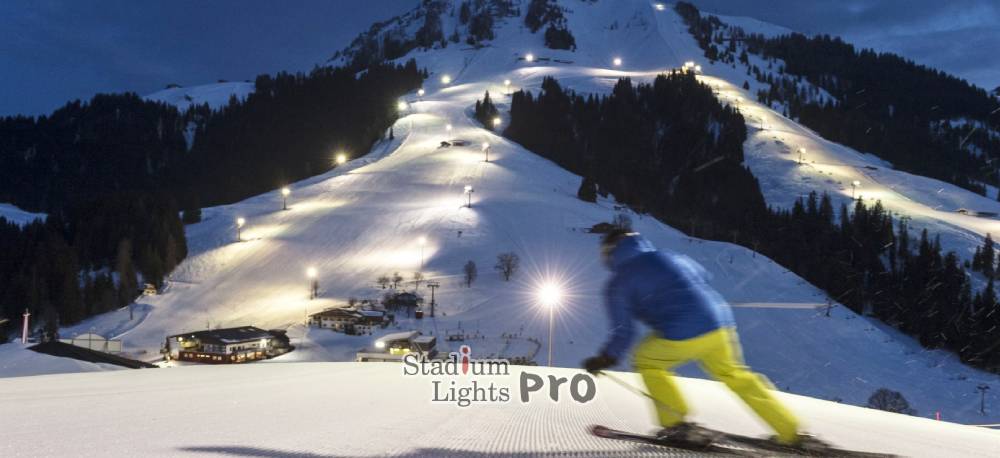
Uniform lighting across a ski slope plays a crucial role in maintaining both safety and visual comfort for skiers. Uneven illumination can create dark spots, shadows, or overly bright areas known as hotspots, which may impair depth perception or cause visual fatigue. Achieving an even distribution of light requires careful coordination of wattage and fixture placement. Simply increasing the wattage of a few fixtures in one area does not guarantee better lighting; in fact, concentrating high-wattage fixtures in a limited zone can produce glare and discomfort while leaving other parts underlit.
Lighting designers use advanced simulation software to model the slope’s terrain and predict how light from different fixtures, wattages, and angles will interact. These models help balance the number of fixtures and their wattage ratings to create smooth, consistent illumination. The goal is to minimize variation in light levels so that skiers experience uniform brightness whether they are on steep downhill sections, flat stretches, or in transition zones. This approach also considers the reflective properties of snow, which can amplify light in some areas and diminish it in others.
By carefully adjusting wattage and distribution, the lighting design can avoid situations where some regions are dazzlingly bright while others are left too dark. This balance supports safer navigation and an overall more pleasant skiing experience during nighttime or low-light conditions.
Beam Angle and Mounting Height
The beam angle of LED fixtures determines how light is spread over the ski slope surface and significantly influences wattage requirements. Fixtures with narrow beam angles focus light into a tight, concentrated area. This focused beam often necessitates higher wattage fixtures because the light intensity needs to be strong enough to illuminate a smaller, specific area adequately. However, fewer fixtures may be required overall, which can reduce installation complexity and costs.
Conversely, fixtures with wide beam angles distribute light more broadly, covering larger areas with each fixture. Although the wattage per fixture can be lower, more fixtures may be needed to achieve the desired illuminance level across the entire slope. Wide beam angles are useful for illuminating open, flat areas or where smooth, diffused light is preferred to reduce shadows and glare.
Mounting height is another key factor that interacts with beam angle to affect wattage decisions. Fixtures mounted at higher elevations must produce more intense light to maintain adequate illuminance on the ground due to the increased distance and spread of the beam. For instance, a light mounted at 30 meters will require a higher wattage and possibly a narrower beam angle than one mounted at 15 meters to achieve similar brightness on the slope.
Optimizing both beam angle and mounting height allows lighting designers to use wattage efficiently, ensuring that each fixture contributes effectively to overall slope illumination without excessive power consumption or unwanted glare.
Control Systems and Dimming
Modern LED ski slope lighting systems often incorporate sophisticated control technologies that allow dynamic adjustment of wattage through dimming capabilities. These control systems enable operators to vary the light output based on activity levels, ambient natural light, or specific events, significantly enhancing energy management and fixture longevity.
During times of low skier activity, such as late evenings or off-peak hours, the lighting system can reduce wattage output without compromising safety. Similarly, when moonlight or nearby city lights provide sufficient ambient illumination, dimming allows the ski slope lighting to scale back, saving energy and reducing wear on the fixtures.
The base wattage of LED fixtures must be selected to deliver full brightness when needed, but the ability to smoothly dim from 100% down to 10% or lower provides flexibility in operational control. This variable wattage use extends the lifespan of the LEDs by reducing thermal stress and electrical load during dimmed operation, which in turn lowers maintenance costs and replacement frequency.
Advanced control systems may also integrate with sensors and weather data, automatically adjusting wattage output in response to changing conditions like fog or snowfall, optimizing visibility while conserving energy. Overall, dimming and control systems enable more sustainable and adaptable lighting solutions that respond to the real-world demands of ski slope environments.
Case Studies and Examples
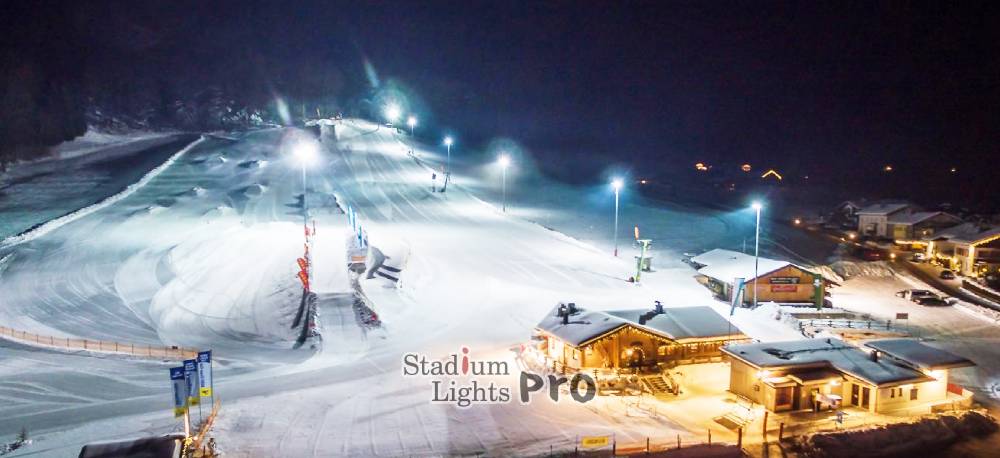
Examining real-world examples of LED ski slope lighting installations provides valuable insight into wattage selection and system design tailored to varying resort sizes and lighting demands. Ski resorts worldwide have adopted LED lighting to improve visibility, reduce energy consumption, and meet evolving safety and environmental standards. These case studies highlight practical wattage ranges, fixture counts, and the integration of advanced controls to optimize performance.
One representative example involves a medium-sized ski slope covering roughly 15 hectares (approximately 37 acres). This slope serves primarily recreational skiers but also hosts occasional local competitions and night events. To achieve uniform, bright illumination across this area, the resort installed around 40 LED fixtures rated at 300 watts each. The lighting design focused on evenly spaced fixtures mounted at heights between 15 and 20 meters, combined with beam angles optimized for broad yet focused coverage.
This configuration resulted in an average illuminance of approximately 30 to 50 lux across the main skiing runs, which aligns well with recommendations for recreational night skiing. The use of mid-range wattage fixtures helped balance energy efficiency with adequate brightness, ensuring skiers experienced clear visibility without excessive glare or dark spots. Additionally, the resort integrated a control system enabling dimming during low-traffic hours, reducing power consumption by up to 30% during off-peak periods without compromising safety.
In contrast, large international ski resorts that regularly host high-profile competitions and broadcast events require lighting systems with much higher wattage and precision. For instance, a prominent alpine resort hosting World Cup races installed over 100 LED fixtures, many rated above 500 watts each. These fixtures are designed to deliver illuminance levels exceeding 100 lux uniformly across racing tracks, jump areas, and spectator zones.
Mounting heights for these fixtures typically range from 25 to 40 meters, allowing for wide beam spreads and minimal shadows. Sophisticated lighting controls dynamically adjust wattage based on event schedules, weather conditions, and ambient light levels. The system can ramp up to full brightness for televised competitions, ensuring excellent visibility for athletes and broadcast cameras, and scale down during training or recreational hours to conserve energy.
These large-scale installations often feature smart networking between fixtures, enabling targeted dimming and real-time monitoring of performance. As a result, resorts can fine-tune wattage outputs across different slope sections, maximizing both efficiency and visual quality. The upfront investment in high-wattage LEDs and control systems is offset over time by substantial reductions in energy use and maintenance costs.
Comparisons to Traditional Lighting Technologies
Prior to the widespread adoption of LED lighting, many ski slopes relied on traditional metal halide or halogen lamps. These older technologies typically consumed much higher wattage—often exceeding 1000 watts per fixture—to achieve the brightness now provided by lower-wattage LEDs. Metal halide lamps, for example, not only required more power but also had longer warm-up times, lower luminous efficacy, and shorter operational lifespans.
Transitioning to LED technology allows ski resorts to dramatically reduce wattage requirements while improving illumination quality. LEDs achieve higher luminous efficacy, often between 100 and 150 lumens per watt, compared to 70 to 90 lumens per watt for metal halide lamps. Their directional light output also minimizes wasted light and glare, allowing better control of beam angles and fixture placement.
As a result, ski slopes upgrading from traditional lighting systems to LEDs often realize energy savings between 40% and 70%, depending on the lighting design and control strategies employed. These savings translate into reduced operating expenses and a smaller environmental footprint. Additionally, LEDs offer increased reliability and require less frequent maintenance or replacement, further enhancing the economic benefits over the long term.
In summary, case studies from ski resorts of varying sizes illustrate how LED wattage selection and lighting system design must be tailored to the unique needs of each location. Smaller resorts can achieve excellent lighting performance using moderate wattage fixtures with strategic placement and dimming controls. Larger, competition-focused resorts invest in high-wattage, advanced systems capable of delivering broadcast-quality illumination with precise control over wattage distribution. Across the board, the shift to LED lighting has enabled ski resorts to improve safety and visibility while reducing energy consumption and maintenance demands compared to legacy lighting technologies.
Balancing Cost and Performance
When planning the lighting system for a ski slope, balancing cost and performance is a complex but necessary consideration. The choice of wattage directly affects both the upfront investment in equipment and the ongoing operational expenses. Higher wattage LED fixtures typically come with a higher initial price tag due to their increased power capacity, enhanced components, and sometimes larger form factors. However, these fixtures often provide broader and more intense illumination, which can reduce the total number of lights required to adequately cover a ski slope.
In contrast, lower wattage fixtures are generally less expensive per unit, making them attractive from a capital expenditure perspective. But using smaller wattage units often means installing a greater number of fixtures to achieve uniform lighting levels across the slope. This increase in fixture count can lead to higher installation labor costs, more complex wiring and control systems, and potentially increased maintenance requirements over time.
Lighting designers must carefully evaluate the trade-offs between these two approaches. Total installed cost involves not only the price of fixtures but also poles or mounting structures, electrical infrastructure, control systems, and labor. Moreover, energy consumption is a major factor affecting lifetime cost. Higher wattage fixtures consume more electricity individually, but if fewer are used overall, total energy use might remain comparable or even lower.
Calculating Total Cost of Ownership
To make informed decisions about wattage selection, resorts and lighting professionals often calculate the total cost of ownership (TCO) over the lifespan of the lighting system. This includes initial purchase and installation costs, energy expenses based on expected operational hours, maintenance and replacement costs, and any potential incentives or rebates for energy-efficient technologies.
For example, a ski resort operating its lighting system for roughly 1,200 hours per year may find that energy costs outweigh the initial fixture savings. Investing in fewer, higher wattage LEDs with greater luminous efficacy can reduce annual electricity bills substantially, offsetting the higher upfront cost within a few years. Conversely, resorts with shorter operational seasons or lower power rates might prioritize lower initial expenses by selecting more low-wattage fixtures.
Maintenance also plays a role in TCO calculations. Higher wattage fixtures often use more robust components designed to withstand demanding outdoor conditions, which may extend fixture lifespan and reduce service frequency. However, having fewer fixtures overall can also simplify maintenance logistics, lowering labor costs and downtime.
Environmental Impact and Considerations
Beyond financial factors, many ski resorts now incorporate environmental impact into their wattage selection process. Using energy-efficient LED fixtures with optimized wattage reduces the carbon footprint associated with resort operations. Lower energy consumption translates into fewer greenhouse gas emissions, particularly when the resort’s electricity source includes fossil fuels.
Sustainability-minded resorts often seek to balance lighting quality with minimal environmental disturbance. This includes choosing wattage levels that avoid excessive light pollution, reduce glare, and minimize disruption to local wildlife. By implementing wattage strategies combined with smart controls—such as dimming and motion sensors—resorts can further decrease energy use while maintaining high visibility standards.
In many regions, government incentives, utility rebates, or certification programs reward energy-efficient lighting upgrades. These incentives can offset capital costs and improve the financial case for investing in higher quality, well-designed lighting systems that optimize wattage and performance.
Ultimately, selecting the ideal wattage for ski slope lighting requires a holistic approach, weighing initial and ongoing costs alongside environmental and operational goals. Through careful analysis and collaboration between lighting engineers, resort operators, and sustainability experts, resorts can implement lighting solutions that deliver excellent performance, enhance skier safety and experience, and meet long-term financial and ecological objectives.
Final Thoughts on Wattage for LED Ski Slope Lighting Systems
Determining the ideal wattage for LED ski slope lighting involves a multifaceted approach that considers slope size, desired brightness, environmental factors, and energy goals. The wattage range for LED fixtures can vary widely, typically from 100 watts for small areas to over 600 watts for large or competitive slopes. Achieving uniform and adequate illumination requires coordination of wattage with fixture placement, beam angles, and mounting height.
Advancements in LED technology allow ski resorts to achieve high levels of brightness with lower wattage compared to traditional lighting, enabling substantial energy savings and reduced environmental impact. Incorporating dimming and control systems further enhances efficiency and flexibility. Careful planning and design help avoid under- or over-lighting, ensuring safe, enjoyable night skiing experiences without excessive power consumption.
Ultimately, wattage is one piece of the lighting puzzle, interacting with lumens, optics, and control technology to produce the desired lighting effect. Resorts benefit from working with lighting professionals who can tailor wattage and system design to their unique slope conditions and usage patterns. Well-chosen wattage contributes to a balanced, cost-effective lighting system that supports both skier safety and operational sustainability over many seasons.